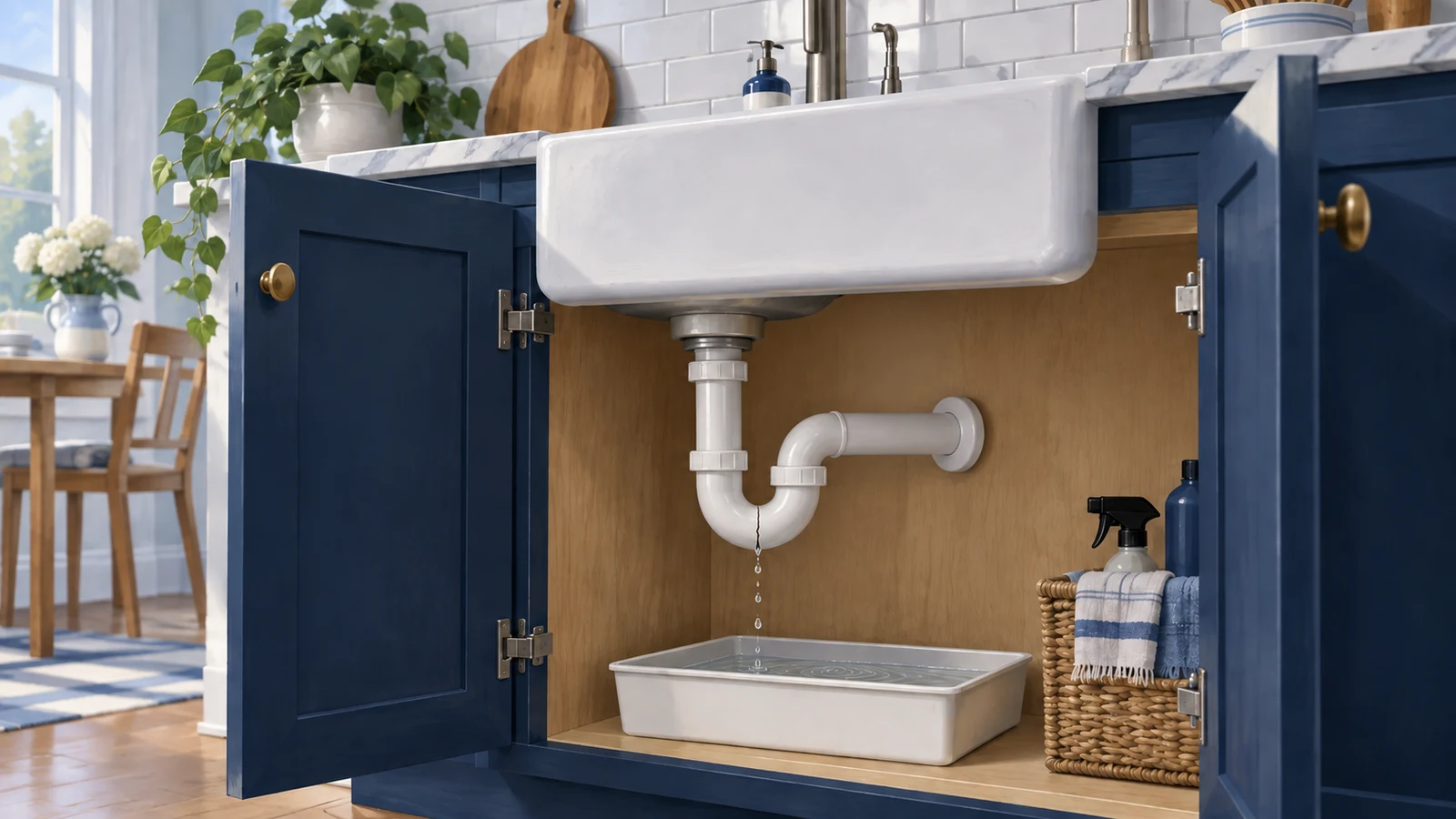



Sewer and drain backup coverage is a question for the actual policy, including any endorsement that adds or changes protection. The word “water” on a broad coverage summary does not answer whether a backup, sump-related event, or flood-related condition is included.
The belongings in the affected space deserve attention too. In a 2023 Triple-I/Munich Re survey, 47% of homeowners said they had prepared an inventory of their possessions. Insurance Information Institute / Munich Re This United States survey reflects self-reported inventories. If your basement holds furniture, tools, or stored household goods, a current list helps you understand what you need to document after a loss.
Find the endorsement, not just its name
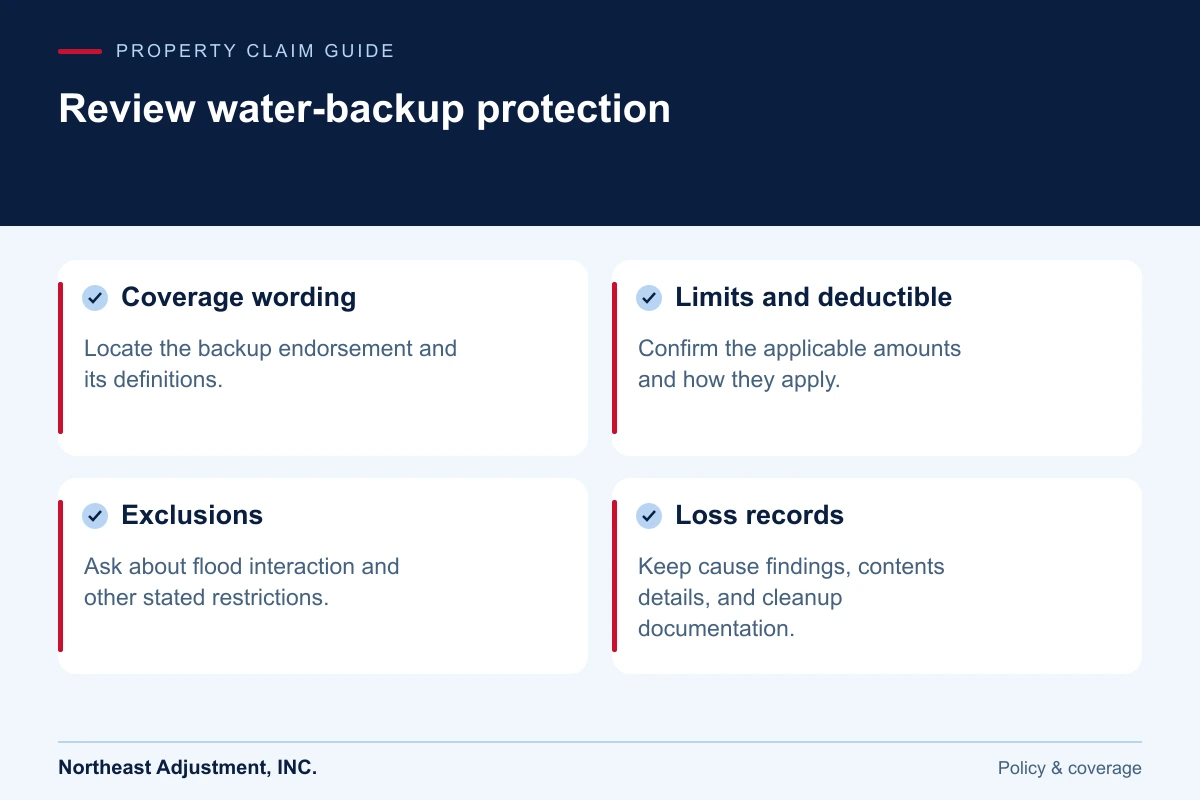
Look at the declarations and forms list for water backup, sewer backup, or similar wording. Request the full form from the insurer if it is missing.
The Connecticut Insurance Department's homeowners FAQ explains that sewer or drain backup is commonly excluded from basic homeowners coverage and may be addressed through an endorsement. The precise protection varies, so read the complete form rather than assuming all backup endorsements are equivalent.
Check how the policy defines the covered event. Ask whether it addresses water from sewers or drains, sump systems, or other sources and which conditions apply.
Review the financial terms
Find the limit and deductible specific to the endorsement. Ask whether the listed amount applies collectively to building damage, belongings, and any other included expense, or whether the form treats them separately.
A large dwelling limit does not necessarily remove a smaller endorsement limit. Similarly, a standard deductible on the declarations may not answer whether a separate backup deductible applies.
Do not rely on a neighbor's policy or an online example. Your coverage period, form, selected limits, and property facts are the relevant starting point.
Questions for a policy review
- Which exact water-backup endorsement is part of the policy?
- What event and property does it describe?
- What limit and deductible apply?
- How does it treat flood-related water or multiple contributing sources?
- What documents are required after a loss?
- Does the current basement use raise any questions about the insured property?
Ask for responses in writing and retain them with the form. A general conversation about buying coverage should not be mistaken for confirmation that a past event is insured.
If a backup has already occurred
Keep people away from potentially contaminated water and affected electrical equipment. Use appropriate professionals for source investigation and cleanup. Report the observed event promptly, describing what is known and what remains uncertain.
Request a cause report identifying the relevant drain or system and the findings supporting the conclusion. Save safe photographs, itemized cleanup records, and a room-by-room list of affected belongings.
Health and safety take priority over keeping physical evidence. When items need prompt disposal, document quantities and condition safely and retain professional instructions or disposal records.
A basement workshop scenario
Imagine a hypothetical New Jersey homeowner uses part of the basement as a workshop. Water appears near a floor drain, affecting stored tools and wall finishes. The owner has a water-backup endorsement but has not reviewed its details.
A plumber investigates the source while the owner locates the complete endorsement and identifies the damaged tools. The insurer can then review the cause, applicable limit, deductible, and supporting evidence. The presence of an endorsement alone does not decide the amount or every item included.
The example also shows why a contents inventory matters: a general cleanup bill cannot establish which tools were present or damaged.
Common questions
Is sewer backup the same as flood?
No. They can raise different definitions and exclusions, and the events may interact. Ask how the actual source findings relate to each policy.
Can I add coverage after discovering damage?
A newly purchased endorsement should not be assumed to cover an earlier loss. Discuss current reporting and future coverage questions separately with the insurer.
Does the plumber decide coverage?
The plumber provides technical findings. The insurer applies the policy, and you can request an explanation tied to the facts and wording.
See how basement water sources are identified. If a backup claim needs a clearer evidence package, contact Northeast Adjustment.