


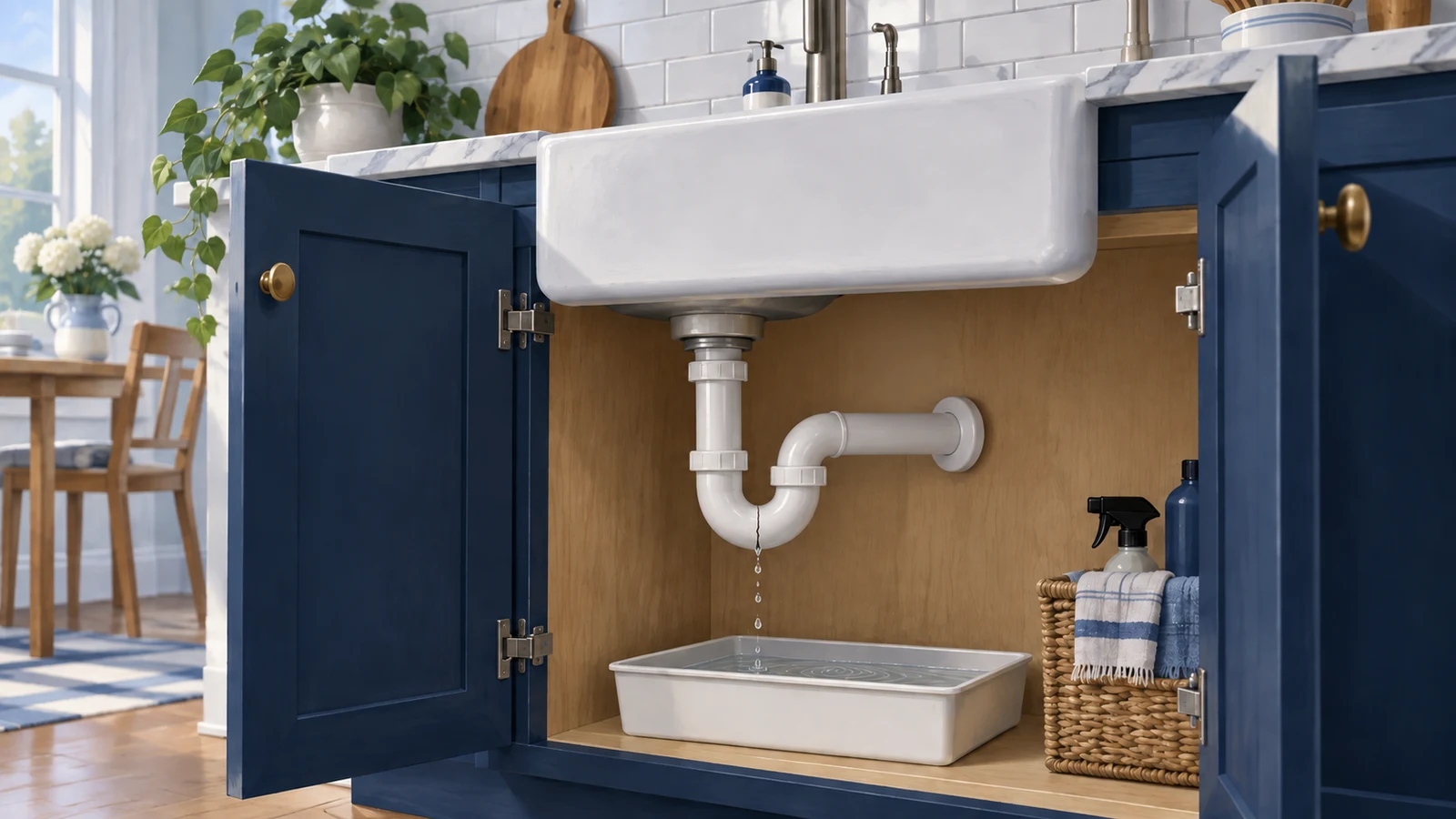
“Sudden and accidental” is language that may appear in discussions of water damage, especially an unexpected plumbing discharge. It should not be treated as a shortcut for “I just found water.” The timing, cause, affected property, and policy wording all need attention.
Freeze-related incidents show why the facts can vary. State Farm reported more than 20,000 freeze-related water-damage claims from 2024 through June 2025. State Farm The figure describes one insurer's United States experience, including several kinds of freeze-related damage. It does not mean that each event had the same cause or was handled under identical policy provisions.
Separate discovery from duration
Write down when you first noticed the water and what you saw. Then identify what remains unknown. A wet cabinet discovered on Monday could involve a newly failed connection or a condition that developed earlier.
Do not guess at a start time to make the event fit a phrase. Keep prior photographs, repair invoices, messages about earlier symptoms, and the professional's findings. Accurate history is more useful than a confident but unsupported explanation.
When a plumber inspects the system, ask the report to identify the component and observed condition. A statement that a supply connector failed is more informative than a generic invoice saying “fixed leak.”
Read the actual provision
The NAIC's burst-pipe guidance discusses potential coverage for sudden accidental discharge and the importance of reasonable freeze-prevention measures. It also highlights why policy requirements matter.
A policy may distinguish resulting water damage from the cost of fixing the failed component. It may also address repeated seepage, deterioration, vacancy, or maintaining heat. Do not assume that one phrase answers all those questions.
Ask the insurer to identify the relevant wording and explain its application to the reported facts. If a decision turns on the duration or source, ask what evidence supports that conclusion.
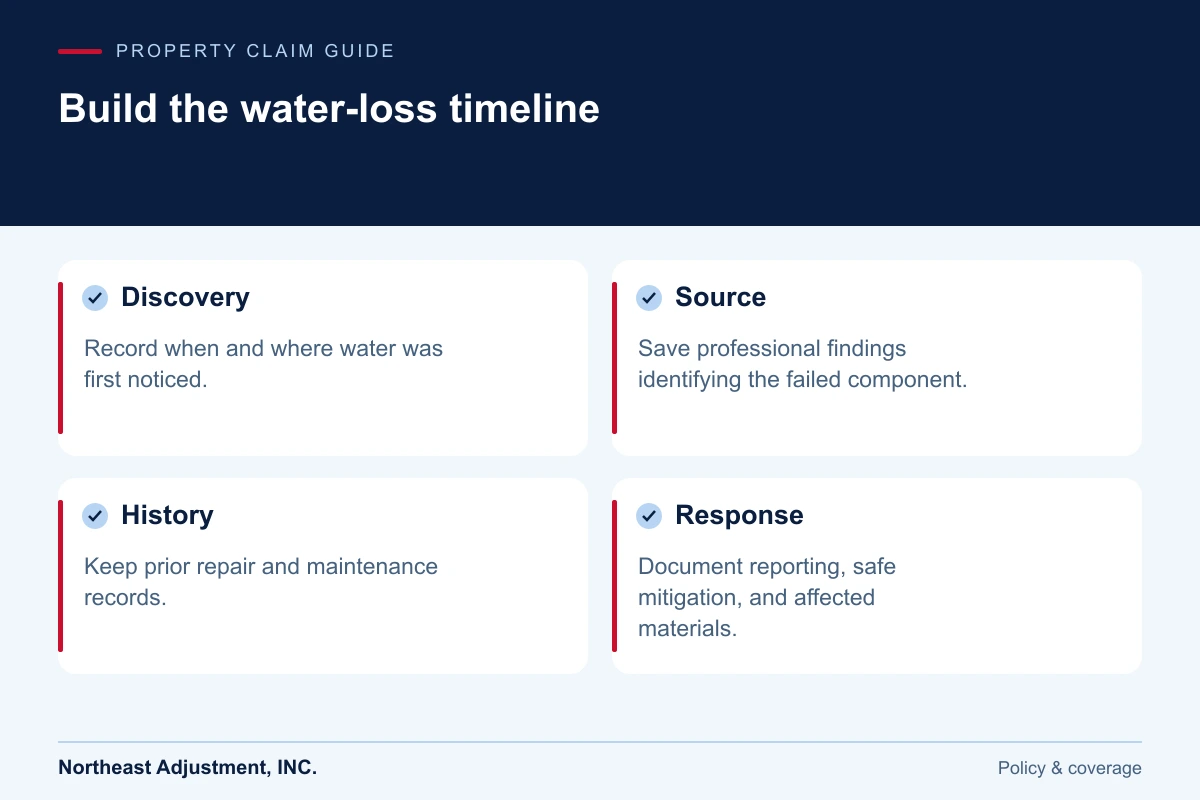
A source-and-timeline checklist
- Date and time the damage was discovered.
- Where water appeared and which areas were accessible.
- Recent use, service, or repairs involving the affected system.
- Photographs of the failed component and surrounding damage when safe.
- Professional cause findings and any limits on that assessment.
- Actions taken to stop the loss and protect affected materials.
Preserve the failed part when safe and practical, and ask the insurer about examination needs before it is discarded. If urgent repair requires removal, request detailed photographs and a written description.
Consider a laundry-area leak
In a hypothetical New Jersey home, an owner finds water beside a washing machine after returning from work. The owner reports the observed damage and asks a plumber to investigate.
The plumber identifies a failed supply connection. The owner saves the findings, earlier service records, and photographs of the wet floor. They avoid stating that the failure happened at a precise hour no one observed.
The insurer can then evaluate the cause, timing evidence, resulting damage, and policy terms. The scenario does not guarantee coverage for the connection, the flooring, or any additional work.
Keep mitigation separate from the coverage debate
Report the event promptly and arrange safe measures to prevent more damage. Necessary protection should not wait until every coverage question is settled. At the same time, record the reason for each task and keep itemized invoices.
If hidden moisture or additional damage is found, update the claim with the professional findings. An earlier photograph may show the visible starting point, while later reports explain conditions that could not initially be seen.
A record can be honest about uncertainty. “Duration not determined by the plumber” is better than removing that limitation from the report.
Common questions
Does a burst pipe always produce a covered claim?
No. The policy, cause, exclusions, conditions, and evidence must be reviewed. Freeze-related requirements can be especially important.
Can I repair the pipe before inspection?
Address urgent safety and damage prevention appropriately. Notify the insurer, document the component and work, and preserve evidence when safe.
Does an old pipe mean resulting damage is excluded?
Age alone does not answer the policy question. Ask for the applicable provision and a fact-based explanation.
Read about emergency and permanent repairs for the next stage. Contact Northeast Adjustment to discuss organizing your water-loss documentation.