
Connecticut Fire Damage Insurance Claims

The insurer's first estimate rarely tells the whole story of a Connecticut fire loss. Northeast Adjustment, INC. documents the burn, smoke, and contents damage independently and negotiates your Connecticut fire claim from your side of the table.

Icon check mark
Connecticut fire and smoke claim representation
Icon check mark
Burn, smoke, and contents losses priced independently
Icon check mark
Free review of your fire claim
A+ Rating
on BBB
Better Business Bureau
Over 50+ Years of
Combined Expereince
Free consultation
Our Process
1
We personally inspect your property and establish the true value of your loss

We walk the property with you, document every affected area, and evaluate inventories, so your loss is on paper before the insurance company puts a number on it.

2
We arrange your temporary housing while you are out of your home

We take over your hotel bill and actively look for a house or apartment rental. Families are often out of their home for a year, this is the in-between living while the claim is settled with the insurance company.

3
We serve as your direct liaison with the insurance company

Every call, inspection, and negotiation goes through us. You never have to argue with an insurance adjuster or chase paperwork on your own.

4
We’ll ensure you receive the Maximum compensation

We negotiate the settlement against your full documented loss, not against the first offer the insurance company puts in front of you.

Request free claim review
Why fire damage claims in Connecticut are different

Start with who reads the claim. Finance, insurance, and real estate together form Connecticut's largest industry, and Hartford's major employers include The Hartford, Travelers, Cigna, and the Aetna subsidiary of CVS Health. A Connecticut fire claim is often negotiated against one of the country's largest insurers, exactly the situation policyholder-side representation exists for.

Then consider what burns. Colonial-era houses still stand around historic town greens in the state's northeast and northwest corners, and rebuilt sections of an older home generally must meet current building standards. A policy pays that added cost only when it carries the right ordinance or law coverage.

Commercial fires can run to industrial scale. Pratt & Whitney builds jet engines in East Hartford, Electric Boat builds submarines in Groton, and Sikorsky's plant in Stratford is the state's largest single manufacturing site. A fire in buildings like these, or in the shops that supply them, may pull equipment, inventory, and operations into the claim along with the structure.

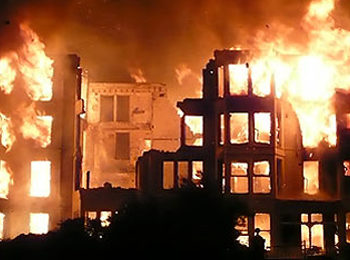
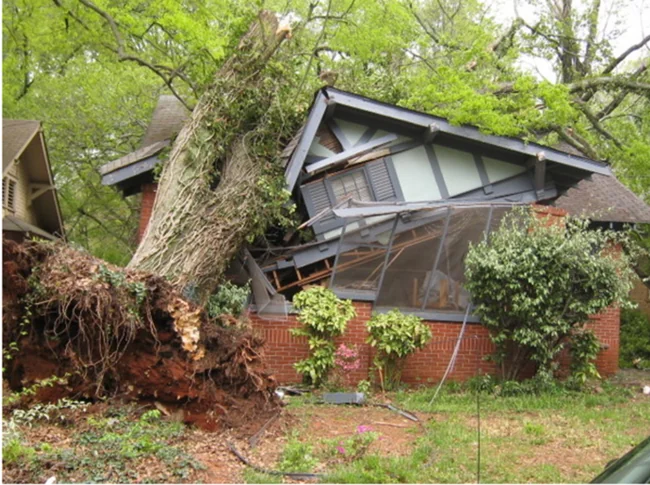
Connecticut's loss history shows how perils stack. During the 1938 hurricane, wind drove a 500-foot sailing ship into a New London warehouse complex and touched off a major fire: wind, water, and flame damage in one loss. Each cause may fall under different policy provisions and needs its own photographs and estimate. Our fire damage claim guide lays out the line items a full fire estimate cannot skip.

Connecticut fire loss scenarios

Fire loss patterns we see across Connecticut.

Contamination past the burn area

Smoke residue is corrosive and can coat equipment, tooling, and stock rooms away from the fire itself. What gets restored versus written off often moves a claim more than the structural repair, so contaminated items are documented as their own category.

When the doors stay closed

For a manufacturer, restaurant, or commercial tenant, the weeks a Connecticut property sits unusable are a loss in their own right. Business interruption and extra expense coverage is how that period gets claimed, and whether it applies turns on the specific policy language.

Two policies, one building

A fire in a leased Connecticut building splits the loss: the structure belongs on the owner's policy, the tenant's improvements, equipment, and stock generally on the tenant's own. Sorting each damaged item into the right claim early keeps either carrier from pointing at the other.

Connecticut deadlines that matter

Connecticut sets no fixed number of days for deciding a fire claim. Conn. Gen. Stat. § 38a-816 instead makes it an unfair insurance practice to fail to acknowledge a claim with reasonable promptness, to fail to investigate promptly, or to fail to attempt a prompt, fair and equitable settlement once liability is reasonably clear. Those standards are enforced through the record, so every dated letter and inspection matters; the details are in our Connecticut claim deadline guide.

How we handle a Connecticut fire damage claim

Public adjusting in Connecticut is a licensed profession overseen by the Connecticut Insurance Department, and a public adjuster works for the policyholder alone. Northeast Adjustment, INC. represents Connecticut homeowners and businesses from our office in Forest Hills, Queens. We walk the fire scene ourselves, price the structural, smoke, and contents damage independently, and negotiate that figure with the carrier line by line.

The Connecticut public adjuster hub covers the full service area, and we also handle Connecticut water damage claims, storm damage claims in Connecticut, and Connecticut power outage claims.

FAQs
What does reasonable promptness mean for my Connecticut fire claim?
How is lost business income documented after a Connecticut commercial fire?
Who pays for our housing while a Connecticut fire claim is open?
The insurer already made an offer on my fire claim. Can it still change?
What does it cost to hire a public adjuster for a Connecticut fire?
Still have questions?
Get in touch with our friendly support team.
Get in touch
Our loyalty is to you, not your insurance company.
Thank you! A team member will be in touch shortly.
Oops! Something went wrong while submitting the form.
Don't settle for less, maximizing your compensation is our priority.