


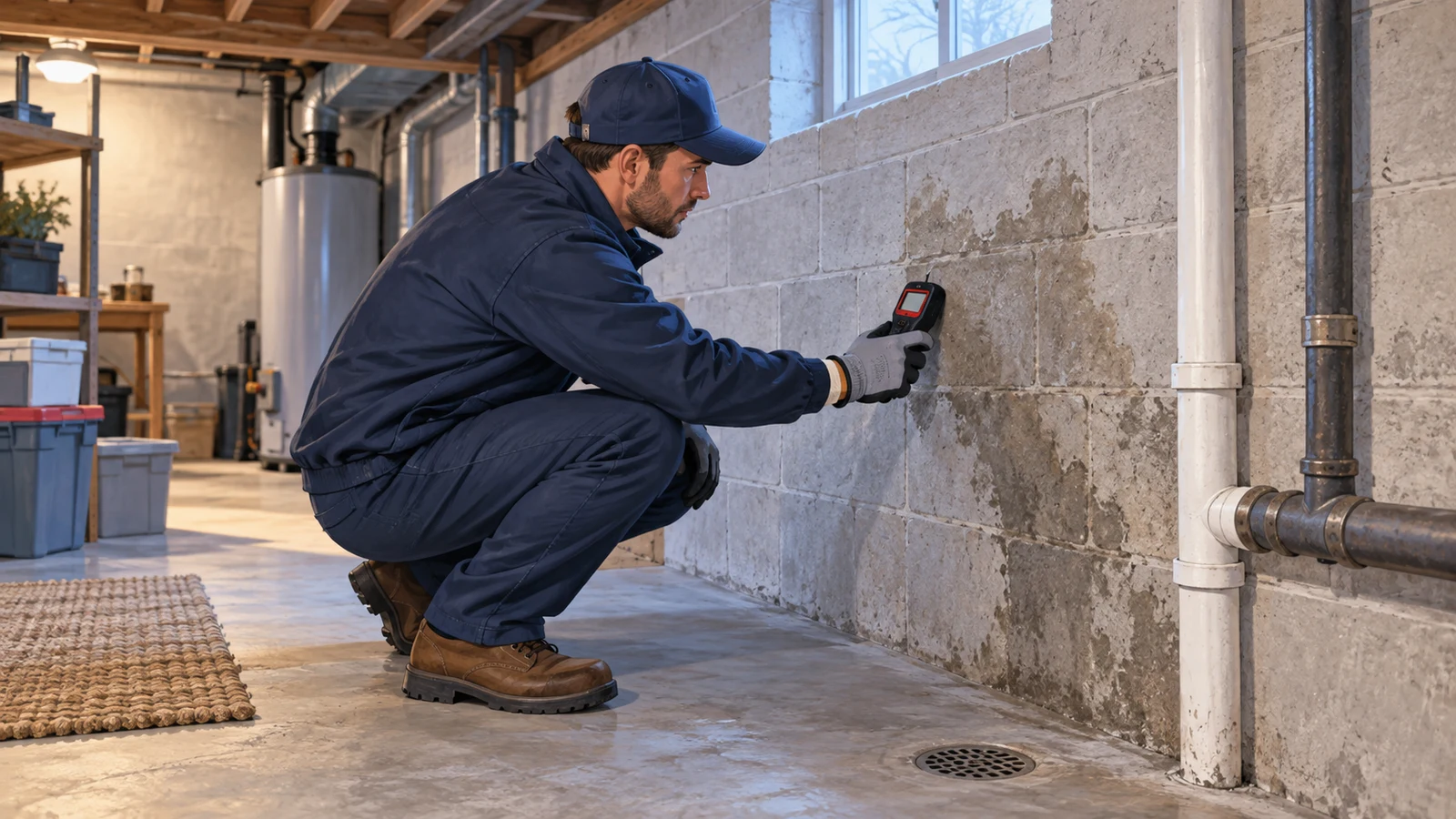
The first question after discovering basement water is often “Is this covered?” Before that can be answered well, the source needs attention. Water can arrive through a plumbing failure, a drain backup, an exterior opening, or another route. Similar wet floors can result from very different events.
Pennsylvania's Insurance Department reports that destructive flooding has occurred in all 67 Pennsylvania counties. Pennsylvania Insurance Department The department's statement describes cumulative history and does not provide a date interval. It is a reason to take ground-level water seriously throughout the state, not proof that your basement event meets an insurance policy's definition of flood.
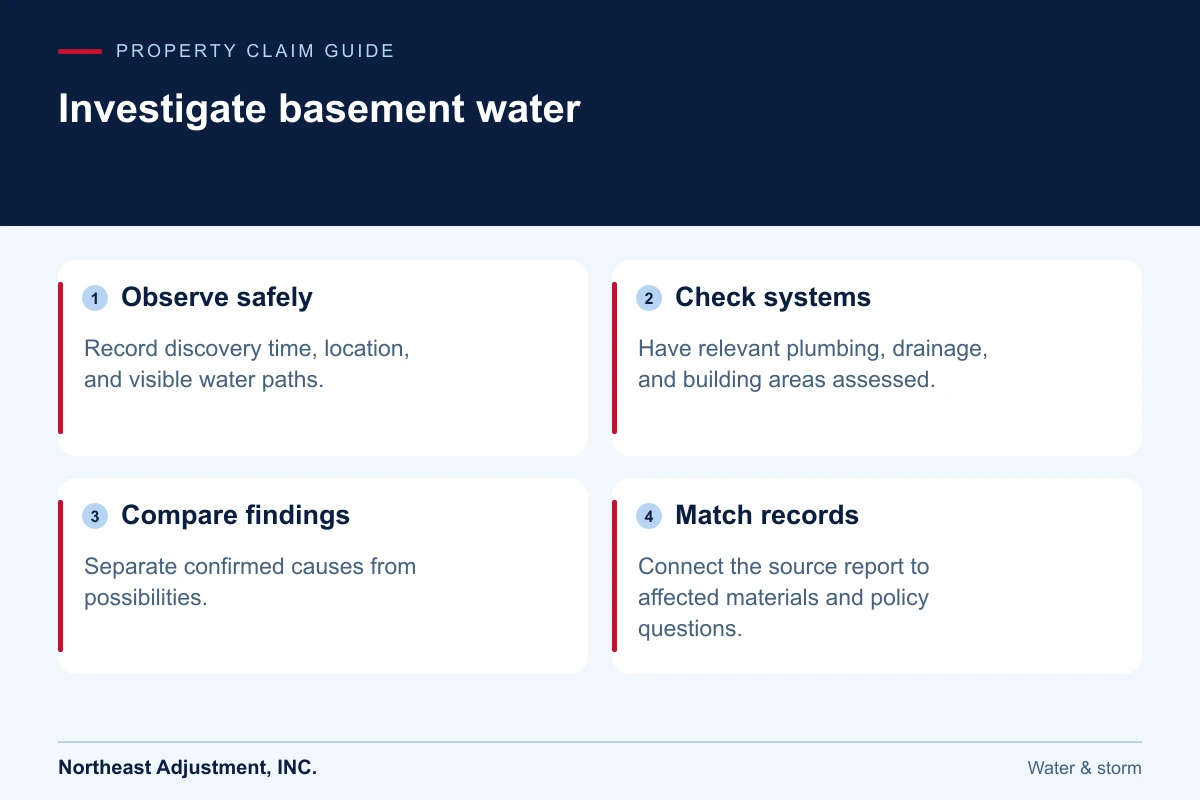
Record the discovery without entering danger
Stay out of water where electrical hazards or contamination may be present. Follow appropriate emergency, utility, and professional guidance. Do not reach through standing water to inspect a pump or electrical panel.
From a safe location, note where water is visible, its approximate extent, and when it was first discovered. Photograph visible water lines or entry points if possible. Describe odor or appearance without treating either as a reliable contamination test.
If cleanup must begin immediately, ask the contractor to record conditions and the reason for urgent work. A safe record can be made by professionals without requiring the owner to enter.
Match the professional to the question
A plumber may assess supply lines, drains, and failed plumbing components. A drainage or building professional may investigate exterior pathways, window wells, or foundation-related entry. More than one specialty may be needed.
Ask each report to distinguish findings from possibilities. “Water present near the drain” is different from a confirmed backup. “Moisture at the wall” does not establish whether it entered from outside or traveled from another room.
The Connecticut Insurance Department's storm-water guidance explains that water events raise different policy questions. The actual home policy, flood policy, and any endorsements should be reviewed against the supported cause.
Useful records for the investigation
- Discovery time, recent weather observations, and any witnessed flow.
- Photos of the wet area and accessible nearby drains, pipes, and openings.
- Pump service records, plumbing repairs, and drainage maintenance documents.
- Professional findings about failed parts or entry routes.
- Earlier basement photographs and any known recurring water history.
Keep the failed component when safe and practical, or ask for detailed photographs before removal. Do not hide prior seepage or an earlier repair; those records may help distinguish new damage from an older condition.
Follow the water into the contents list
Once the affected area is assessed, identify the building materials and belongings involved. A finished basement may contain flooring, wall materials, cabinets, appliances, and stored property that require separate descriptions.
Record the location of each item. Do not assume that everything in a basement was affected simply because some water was present. Equally, do not use a dry-looking surface as proof that hidden materials are dry; appropriate moisture assessment may be needed.
Save extraction and drying records separately from the cause report. One explains the response; the other explains the investigation.
A practical hypothetical case
Consider a Pennsylvania owner who finds water around both a basement floor drain and a nearby exterior door after rain. The owner does not choose between “sewer backup” and “flood” based on appearance alone.
Professionals document the drain condition and exterior route. Their findings may identify one source, several sources, or the need for further work. The owner reports the observations promptly and updates the insurer as evidence develops.
That process is more accurate than revising the story to fit a presumed coverage category.
Common questions
Can a photograph identify contaminated water?
No. Appearance alone is not a safe basis for that conclusion. Ask qualified professionals about handling and assessment.
Does a sump pump failure automatically mean sewer backup coverage applies?
No. The policy's definitions, endorsement, and actual cause need review.
Should I wait to remove water until the source is certain?
Arrange appropriate safety and damage-prevention work while documenting conditions. Investigation and necessary mitigation can proceed together.
Read wind-driven rain versus floodwater for related distinctions. Contact Northeast Adjustment for help assembling a basement water claim record.