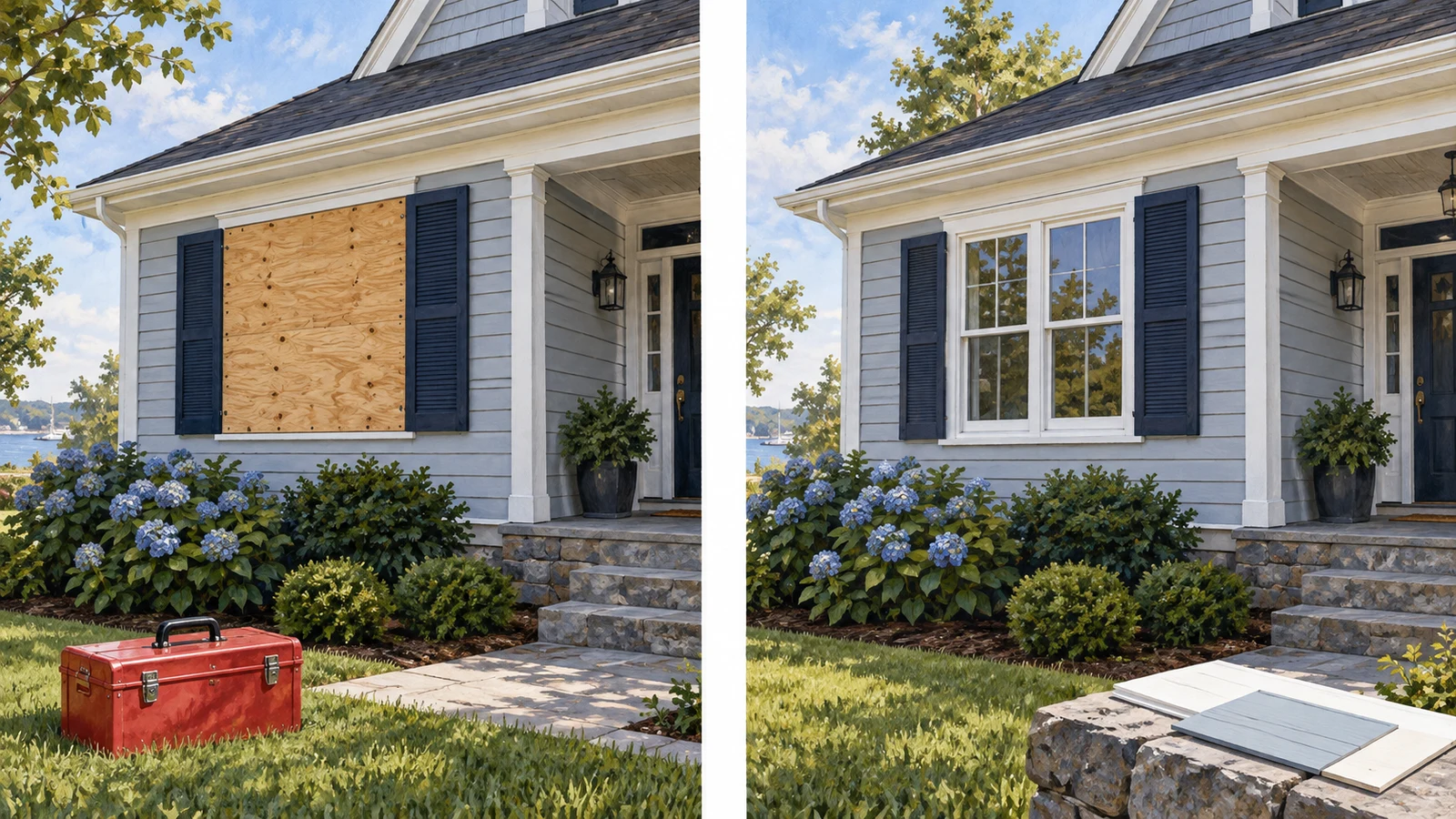



A contractor estimate and an insurer estimate may have different totals even when both describe the same damaged property. The useful question is where they differ: rooms included, material quantities, repair methods, labor tasks, prices, or payment adjustments.
Fire recovery provides a common setting for that comparison. USFA estimates that 343,000 residential building fires occurred nationally in 2024. U.S. Fire Administration This United States figure counts residential building fires, not estimate disputes. After an individual fire, the record must explain the actual work needed at that building rather than relying on an average or a broad replacement total.
Put the same scope beside itself
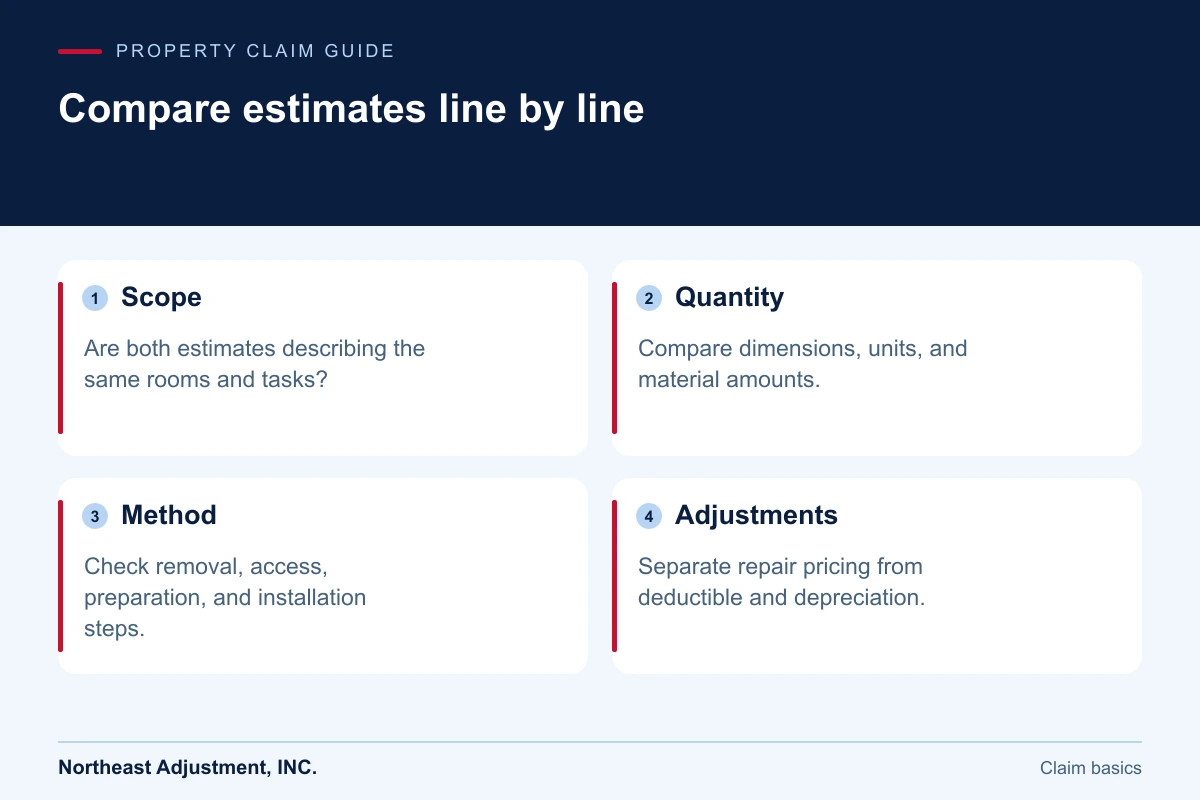
Start with the room names and affected areas. One estimate may include the kitchen and hallway while another covers only the kitchen. Until that difference is identified, comparing totals can be misleading.
Make a simple table with the task, contractor's description, insurer's description, and your question. Use the estimate line references so each reviewer can find the item.
Ask whether demolition, debris handling, drying-related removal, surface preparation, and final finishes are included where supported. Do not add tasks merely to increase the estimate; each should relate to necessary work.
Check quantities and units
Compare measurements and units of measure. Square feet, linear feet, and individual pieces describe different things. A wall finish quantity may not equal the floor area of the room.
If quantities differ, request the measurements or drawings behind them. A photo can show condition, but it may not establish dimensions precisely. Contractor measurements and plans should be retained.
Look at material descriptions too. Plaster and drywall, custom trim and stock molding, or different flooring assemblies may require different methods. Identify the existing material with photographs, records, or professional findings.
Review method before arguing price
A lower price can reflect a different task. Cleaning a surface is not the same work as removing and replacing it. Ask what evidence supports each proposed method.
The New Jersey Department of Banking and Insurance advises contacting the insurer when a contractor uncovers hidden damage omitted from the original assessment. Supply the new findings and estimate details; do not assume a supplemental amount will automatically be approved.
Local access conditions can also matter. Work in an attached home with limited staging space may involve documented tasks different from a detached building with open access. The estimate should explain the need rather than add an unexplained allowance.
Your comparison checklist
- Same affected rooms and building components.
- Matching measurements and units.
- Accurate existing material descriptions.
- Clear cleaning, repair, or replacement methods.
- Necessary access, preparation, and completion tasks.
- Separate deductible, depreciation, and prior-payment calculations.
Keep each estimate's date and version. If the contractor revises a proposal, preserve the earlier copy and identify what changed. This avoids discussing outdated figures.
A hypothetical plaster-wall repair
Imagine a Pennsylvania homeowner has fire-related damage in a room with plaster walls. The contractor's proposal includes a particular restoration method, while the insurer's estimate uses a different wall assembly.
The owner asks both parties to explain the material identification and supported repair approach. Photographs and professional findings become the center of the discussion. The disagreement may concern method, scope, or price; a higher total alone does not prove which estimate is correct.
This example illustrates the comparison process and does not establish coverage for either proposal.
Common questions
Must the insurer accept my contractor's estimate?
No automatic acceptance should be assumed. Ask for a review of specific differences with supporting records and policy-based explanations where relevant.
Does a payment lower than the estimate mean the estimate is wrong?
Not necessarily. Deductibles, depreciation, limits, prior payments, or other adjustments may explain part of the difference.
What if damage appears after work begins?
Document the newly visible condition, obtain the contractor's explanation, and notify the insurer promptly before it is concealed where practical.
Our replacement cost and actual cash value guide explains valuation. Contact Northeast Adjustment for help organizing a repair-estimate comparison.