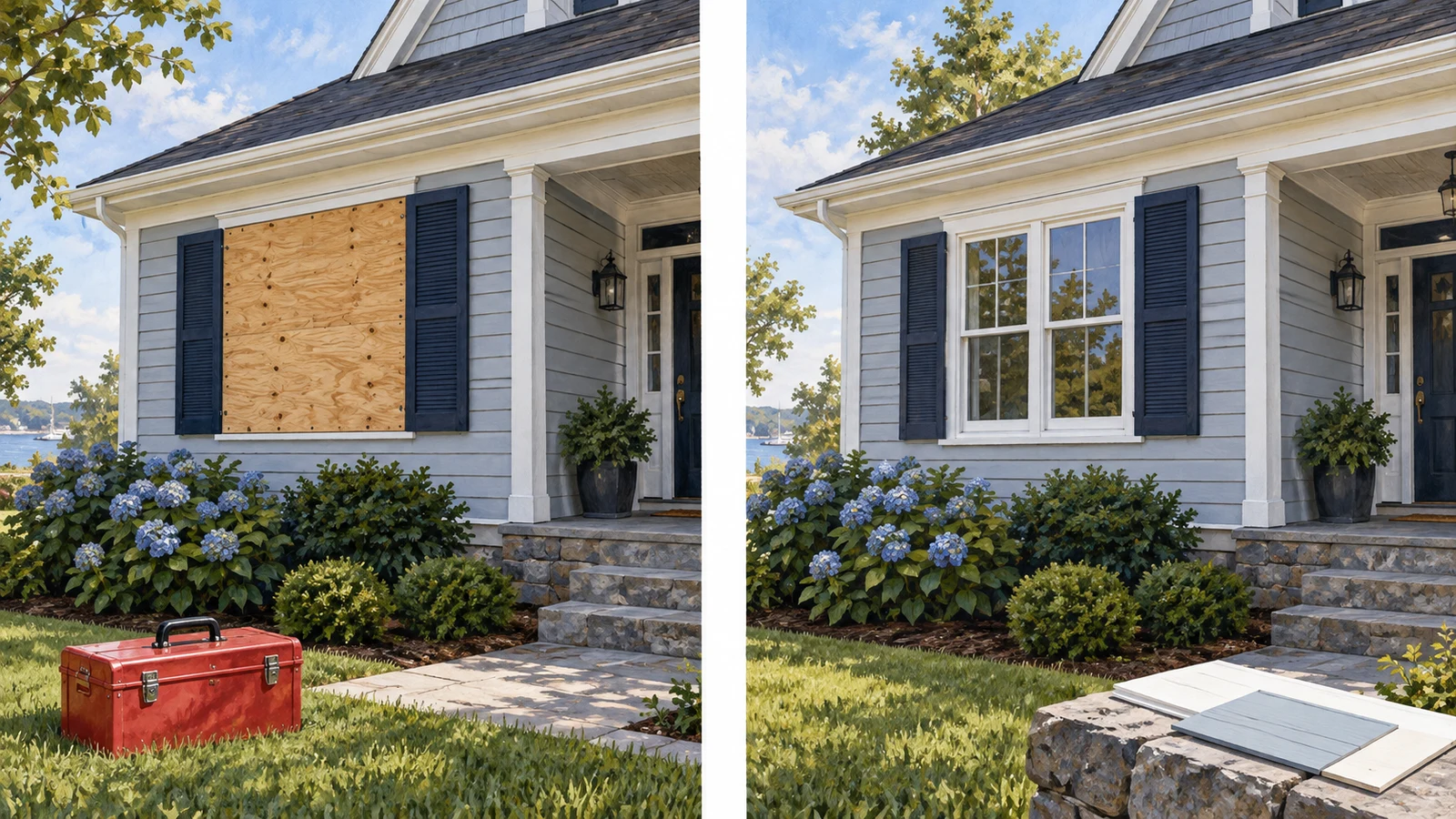



When a rental property is damaged, the landlord and tenant may be dealing with the same event but different insured interests. Building materials, landlord-owned appliances, tenant belongings, and temporary arrangements should be identified separately.
Fire can create this situation quickly. USFA estimates that 343,000 residential building fires occurred nationally in 2024. U.S. Fire Administration This is a United States residential building estimate, not a count of rental-property claims. In a Northeast multifamily building, one event can affect several households, making clear communication and ownership records particularly useful.
Report through the relevant channels
The landlord should address the building claim and property management response. The tenant should notify their own insurer about potentially affected belongings or other policy benefits. Both should communicate promptly about the observed damage and immediate safety needs.
The Connecticut Insurance Department's winter claim tips distinguish a landlord's building insurance from a renter's belongings insurance, while noting that policies vary. Do not assume the landlord's policy protects all tenant property.
Follow emergency officials on access. A tenant should not reenter a restricted unit for inventory photographs, and a landlord should not treat a claim appointment as a substitute for a safety assessment.
Identify ownership before combining lists
Record which appliances, furnishings, and fixtures belong to the landlord and which belong to the tenant. A refrigerator supplied with the apartment and one purchased by the tenant may require different documentation.
For shared spaces, identify stored property and its owner. Do not include another tenant's belongings on your own inventory merely because they were in the same wet basement.
Keep photographs labeled by unit, room, and item. Each party can share relevant building observations while maintaining a separate list of its own property and expenses.
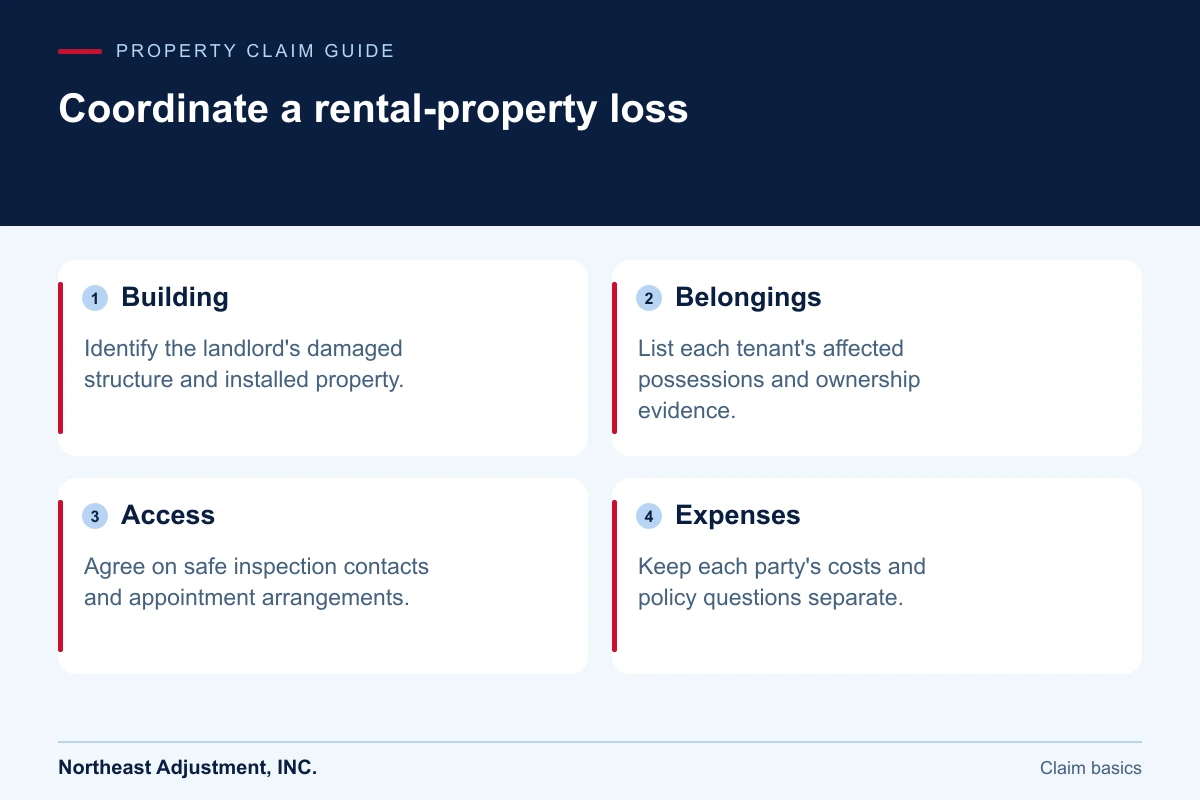
Questions to settle early
- Who is the main contact for building access and emergency contractors?
- Which insurers have been notified and what claim references exist?
- Who owns each affected appliance or installed item?
- What documents are available about the cause and extent of damage?
- How will inspection times and repair updates be communicated?
- Which temporary expense or rental income questions need policy review?
Save the lease, move-in records, maintenance communications, and any relevant photographs. Lease obligations and insurance coverage are separate questions; one document may not answer both.
Keep financial issues in the right record
Tenants should retain receipts and ask their insurer about any applicable additional living expense provisions. A policy may cover certain increased expenses after a covered event, subject to its conditions and limits.
Landlords should keep rental agreements, payment history, repair schedules, and records relevant to any lost-rent provision. Lost rent is not automatically payable whenever a tenant leaves.
Questions about rent withholding, lease termination, access rights, or legal responsibility should be addressed through the appropriate legal or housing professional. Do not assume an insurance claim authorizes a change to the lease.
A hypothetical two-family home
Imagine a plumbing failure affects the first-floor apartment and shared basement of a New York two-family home. The landlord arranges professional source assessment and necessary building protection. The tenant documents damaged furniture and clothing from a safe location.
They share the plumber's report and agree on an inspection contact. Their lists distinguish the landlord's washer from the tenant's stored boxes. Neither side assumes the other's insurer will handle everything.
This illustrates coordination rather than a finding about coverage, liability, or any person's legal duties.
Track work without losing responsibility
Use a simple update log for access dates, completed work, and outstanding questions. If a contractor moves belongings, ask for a location or storage list. If additional damage appears, share factual photographs and reports with the relevant insurers.
Keep requests specific. “Please confirm who will arrange access for the drying contractor on Tuesday” is more actionable than a broad demand to fix everything immediately.
Common questions
Can a tenant rely only on the landlord's claim?
The building claim does not replace the tenant's own policy review and reporting for belongings or other interests.
Does the person who owned the leaking appliance automatically owe every cost?
Ownership alone does not resolve legal responsibility or insurance coverage. Preserve the facts and ask the appropriate professionals.
Read creating a home inventory for belongings records. Contact Northeast Adjustment for help organizing a rental property's documented loss.