


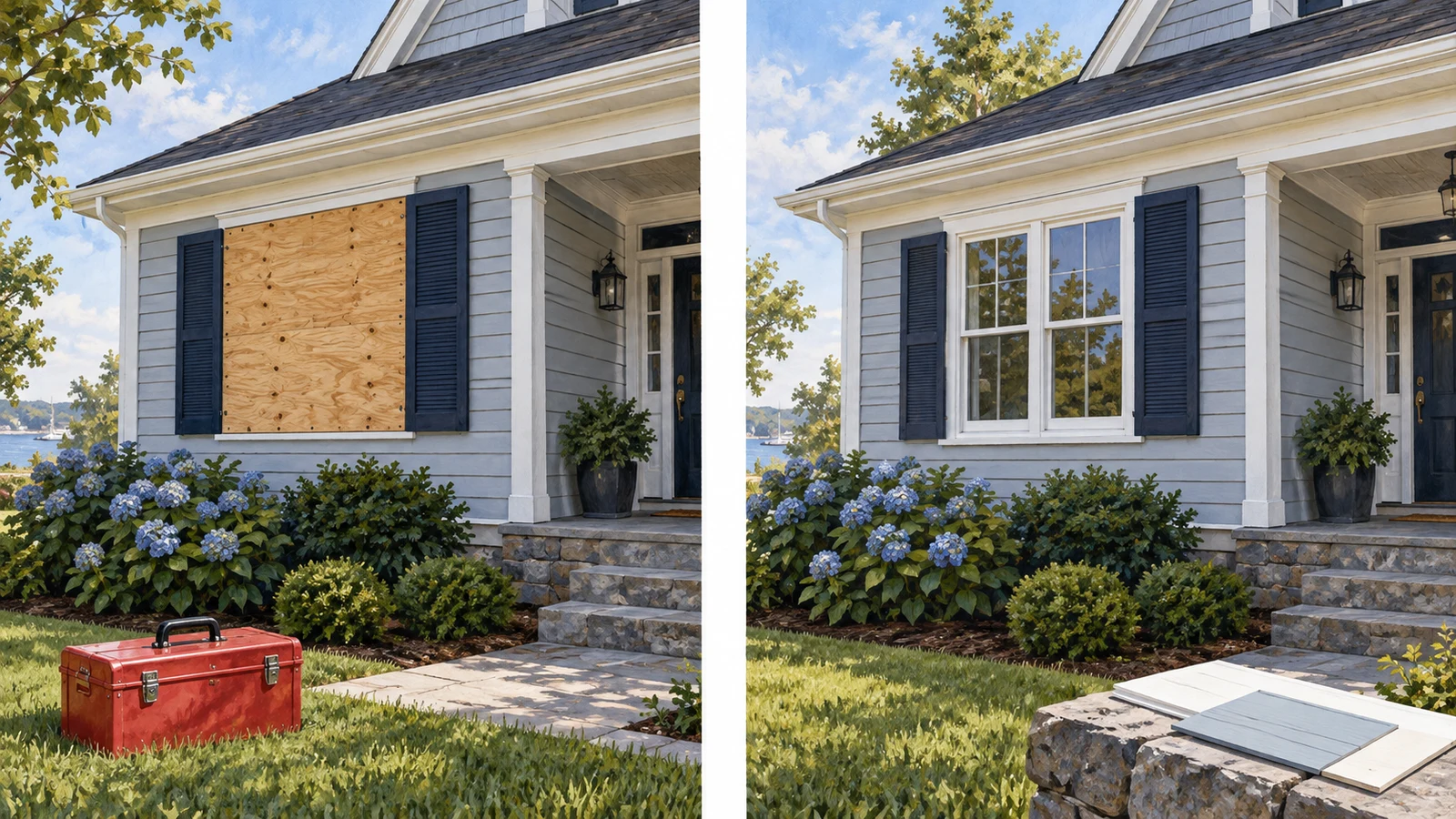
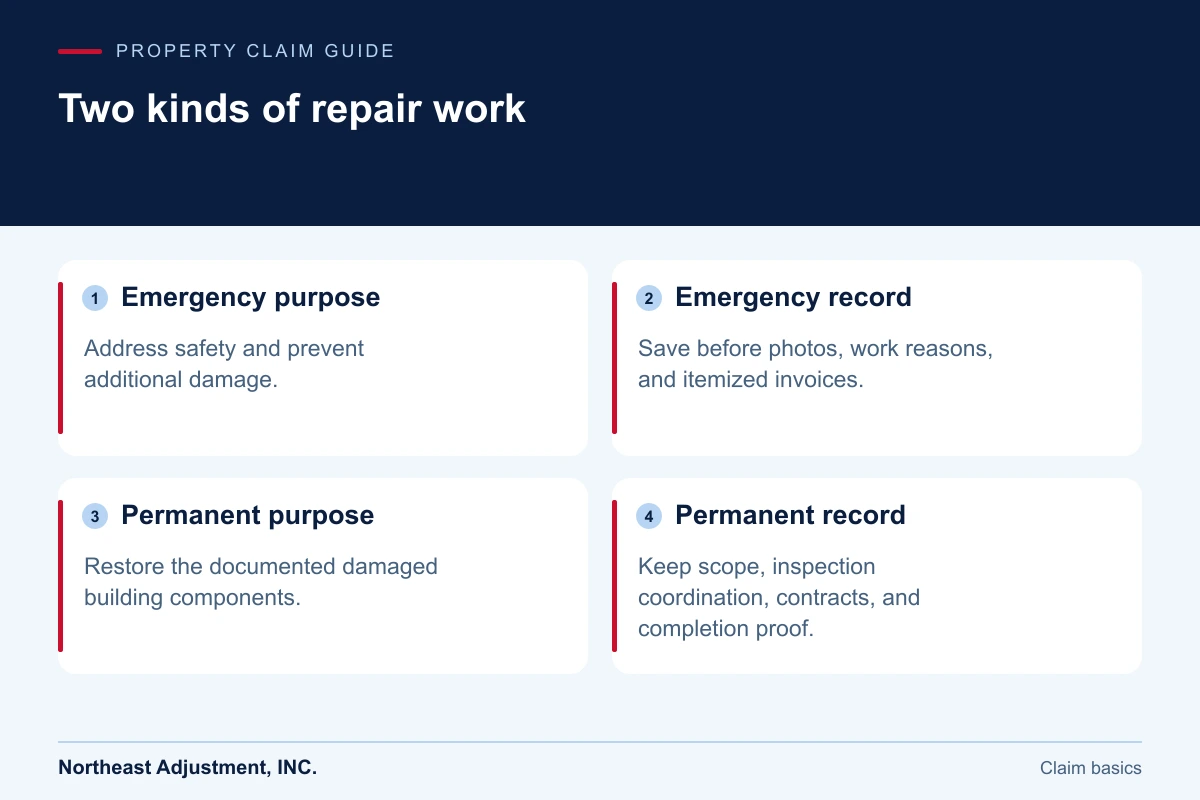
Emergency repairs address immediate safety or prevent more damage. Permanent repairs restore the damaged property. Both may be necessary after the same event, but they answer different questions and should be clearly described in the claim record.
Storm history offers context for planning those handoffs. NOAA recorded 48 billion-dollar severe-storm events affecting New York during 1980–2024. NOAA National Centers for Environmental Information This threshold applies to each event's U.S. losses. This is a historical statewide event count through 2024, not a forecast of this autumn's weather or the losses at any one address. After a Northeast storm, access and contractor availability can change quickly, making a clear record of urgent work especially useful.
Recognize the purpose of the work
A professional board-up protects a broken opening. A properly arranged temporary tarp helps protect an affected roof area. Extraction may remove standing water while the permanent flooring decision is still being assessed.
Replacing the window, rebuilding the roof assembly, or installing new flooring is permanent restoration. The distinction is the work's purpose and effect, not merely whether the contractor calls it “emergency.”
Some necessary removal work changes the building immediately. For example, a professional may identify wet material that must be removed to address a hazard or permit appropriate drying. Ask for the reason and document the condition before removal where safe.
Preserve evidence while protection proceeds
Report the loss promptly and ask the insurer about inspection arrangements. New York DFS distinguishes necessary protective work from permanent repairs and emphasizes documenting damage and retaining receipts.
Coordinate permanent repairs before they cover evidence. At the same time, do not leave a building exposed or unsafe solely to wait for a routine visit. When urgent work must proceed, save photos, professional findings, and the contractor's explanation.
No contractor's use of the word “emergency” guarantees that its invoice is covered. The cause, policy provisions, scope, and cost still require review.
A checklist for emergency work
- Photograph the damaged opening or affected area from a safe location.
- Record why work could not reasonably wait.
- Identify the contractor, date, work area, materials, and labor performed.
- Retain the authorization, itemized invoice, and payment evidence.
- Ask whether follow-up checks or additional protection will be needed.
If the contractor bundles urgent protection with a large permanent repair agreement, read the scope carefully. Ask which work you are authorizing now and which work requires a later decision. Do not sign blank forms or rely on an unexplained total.
Plan the transition to permanent repairs
Before permanent work starts, compare the proposed scope with inspection findings and insurer correspondence. Identify unresolved questions about materials, quantities, permits, and access.
Keep estimates separate from paid invoices. If an emergency contractor removed material and a rebuilding contractor also includes demolition, check whether the scopes overlap. A clear explanation may resolve the difference without assuming either estimate is wrong.
Record changes during the job. If newly visible damage requires further work, send the insurer the dated photographs and professional explanation rather than quietly adding it to a final bill.
A New Jersey example in practice
Suppose, hypothetically, a branch breaks a window in a New Jersey home during a storm. Rain is entering, so a qualified contractor boards the opening after safe photographs are taken. The invoice describes the opening, materials, and work date.
The later window estimate identifies the unit, measurements, installation tasks, and interior finish work. The two documents explain why temporary protection was needed and what permanent restoration involves. They do not establish automatic payment for either expense.
Common questions
Can the same company do both types of work?
Yes, but ask for scopes and charges that clearly distinguish the stages. Understand the contract, payment terms, and any obligations before agreeing.
Is a temporary repair supposed to last indefinitely?
Ask the contractor about its limits and monitoring needs. Temporary protection may require follow-up while permanent work is arranged.
What if the insurer has not responded?
Keep a record of contact attempts and continue appropriate safety and damage-prevention measures. Send the documentation through the insurer's official channels.
Our first-day response guide explains the wider sequence. For help presenting emergency and permanent repair records, contact Northeast Adjustment.