



A denial letter may address the entire claim, one coverage, or only particular repair items. Before drafting a response, identify exactly what the insurer decided and why. The next useful step depends on whether the disagreement involves policy language, the cause of damage, the amount, or missing information.
Storm-related disputes have a practical Northeast setting. NOAA recorded 48 billion-dollar severe-storm events affecting New York in 1980–2024, with qualification based on each event's total U.S. losses. That history says nothing about whether a particular claim should be paid; the evidence and policy still control. NOAA New York summary
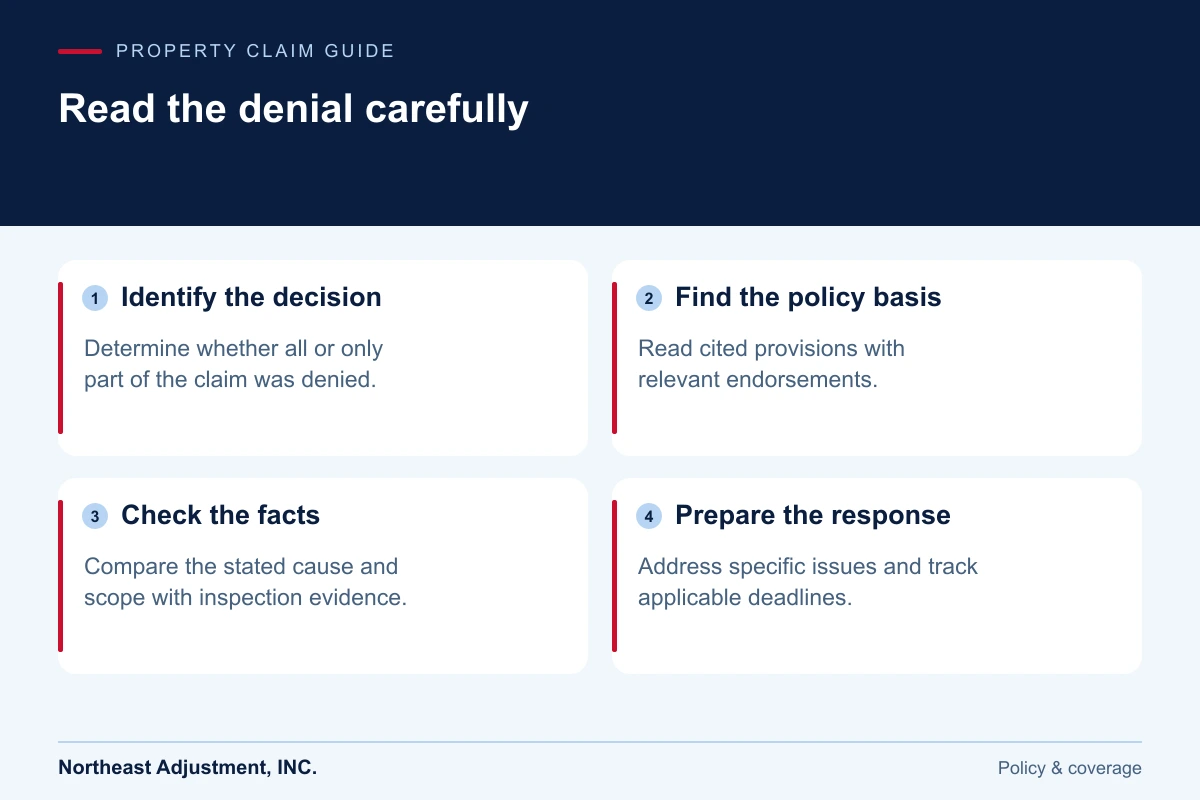
Mark the decision, not just the word “denied”
Read the letter from beginning to end. Highlight the property, date of loss, claim number, coverage, and damage being discussed.
Ask whether other portions remain open or whether the insurer considers its review complete. A letter denying a specific item may accompany payment for another part of the loss.
Also distinguish a denial from a reservation of rights or a request for information. These documents can have different meanings. If the wording is unclear, ask the insurer to explain the current status in writing.
Read the cited language in context
Locate each quoted provision in the policy and check the endorsements that may modify it. Keep the complete policy for the relevant period, rather than relying only on the declarations page.
The New York DFS recovery guidance explains that a denial should have a reason supported by policy language. Ask how the cited provision applies to the specific facts of your loss.
Do not assume that finding one sentence you favor resolves the question. Coverage provisions, exclusions, exceptions, definitions, and conditions can interact. Legal interpretation or questions about preserving rights may require an attorney.
Compare the stated facts with the evidence
Consider an illustrative New Jersey homeowner whose wind-related siding claim is denied because the insurer attributes the condition to deterioration. The useful response is evidence addressing that conclusion, not simply photographs of a recent storm elsewhere.
Review the inspection report, dated preloss photos, maintenance records, contractor findings, and damage pattern. Identify factual errors precisely. If the report names the wrong building side or describes an uninspected area, point that out with support.
Ask a qualified professional to explain the basis for a different cause opinion. A second estimate showing a higher price may not address a denial based on cause.
Build a response around individual issues
Use a short table or numbered list with the insurer's point, your question or correction, and the supporting document.
For example:
- “The letter refers to the rear elevation; the damaged panel is on the street side.”
- “The attached preloss photograph is dated before the event.”
- “The contractor's report explains the observed fastening condition.”
- “Please clarify whether the interior damage was evaluated separately.”
These are illustrative ways to organize evidence, not suggested facts for your claim. Submit only accurate information that belongs to your property.
If a record is missing, identify what you requested and when. Do not claim a document proves more than it actually shows.
Track the next step and relevant deadlines
Ask about any internal review process and where to submit additional information. Keep confirmation of delivery and the exact file sent.
Review deadlines in the policy and letter promptly. An ongoing conversation or complaint may not extend a contractual or legal deadline. Obtain qualified advice when timing or rights are uncertain.
State insurance departments provide consumer-assistance processes. Depending on the dispute, other options may involve a licensed public adjuster or an attorney. Appraisal should not be treated as a universal solution to a coverage or causation dispute.
Questions after receiving a denial
Does new evidence guarantee reopening?
No. Ask whether the insurer will consider the specific information and how it should be submitted.
Should I stop protecting the property?
Continue necessary safe measures to prevent additional damage and document them. Keep disputed costs clearly identified.
Can I respond before every report is ready?
You can notify the insurer of the issue and expected information, while still meeting applicable requirements. Do not assume this changes deadlines.
Our claim resources explain related documentation. Contact Northeast Adjustment to discuss the evidence and questions surrounding your property claim.