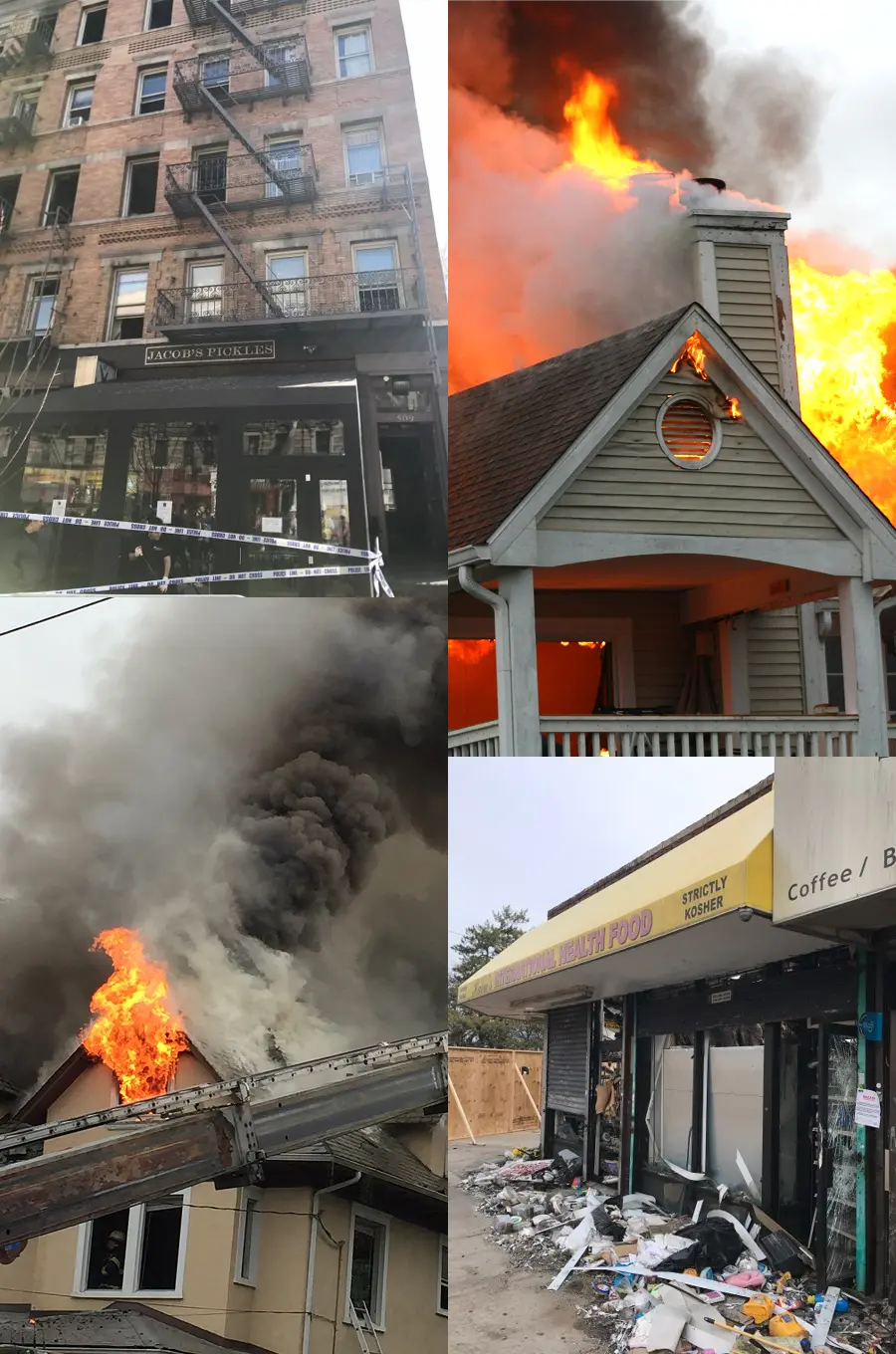


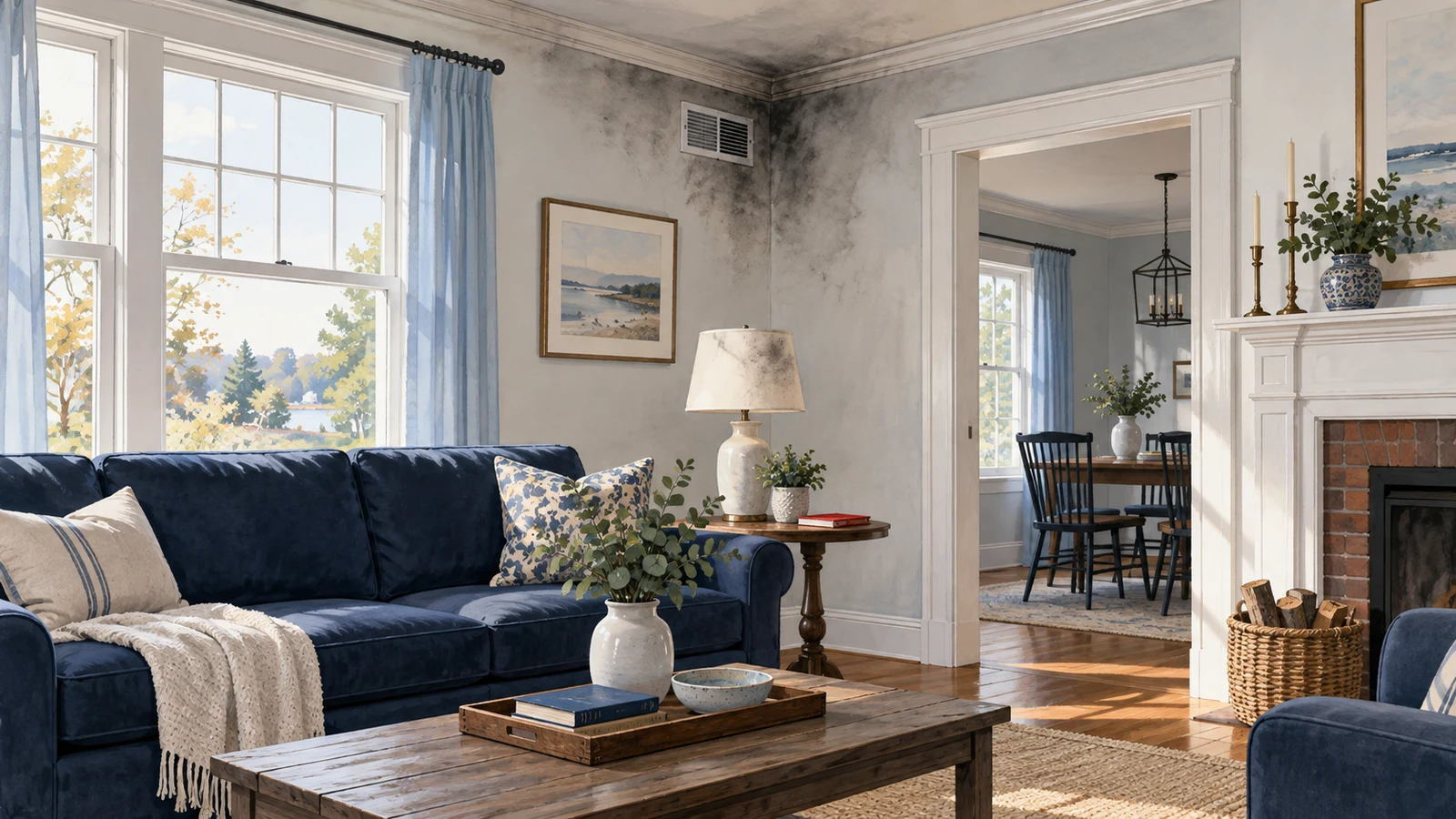
A room does not need visible charring to deserve attention after a fire. Smoke odors, deposits, and affected belongings may be reported elsewhere in the building. The important step is to document the observations and request an appropriate assessment rather than assuming that every dark mark is soot or every odor requires replacement.
The broader fire context is substantial. USFA estimates that 343,000 residential building fires occurred nationally in 2024. U.S. Fire Administration This is a national building-fire estimate, not a count of smoke claims or Northeast incidents. For a property with connected rooms or multiple floors, a systematic room survey helps prevent the investigation from stopping at the most obvious damage.
Start with clearance and a room map
Enter only when the relevant officials or professionals say it is safe. Fire-damaged electrical systems, weakened materials, and airborne hazards can remain after flames are extinguished.
Draw a simple floor plan or list rooms in walking order. Mark the fire's reported location separately from rooms where you observed odor or deposits. Do not treat a suspected pathway through a vent or wall cavity as proven without technical support.
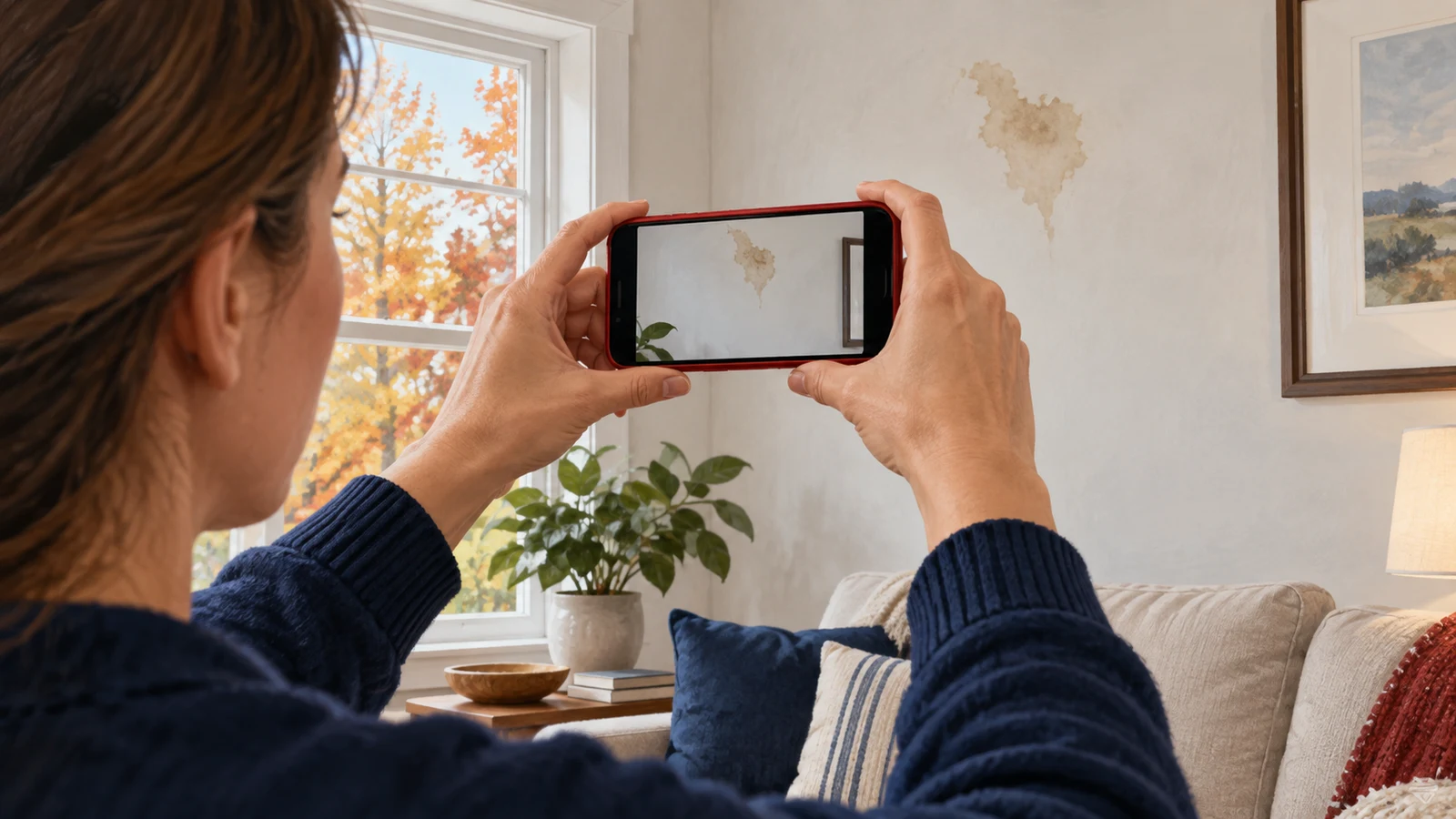
In each accessible room, take wide pictures and close details. Note whether doors were open or closed if you actually know. These facts may be useful to a restoration specialist; guesses can make the record harder to interpret.
Record symptoms without testing on your own
Describe what you see and smell in ordinary terms. “Dark deposit above the doorway” and “odor noticed in the upstairs closet” are useful observations. “Toxic soot throughout the house” is a technical conclusion that a homeowner's photograph cannot establish.
Avoid rubbing residue into a surface, operating affected electronics, or using a household cleaner as an informal test. Ask a qualified restoration professional how materials should be assessed and handled.
New York DFS advises documenting damage and maintaining a detailed inventory. For smoke concerns, pair that record with the professional's written findings so the proposed work has an explanation.
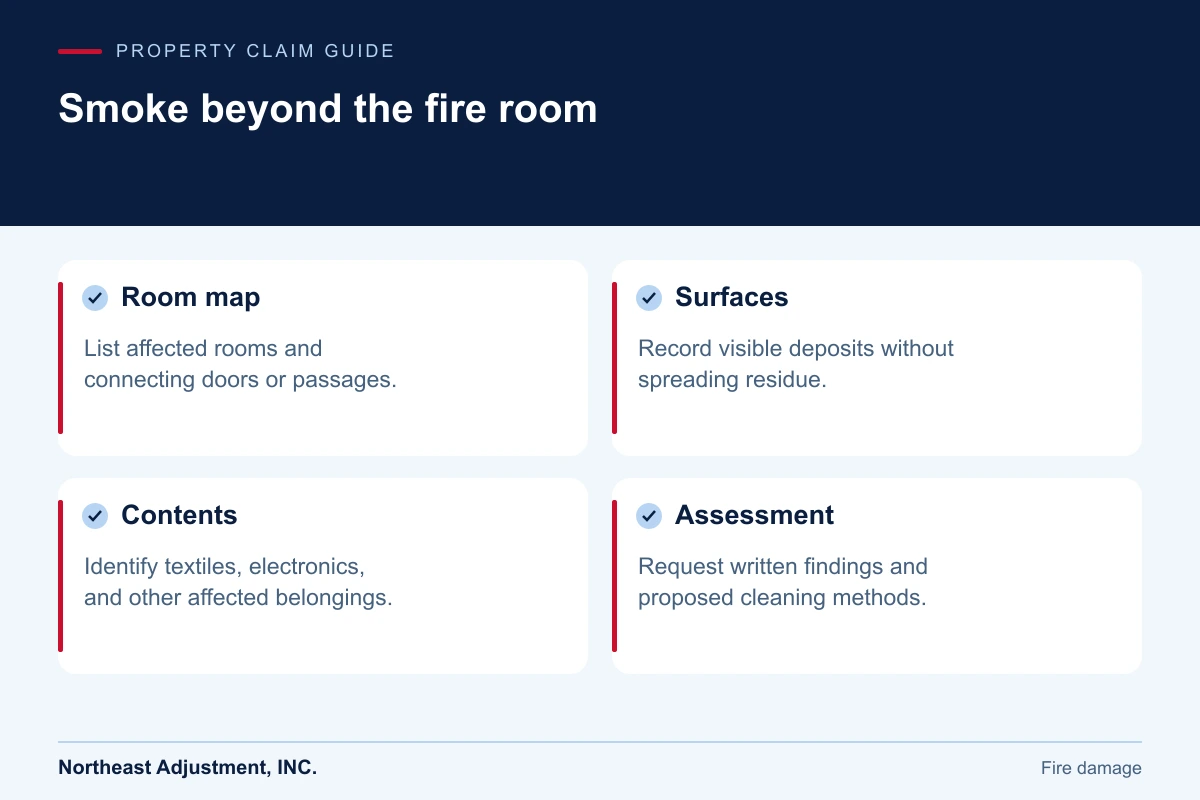
A room-by-room smoke checklist
- Identify walls, ceilings, trim, cabinets, and vents with visible deposits.
- List curtains, clothing, upholstered furniture, and other contents requiring assessment.
- Photograph electronics and model labels without powering on questionable equipment.
- Record the date and location of odor observations and any change after work.
- Ask the professional to distinguish cleaning recommendations, testing needs, and replacement proposals.
Request specific reasons for the recommended method. If cleaning is proposed, ask how results will be evaluated. If replacement is proposed, ask which material conditions support that conclusion. A generic line for “smoke cleaning” may be too vague to connect the cost to the rooms involved.
An illustrative attached-home situation
Imagine a kitchen fire in an attached Queens home. Firefighters contain the fire downstairs, but the owner notices deposits near the upstairs landing and an odor in a bedroom closet.
The owner lists those locations and requests a broader inspection after access is cleared. A restoration professional records the affected surfaces and explains the recommended work. The owner also documents which belongings were in each room, avoiding a single undifferentiated list of everything in the house.
This is an illustrative scenario. The cause, extent, policy terms, and evidence determine how each part of an actual claim is evaluated.
Keep the cleanup history
Save the original assessment, work authorization, room-specific invoices, and completion records. If odor remains, report its location and timing rather than simply saying the whole job failed. Follow-up findings can then be connected to the earlier scope.
Coordinate inspection opportunities before permanent finishes cover evidence. Necessary safety and protection work should continue as appropriate. Ask the insurer what documentation it needs for any additional areas discovered during cleanup.
Common questions
Does odor alone prove an item must be discarded?
No. It identifies an assessment question. Material, contamination, restoration options, and professional findings matter.
Should the heating or cooling system run?
Ask the appropriate fire, HVAC, or restoration professional before operating a system that may have been affected. Do not use it to test whether an odor spreads.
For better image records, see how to photograph property damage. For help presenting a documented fire loss, contact Northeast Adjustment.