


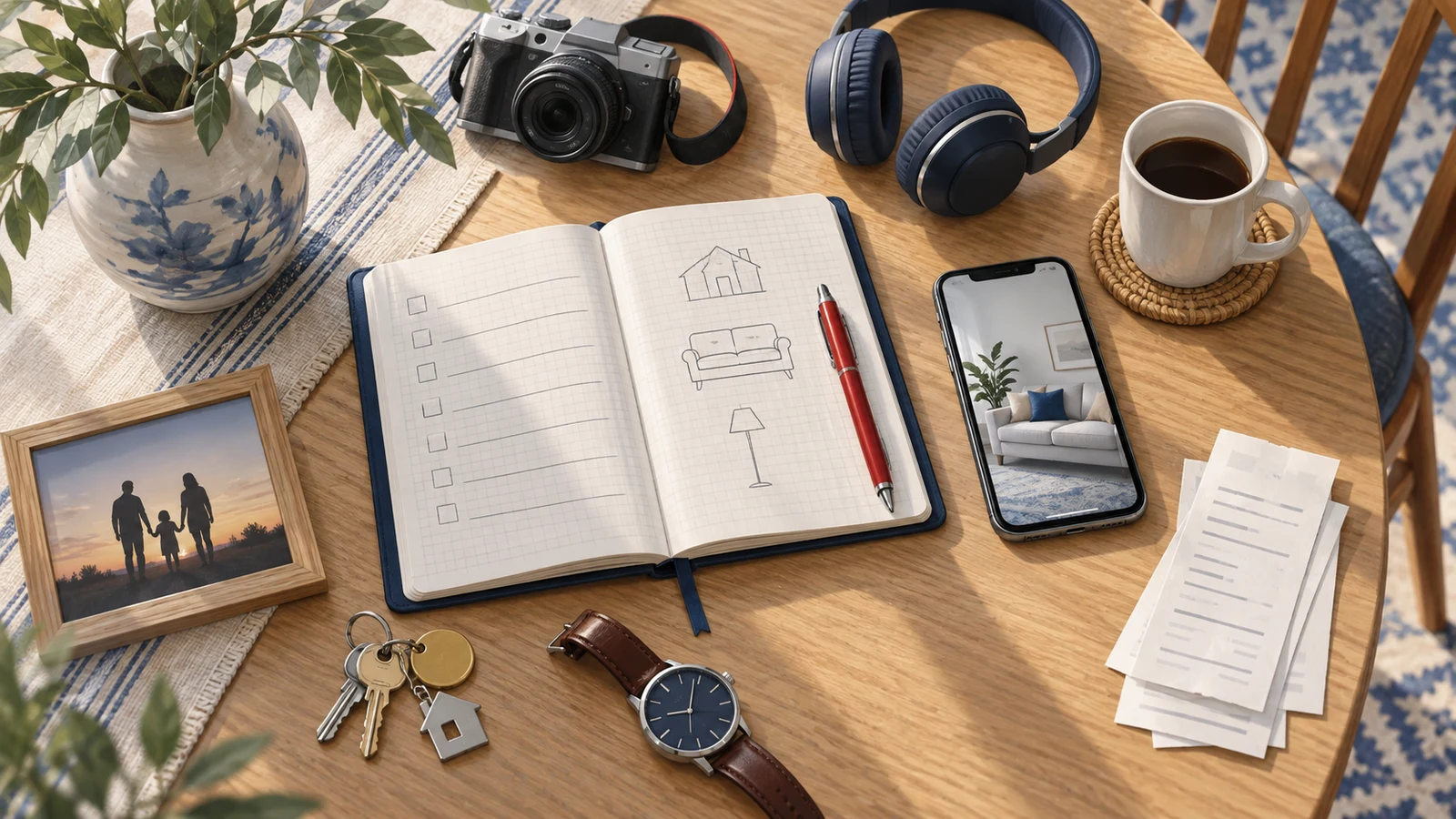
A home inventory is a record of what you own before you need to describe it from memory. It can be a spreadsheet, an app, or a folder of labeled photographs with a written list. The useful part is the detail: what an item is, where it belongs, and what evidence helps identify it.
Many households have not completed this task. In a 2023 Triple-I/Munich Re survey, 47% of homeowners said they had prepared an inventory of their possessions. Insurance Information Institute / Munich Re The finding comes from a United States consumer survey and describes self-reported preparation. You can start closing your own information gaps with a single room instead of waiting for time to document the entire house.
Choose a structure you will maintain
Create one section for each room, plus storage areas. Closets, basements, garages, and sheds often hold belongings that do not appear in everyday photographs. List items in the location where they are usually kept.
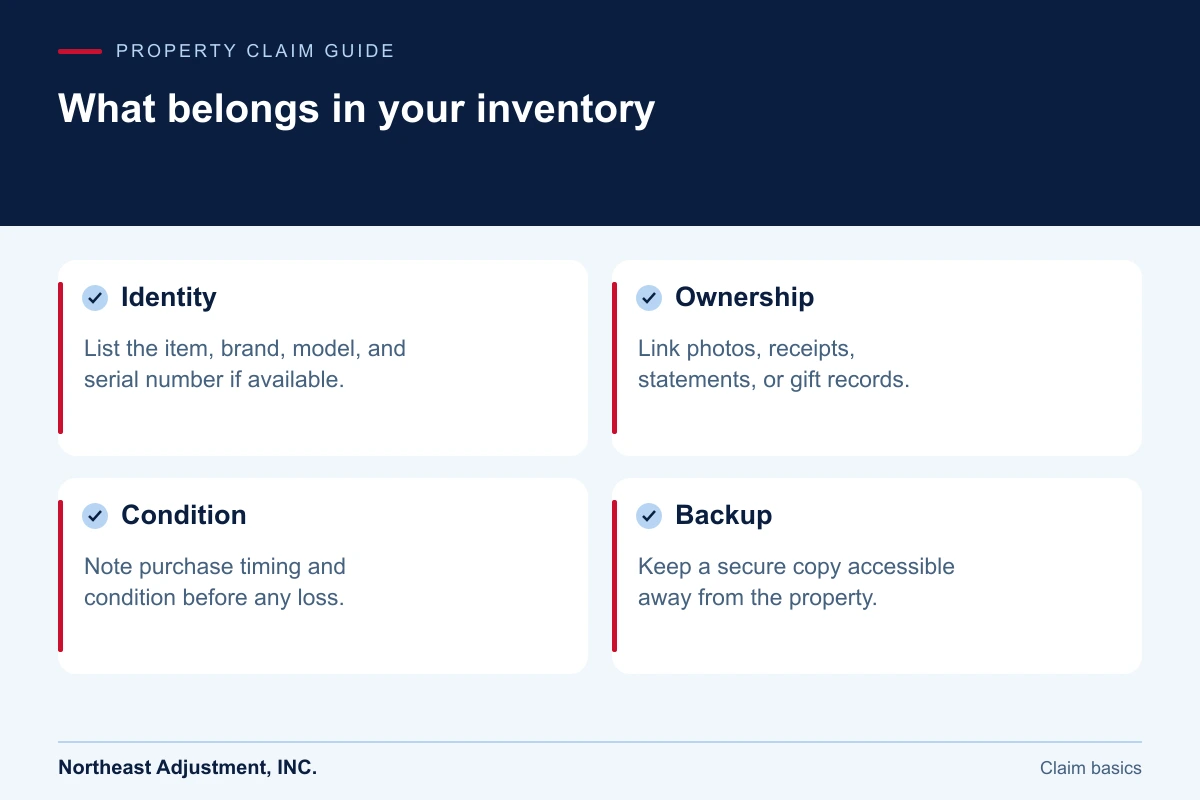
Give each item or sensible group an identifier. “Kitchen-014” can connect a toaster's photograph, model label, and purchase record. For ordinary grouped items such as towels, record a count and an honest description. For higher-value or distinctive property, preserve individual details.
Avoid assigning every item today's highest advertised price. An inventory records ownership and characteristics. The policy's valuation terms and supporting information will matter if there is a claim.
Capture the facts while they are available
For electronics and appliances, photograph model and serial labels. For furniture, note material, dimensions, brand if known, and whether it was custom made. For tools or collections, record distinguishing features rather than relying on a wide shelf photo.
The Pennsylvania Insurance Department's homeowners guidance encourages keeping an inventory and understanding the policy's coverage. Special categories can have limits or require separate arrangements, so use the exercise to ask questions about valuable items before a loss.
Your first-room checklist
- Take a wide photograph from more than one angle to show the room's contents.
- Open accessible drawers and closets for overview images without displaying private documents.
- List major items, quantities, purchase dates if known, and prior condition.
- Link available receipts, order confirmations, appraisals, or warranty registrations.
- Mark uncertain information as approximate and set a follow-up task where needed.
An old photograph can still be useful, but identify its date. If a sofa was replaced after that picture, update the record rather than letting two versions imply that you own both.
Make the inventory retrievable
Store a secure backup somewhere other than the device used to create it. Test access from another device. A careful list on a phone that is lost in the same event is difficult to use.
Protect sensitive information. Equipment identification can be useful, but full bank account details, identity documents, and passwords do not belong in a broadly shared inventory folder. Provide claim-related records through appropriate channels when requested.
Schedule updates around purchases, renovations, or an annual household review. Keep retired items marked as removed. This reduces accidental duplicate claims and makes the list more reliable.
An illustrative Northeast household
Imagine a Pennsylvania family uses a basement for seasonal storage and keeps hobby equipment in a detached garage. A living-room video would miss most of that property.
They create separate storage sections, photograph labeled bins, and record the equipment models. Later, if water affects the basement, they can identify what was stored there without assuming the garage items were also damaged. The inventory supports the facts; it does not make every water event or storage location covered.
Common questions
What if I do not have a receipt?
Record what you know and save other evidence, such as photographs, order history, or a gift record. Ask the insurer what support it needs rather than inventing an exact purchase price.
Should I include borrowed belongings?
Identify them clearly as owned by someone else and record the owner's contact information privately. Their treatment may involve different policy provisions.
Do I need professional appraisals for everything?
No. Ask your insurer about documentation and coverage arrangements for particular valuables. Ordinary household items generally call for practical identification records.
Our property damage photography guide explains a useful photo sequence. If you are reconstructing an inventory after a loss, contact Northeast Adjustment to discuss the claim documentation.