



The first day after property damage is usually a mix of urgent calls and incomplete information. You do not need to know the full repair cost or the final cause before taking useful action. Focus on safety, prompt reporting, and preserving a clear record while necessary protection work moves ahead.
Fire is one example of how suddenly a property can become inaccessible. USFA estimates that 343,000 residential building fires occurred nationally in 2024. U.S. Fire Administration This national estimate is not a prediction for a Northeast household. It is a reminder that a practical response plan should be usable when you cannot enter the building or reach your usual paperwork.
First, establish safe access
Call emergency services for an active fire, immediate danger, or other emergency. Follow officials' instructions about evacuation and return. Standing water, damaged wiring, unstable ceilings, broken glass, and compromised stairs can make an apparently quiet building unsafe.
Do not enter solely to photograph the loss. If access is restricted, record the restriction, who issued it, and when you learned of it. A photo taken from a safe location and a note explaining why interior documentation is unavailable are better than risking injury.
Ask emergency or utility professionals about affected systems. Do not operate wet electrical equipment or shut down building protection systems without appropriate direction.
Report what you know
Notify the insurer promptly using its official claim channel. Describe the observed event and damage. If the source is uncertain, say so. “Water appeared near the laundry wall” is more accurate than declaring a pipe burst before a plumber investigates.
Save the reporting confirmation, claim number, representative's name, and instructions. Ask about immediate inspections, emergency work documentation, temporary accommodation questions, and any forms required. New Jersey's insurance regulator advises keeping records of conversations, receipts, and photographs after a storm.
Do not wait for a complete inventory to make the first report. You can identify additional damage as it is discovered and provide updates with supporting information.
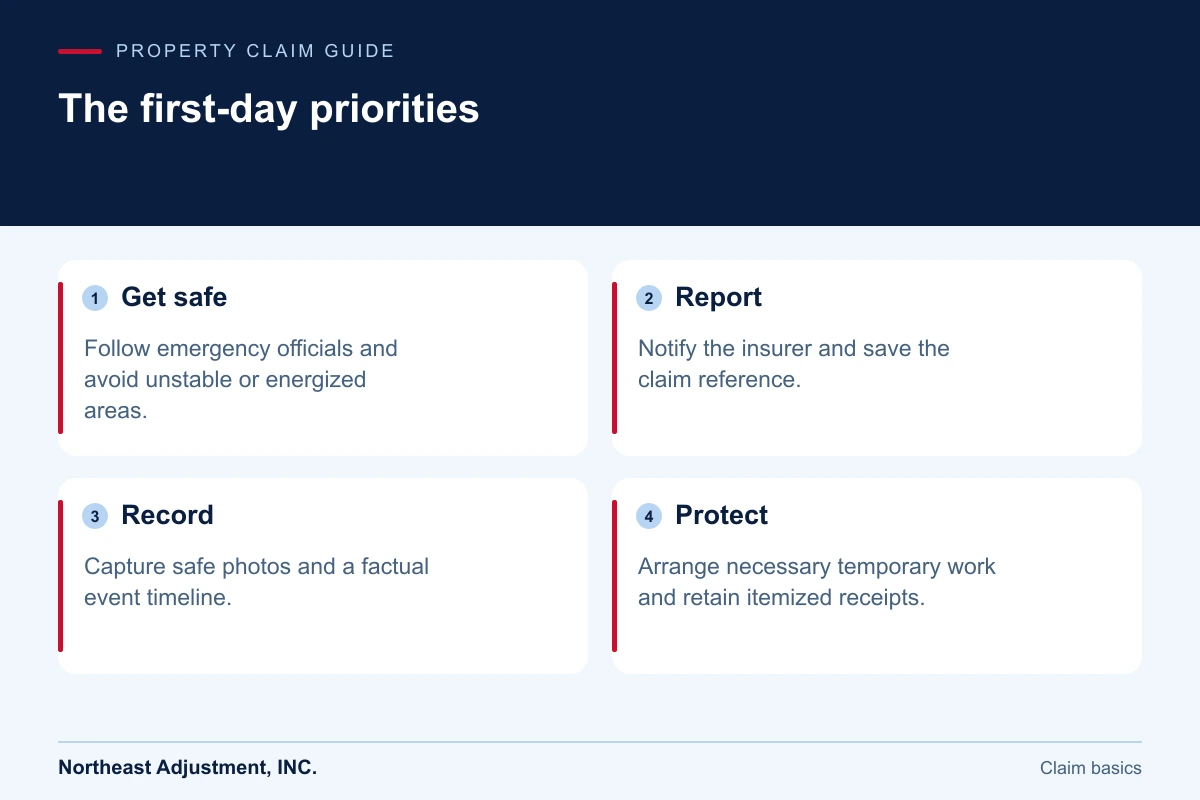
Build a short first-day record
Use a phone note or a paper page with these headings:
- Event: When damage was discovered and what you actually observed.
- Safety: Who assessed access, utilities, or immediate hazards.
- Contacts: Insurer, property manager, emergency contractor, and anyone given access.
- Evidence: Available photos, video, official reports, and damaged-item descriptions.
- Costs: Temporary work, transport, storage, or accommodation receipts.
Keep original image files. For each affected room, take a wide view and closer details if access is safe. Avoid filters that change color or hide damage. Record work as it progresses without obstructing responders.
Protect the property without losing the history
Arrange work necessary to address immediate safety and prevent additional damage. Examples may include professional board-up, temporary roof protection, or water extraction. The appropriate work depends on the hazard and the building.
Ask for an itemized invoice that states what was done, where, and why. Save before-and-after photos when available. Coordinate permanent repairs with the insurer's inspection and evidence needs; emergency protection should not be delayed solely to obtain ideal photographs.
Policy terms and the actual cause govern whether particular expenses are payable. An emergency invoice supports the record but is not itself a promise of reimbursement.
An illustrative New Jersey situation
Imagine a homeowner returns to find water in a basement after heavy rain. The lights are out and the source is unclear. The owner stays outside the affected area, requests appropriate help, reports the observed water to the insurer, and records the discovery time.
A professional later documents water entering near a window well. That finding is added to the file rather than replacing the original observation. The sequence helps everyone understand what was known at each stage, without assuming a coverage result.
Common questions
What if I cannot find my policy?
Use verified insurer or agent contact details to report the event and request the documents. Do not delay notice while searching through an unsafe building.
Must I keep everything physically?
Preserve evidence when safe and ask for disposal instructions. Health and safety take priority; use photos, item lists, and professional disposal records when keeping items is unsafe.
Our fall property checklist can help improve preparation. For support organizing a current loss, contact Northeast Adjustment.