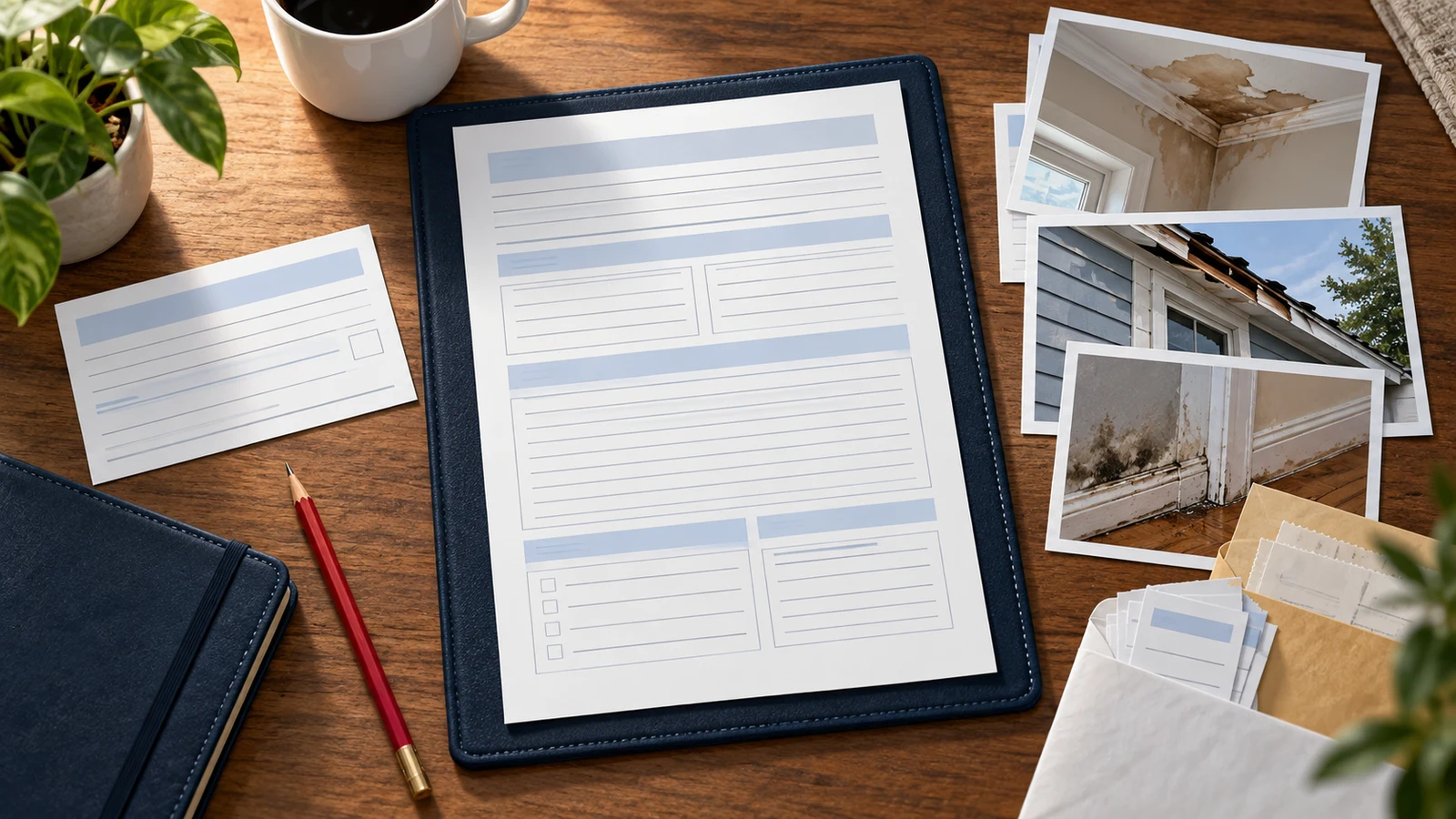


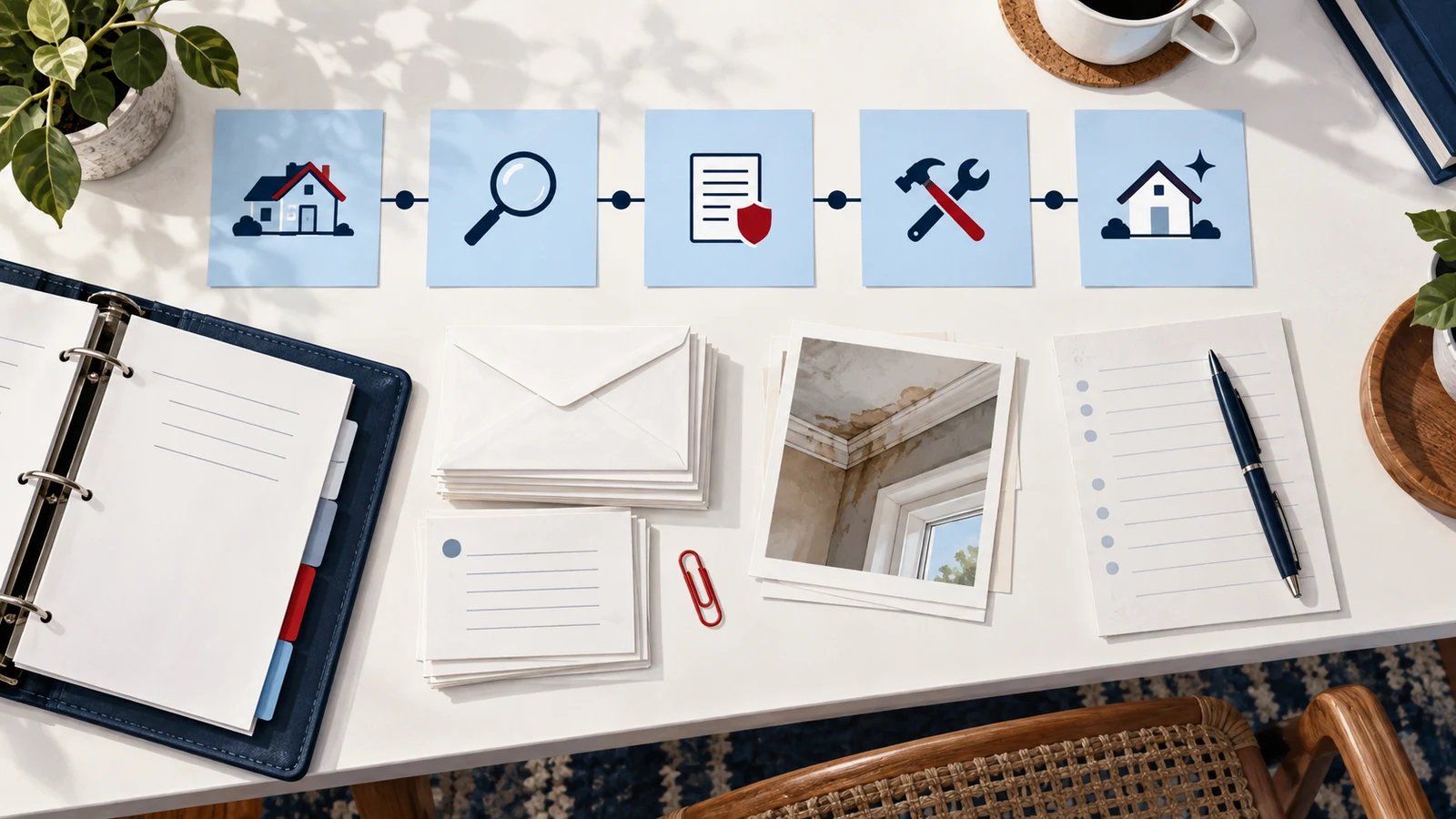
A claim file can grow quickly: a plumber's invoice, a contractor's text, an inspection date, several emails, and photographs with similar filenames. A simple timeline turns that pile into a record somebody else can understand.
Preparation is often incomplete before a loss. In a 2023 Triple-I/Munich Re survey, 47% of U.S. homeowners said they had prepared an inventory of their belongings. That national, self-reported figure concerns inventories rather than claim logs, but it highlights the practical task of rebuilding a clear record after damage. Triple-I survey
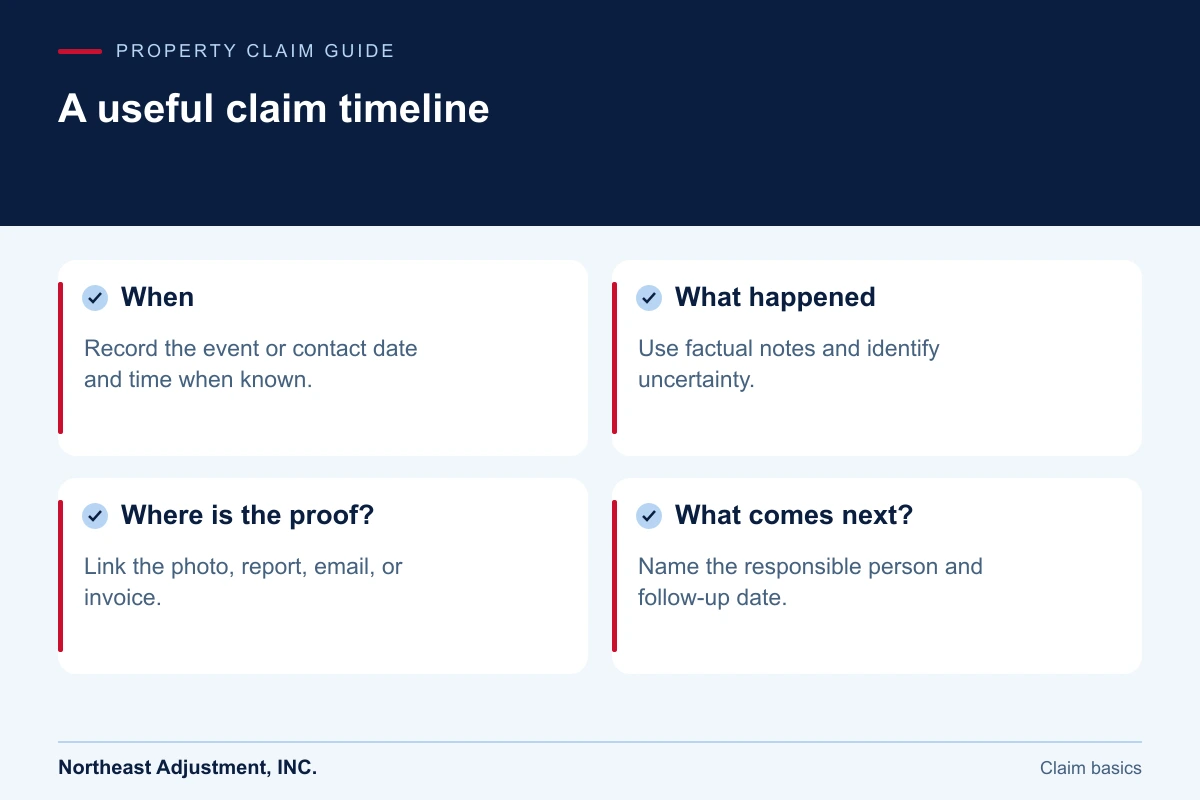
Use four columns that answer real questions
Choose a spreadsheet, document, or notebook you can maintain. Each entry should answer:
- When did this happen?
- What happened or was communicated?
- Where is the supporting record?
- Who has the next action?
A timeline entry might read: “November 4, morning: plumber inspected kitchen supply line; written findings requested; photos P014–P020; homeowner to follow up Friday.” This is an illustrative entry, not a record from an actual customer.
Keep the language factual. “Called insurer, no answer, voicemail left” is clearer than “insurer ignored me.” You can describe concerns separately without turning an interpretation into an event.
Distinguish discovery from cause and timing
Imagine an illustrative Pennsylvania homeowner returning from a weekend trip to find wet basement flooring. The date of discovery is known. The exact time the leak started may not be.
Record “discovered Sunday evening” and identify any later professional opinion about duration. Do not silently replace the discovery date with an estimate.
Apply the same discipline to repair completion. Equipment removal, completion of drying, rebuilding, final inspection, and return to normal use may occur on different days. Each can matter for a different part of the claim.
Let the timeline point to organized files
Use folders for the policy, photographs, reports, estimates, invoices, belongings, living expenses, and communications. Give files names that identify the date and subject.
For example, “2026-11-05-kitchen-plumber-report” is easier to locate than “scan-final-new.” Preserve original files and create clearly labeled copies if you add notes.
Keep versions of revised estimates. A new version should not erase the record of what was previously submitted. Note the change in the timeline and point to both versions when useful.
The Connecticut Insurance Department's winter-claim guidance recommends keeping a record of conversations and correspondence. Your timeline can serve as the index to that record without repeating every email in full.
End each conversation with an action
After a call or visit, note the person's name, role, topics discussed, documents requested, and next step. When an important point needs confirmation, send a short written follow-up.
A useful message identifies your understanding: which report is needed, who will provide it, and when you expect another update. Avoid describing a tentative comment as a firm approval.
Create reminders for actual deadlines and promised follow-ups. Label the difference. An estimated callback date is not necessarily a policy deadline, and a friendly conversation does not automatically extend a formal requirement.
Keep the log usable for other people
If several household members or business staff communicate about the claim, designate one person to maintain the main timeline. Ask others to forward their records.
Limit sensitive information to what is necessary. Keep policy details, banking records, and personal information securely. The timeline can reference a protected file rather than copying its contents into a widely shared document.
Review the open-action column regularly. Close an action only when it is actually completed, and record the result. If a question remains unresolved, keep it visible rather than burying it under the latest activity.
Common questions
Should I record every phone call?
A written log is useful. Audio recording raises consent and legal issues that vary; get appropriate advice before recording people.
What if I started late?
Reconstruct events from existing records and mark uncertain dates. Do not invent exact times.
Can the timeline replace invoices or reports?
No. It helps locate and explain the supporting evidence; it does not substitute for it.
Browse our claim-documentation articles for related guidance. Northeast Adjustment can discuss how to organize the chronology and open questions in your property claim.