


Fall preparation works best when it produces two results: a property that is ready for colder weather and a clear record of its condition. A quick walk around the house can reveal a disconnected downspout, a loose window seal, or a plumbing area that needs professional attention. Record what you see, including items that appear sound.
Heating deserves an early place on the list. About 82% of U.S. households using heating oil as their primary heating fuel in winter 2023–2024 were in the Northeast. U.S. Energy Information Administration That figure describes where the nation's oil-heated households were located; it does not mean that most Northeast households use oil. If your home has oil heat, keeping service records and arranging appropriate maintenance is particularly relevant as temperatures fall.
Start outside and stay on the ground
Walk the perimeter in daylight. Photograph each side of the building, accessible gutters, downspout outlets, window wells, and the ground near the foundation. Look for visible debris, loose components, and changes since your last inspection. A phone photograph cannot establish whether a roof is sound, but it can identify a question for a qualified roofer.
Have tree concerns evaluated by an appropriate professional. Do not climb a wet roof or stand beneath a damaged branch to obtain a better picture. If roof access is needed, ask the contractor for dated photographs and a written description of the work.
Keep maintenance and storm damage records separate. Cleaning a blocked gutter documents upkeep; it does not prove the cause of a later leak. That distinction is useful if a loss eventually requires investigation.
Check the systems you rely on
Locate the main water shutoff and make sure the people responsible for the home know whom to call if a leak occurs. Ask a plumber about pipes in unheated or drafty spaces. For buildings with fire sprinklers, have the appropriate professional address winter protection without compromising the fire system.
Arrange heating service according to the equipment's needs and the manufacturer's instructions. Keep the invoice, findings, and any recommended follow-up. A receipt saying “service visit” is less helpful than a report identifying the unit and the actual work completed.
The Pennsylvania Insurance Department's winter preparation guidance discusses home maintenance and cold-weather preparation. Insurance terms still vary; completing a checklist does not establish coverage for a future event.
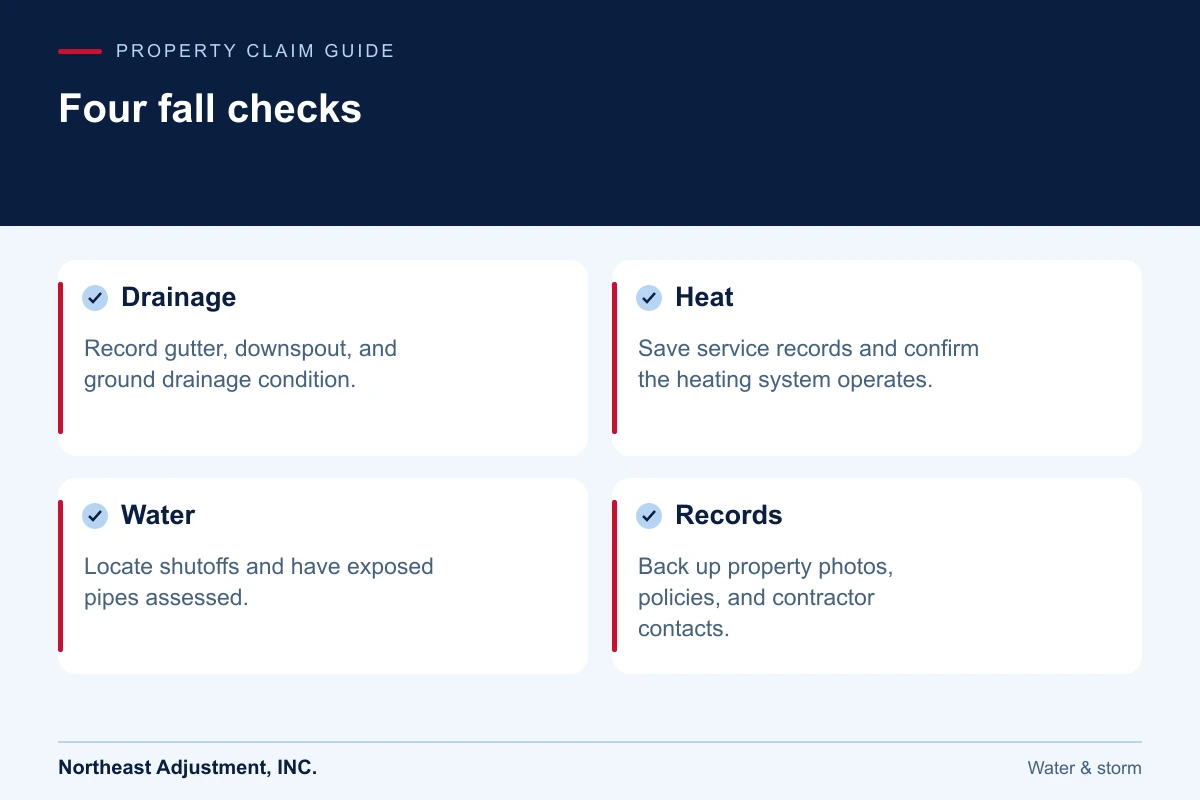
A checklist you can finish in stages
- Exterior: Save wide photos, note roof or siding concerns, and arrange safe professional inspection where needed.
- Drainage: Record gutter cleaning, downspout condition, and any recurring pooling near the building.
- Interior: Photograph plumbing connections, accessible basement walls, and the area around heating equipment.
- Contacts: Confirm insurer reporting details, emergency trades, and a backup person who can access the property.
- Follow-up: Give each unresolved item an owner and a target date. Save the completion record alongside the original observation.
Store a copy outside the house or in a secure account you can access from another device. Include policy documents, equipment serial numbers, and recent renovation invoices.
An illustrative Northeast example
Imagine a Connecticut owner preparing an oil-heated house with a basement laundry area. The walkthrough reveals a downspout that empties beside a window well and an exposed pipe near a drafty opening. The owner photographs both, asks separate contractors to assess them, and saves their findings.
If water appears in the basement later, those records help distinguish what was observed and repaired from what developed afterward. They do not automatically identify the water source or decide the claim. Their value is a more accurate history.
Common questions
Should I file a claim for every maintenance concern?
Maintenance findings and insured losses are different. If actual damage occurs, report it promptly and ask the insurer how the policy applies. Do not describe a suspected cause as confirmed.
Is a video enough?
A video helps show layout. Add still photographs of equipment labels and specific conditions, plus written dates and service reports. This makes individual details easier to find.
Begin with the items that protect the building and the records you would struggle to recreate. For more preparation topics, visit our blog. If you are dealing with property damage and need help organizing the claim, contact Northeast Adjustment.