


An insurance adjuster's inspection is an opportunity to show the damage, explain the event, and identify questions that need follow-up. You do not need a finished repair plan before the visit. You do need safe access, accurate observations, and records that are easy to locate.
Contents documentation is often one of those records. In a 2023 Triple-I/Munich Re survey, 47% of homeowners said they had prepared an inventory of their possessions. Insurance Information Institute / Munich Re This United States survey concerns self-reported preparation. If you lack a complete inventory, bring the photographs and item information available and explain what you are still compiling.
Confirm the visit's purpose and access needs
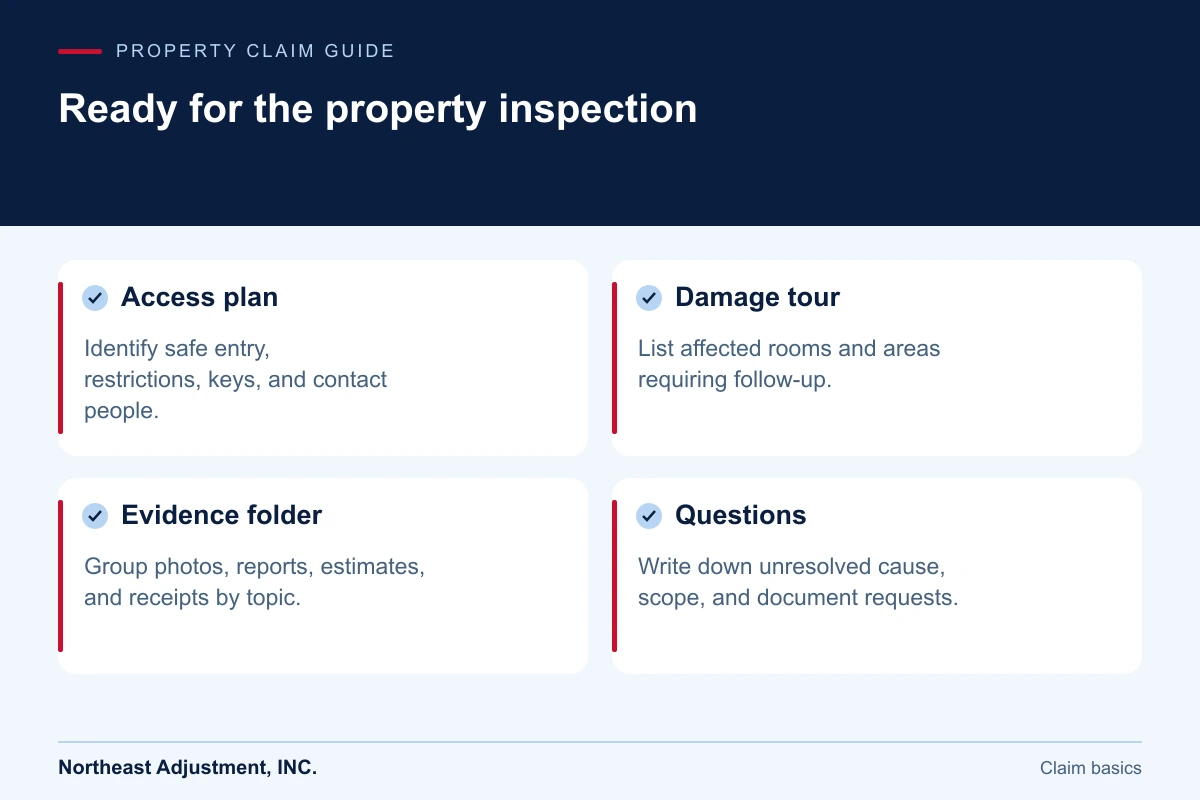
Ask who is attending, which areas they expect to inspect, and whether any specialist is involved. Confirm the appointment and the best contact number through the insurer's established channel.
Identify restricted or unsafe areas in advance. Do not reopen a damaged ceiling, remove protection, or enter a hazardous space simply to make the inspection easier. Coordinate any special access with the appropriate professional.
For a multifamily property, confirm keys, tenant communication, and management arrangements. The adjuster may need information from more than one unit, but access should be organized through the proper contacts.
Prepare a short damage tour
Make a room list in a logical walking order. For each room, note visible damage, affected belongings, emergency work performed, and unresolved questions.
Include areas where damage is suspected but not confirmed. Label them accordingly. A list that says “professional assessment requested” is more accurate than presenting an unverified condition as fact.
The Connecticut Insurance Department's claims guide discusses preparation for the adjuster's damage assessment. Your goal is to provide useful evidence, not to stage the property or rehearse a preferred explanation.
Bring a focused evidence folder
- The policy, claim number, and relevant insurer correspondence.
- A short event timeline and room map.
- Original damage photographs and a simple image index.
- Professional cause or safety reports.
- Emergency-work invoices and available repair estimates.
- A preliminary contents list with uncertain details marked.
Do not hand over your only copy. Keep a record of documents shared, including those uploaded before the visit. If a report has not arrived, identify who is preparing it and when you expect it.
During the inspection, separate facts from questions
Explain what you personally observed and what a professional told you. Identify the source of each technical conclusion. If you do not know when a leak started, say that rather than filling the gap.
Ask how additional damage should be reported, which documents remain needed, and what the next step will be. Take notes so you can distinguish a request from a final determination.
The adjuster's visit does not necessarily settle every coverage or pricing issue. Some questions require policy review, testing, or a later inspection.
A hypothetical multi-floor visit
Imagine a Connecticut homeowner has water damage in an upstairs bathroom and the room below. The owner prepares a floor plan, the plumber's report, and photos taken before emergency drying.
During the visit, the owner explains that one ceiling area has not been opened and asks how follow-up findings should be submitted. The adjuster can see the known damage and the unresolved area without treating the first walkthrough as a complete view of concealed conditions.
This example is illustrative. The inspection findings and policy govern the actual claim's next steps.
Follow up with a concise written recap
After the visit, note the areas inspected, documents provided, requests made, and open questions. Send a factual recap through the appropriate channel and invite correction if you misunderstood something.
Keep the recap with the inspection date. Follow up on promised reports or requested records without assuming silence means agreement.
Common questions
Should my contractor attend?
Ask whether their presence would help explain the repair scope or access. Coordinate in advance so the visit has a clear purpose.
Should I clean everything first?
Perform necessary safe mitigation and retain its records. Do not make cosmetic changes simply to prepare for the visit or discard useful evidence without appropriate guidance.
Can I add information later?
Ask how to submit updates and what deadlines apply. Send newly discovered damage and supporting reports promptly.
See photographing property damage for image preparation. Contact Northeast Adjustment for help organizing the inspection record.