


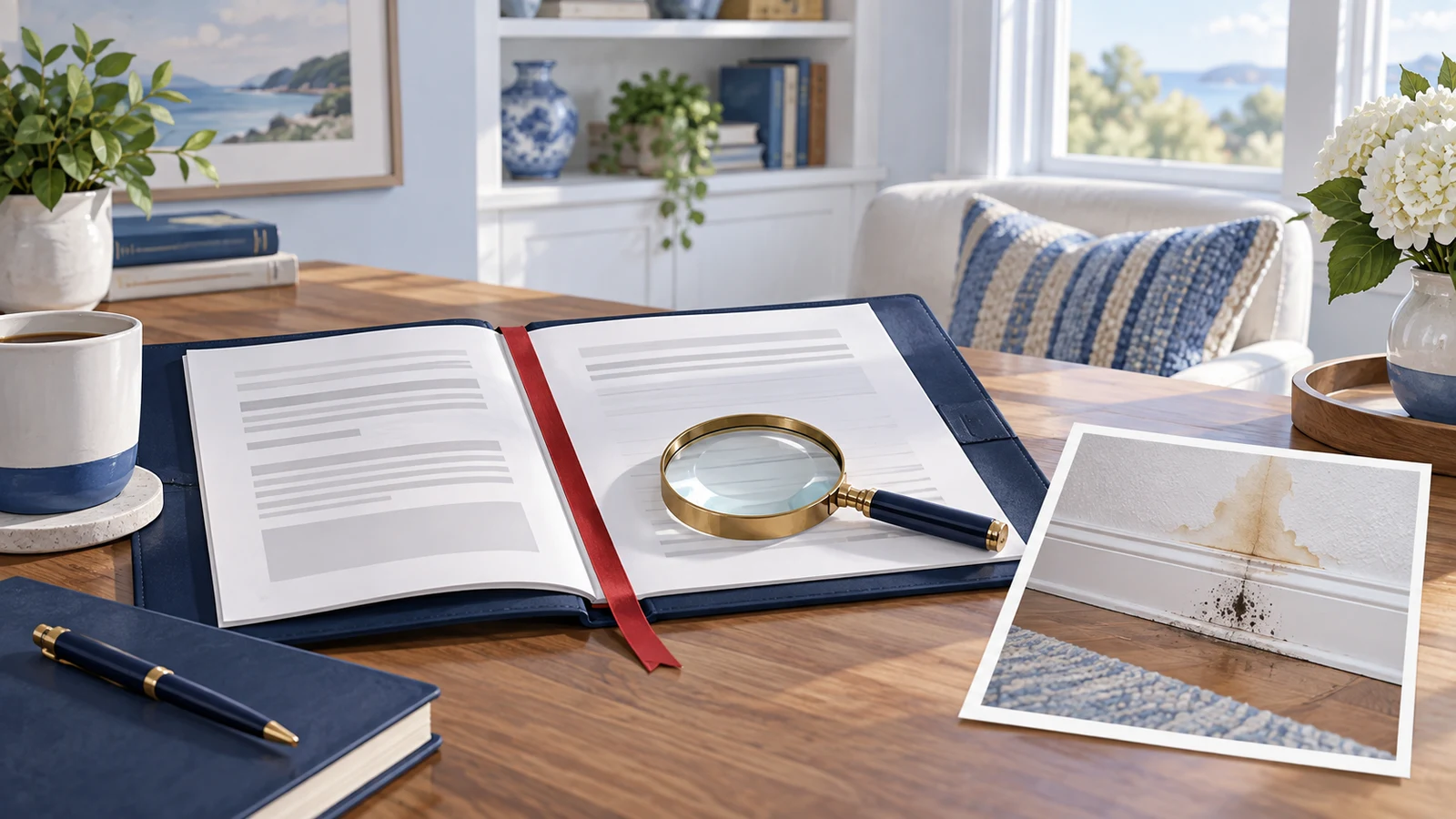
Finding suspected mold after a leak can make a water-damage claim more complicated, but the first conversation should be specific. What caused the moisture? What conditions were found? What work is recommended? Which parts of that work does the policy address?
The financial context can be substantial even before mold-related questions arise. State Farm's national freeze-related water-damage claims averaged more than $30,000 in payments from 2024 through June 2025. Those are one insurer's figures for a broader category of freezing losses, not mold-claim averages or a prediction of coverage. State Farm report
Separate three questions
The physical condition: A qualified assessment can identify affected materials, moisture conditions, and the proposed response.
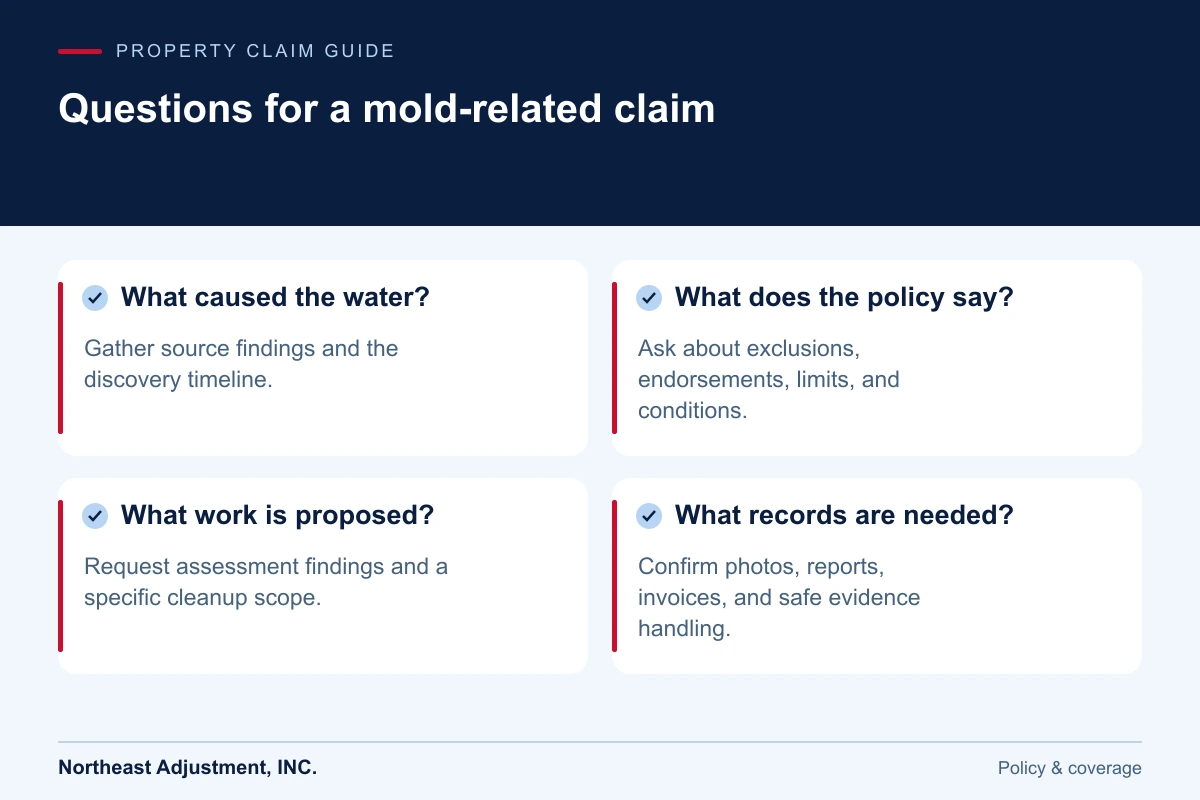
The cause and timing: Repair findings, photographs, and your discovery record help explain how water entered and what was noticed.
The insurance terms: The policy determines how a covered cause, exclusions, endorsements, limits, and conditions apply. An assessment alone does not answer this part.
Keeping these questions distinct prevents an unhelpful shortcut: assuming that the word “mold” either guarantees coverage or rules out the entire water-damage claim.
Document what you actually know
Consider an illustrative New Jersey home where a pipe leaks behind a basement cabinet. The homeowner notices staining after a weekend away, and a contractor later finds additional affected material. The discovery date, the estimated duration of leakage, and the date of the contractor's observation are different pieces of information.
Record them separately. Do not turn uncertainty into an exact failure date. Save the source-repair report, early photos, maintenance records, and communications about access or cleanup.
If the contractor offers an opinion about duration, ask for its basis and whether the conclusion is tentative. Distinguish professional findings from your own observations in anything you submit.
Ask these policy questions in writing
A focused request can include:
- Which policy provisions address the initial water damage?
- Is there a mold, fungi, or similar exclusion or endorsement?
- Does a separate limit apply to particular work or testing?
- What facts are still needed to evaluate the claim?
- Which proposed charges are accepted, questioned, or excluded?
- What evidence should be retained before materials are removed?
Ask for the applicable language and an explanation tied to the facts. A general statement that “mold is excluded” may not tell you how the insurer is treating associated building damage or a particular endorsement. Equally, the existence of an endorsement does not mean every expense qualifies.
Protect the property while preserving useful evidence
The EPA's mold and moisture guide emphasizes controlling moisture and drying affected areas promptly. Its 24–48-hour guidance is a prevention target, not a guarantee about when growth begins or an insurance deadline.
Ask qualified professionals about safe access, containment, removal, and cleaning for your circumstances. Avoid disturbing suspected contamination merely to get a photograph. Do not attempt to identify a health risk from color alone.
Document work when it is safe: photographs of the area, material descriptions, assessment findings, and reasons for removal. Keep the cleanup scope and invoices. Safety needs and necessary mitigation should not be delayed while you assemble a perfect claim package.
Keep the scope understandable
A proposal should identify rooms, materials, quantities, and the reason for each operation. Ask which charges relate to source repair, drying, assessment, cleanup, reconstruction, or belongings. This makes the insurer's response easier to compare with the actual work.
If additional conditions appear during removal, document the finding and notify the insurer promptly. Ask how a revised scope should be submitted. Avoid adding unrelated maintenance work without identifying it separately.
Questions homeowners often raise
Does mold automatically make the home uninhabitable?
Do not make that conclusion yourself. Obtain appropriate professional guidance and ask the insurer what documentation it needs for any displacement claim.
Can I discard affected belongings?
Address unsafe items appropriately, but ask how to record and preserve evidence when feasible. Photos and a detailed inventory are useful.
What if the insurer denies the mold-related portion?
Request the written basis and review whether other portions remain under consideration. State insurance regulators can provide consumer assistance.
Explore our water-damage articles for related documentation advice. Contact Northeast Adjustment to discuss the records and policy questions arising from your loss.