



A damaged rental unit can leave a landlord managing repairs while expected rent changes or stops. Keep the property-damage record and rental-income record connected, but do not treat them as the same calculation.
Northeast winter conditions create a practical setting for this problem. NOAA identified 21 billion-dollar winter-storm events affecting New York during 1980–2024. The threshold uses each event's U.S. losses, not New York losses alone, and does not determine insurance coverage. It illustrates the history of events that can disrupt occupied properties. NOAA New York summary
Confirm the coverage before calculating a claim
Ask whether the policy includes loss of rents, rental value, business income, or another relevant provision. Request the limits, conditions, period rules, and required records.
The Connecticut Insurance Department's glossary describes rent insurance as protection for income interrupted by an insured peril. Your actual policy determines the scope; ordinary vacancy or unrelated nonpayment is not automatically the same as a covered rental interruption.
Also confirm that the property's actual rental use was accurately described to the insurer. Long-term tenancy, short-term rentals, and owner occupancy can involve different arrangements.
Establish the rental baseline
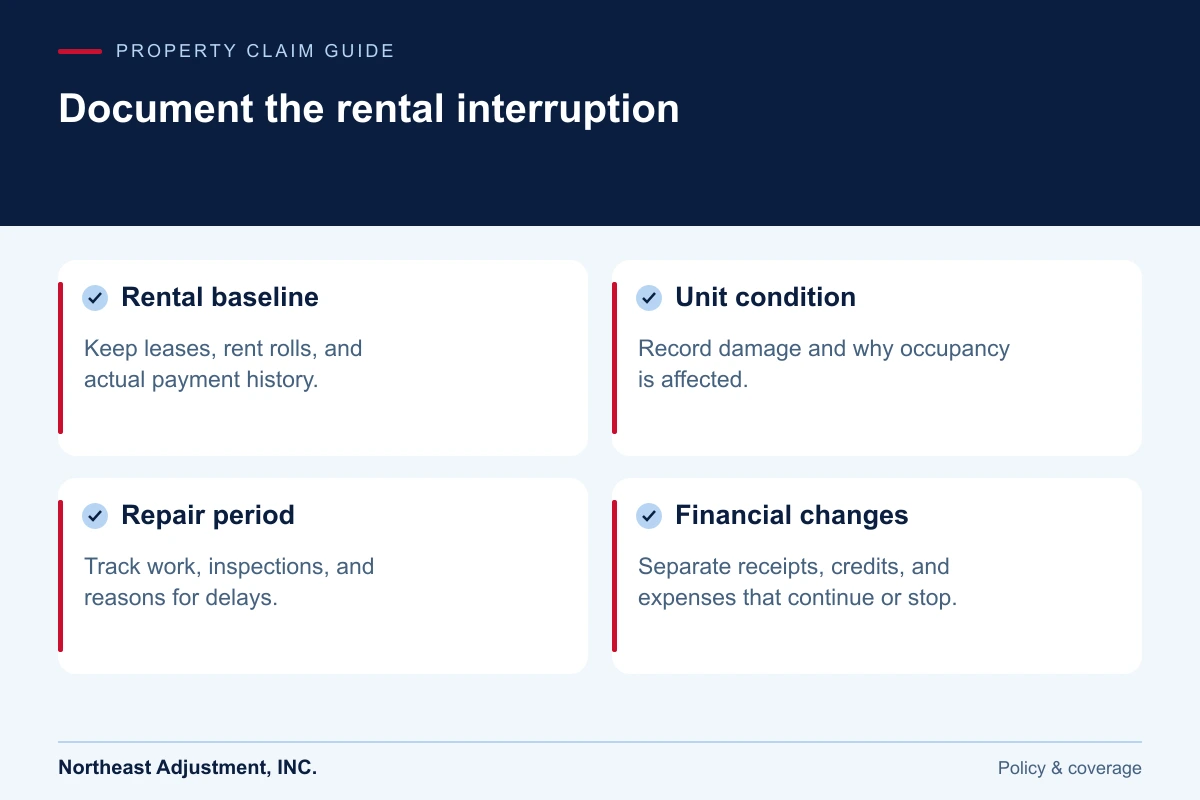
Gather the signed lease, amendments, rent roll, payment history, and records of concessions or credits. Show what rent was actually due and collected before the damage.
For a multiunit property, organize records by unit. Avoid multiplying one apartment's rent by the number of units if only part of the building was affected.
Consider an illustrative New York two-family property where water damage makes one unit unavailable while the other remains occupied. The claim file should show the affected unit's condition and rental history separately from the unaffected tenancy.
If there was no current tenant, provide the actual circumstances and ask what evidence is relevant. Do not create a lease or assume an advertised asking rent equals recoverable income.
Explain why and when use changed
Photograph the damage and retain professional findings about affected utilities, access, and necessary work. Record notices or orders from relevant authorities where they exist.
Keep communications with the tenant, but separate insurance questions from landlord-tenant legal obligations. Rent abatements, lease termination, access rights, and relocation duties may require legal advice. Do not use an insurance article as authority for withholding services or demanding rent.
The timeline should identify discovery, inspections, cleanup, repair milestones, and when the unit could be used again. Record delays accurately and preserve supporting messages.
Track the money that actually changed
Maintain a ledger showing expected rent, payments received, credits issued, deposits handled, and expenses that continued or stopped. Ask the insurer or claim professional which figures the policy uses.
A simple illustrative scenario might involve $2,000 monthly rent and a period of unavailability. That starting figure alone does not establish the insured loss. The relevant period, policy calculation, actual collections, saved expenses, and limits still need consideration.
Keep security deposits distinct from ordinary rental income. Do not count the same amount twice or treat a refundable payment as a final expense. Ask an accountant about financial-record presentation and tax treatment rather than assuming insurance and tax calculations match.
Keep the repair file current
A lost-income claim can depend on explaining the reasonable repair period. Keep contractor schedules, material orders, inspection requests, and reasons for changes.
If you add elective renovations, identify them separately from damage repairs. Additional work may affect timing without necessarily extending an insured interruption.
When the unit becomes available, record the condition and date with appropriate documentation. If the insurer uses a different end date, ask for its reasoning and identify the evidence relevant to that difference.
Questions landlords ask
Does building-repair coverage automatically include lost rent?
No. Confirm the relevant coverage and conditions in the policy.
Can I include a tenant's damaged belongings?
Ownership and coverage matter. Keep tenant property separate and avoid assuming your building policy covers it.
What if the tenant leaves permanently?
Document the facts and seek advice about the lease and policy. Continuing vacancy is not automatically covered indefinitely.
Our rental and property-claim resources provide related guidance. Contact Northeast Adjustment to discuss the records needed to explain damage and rental interruption at your property.