

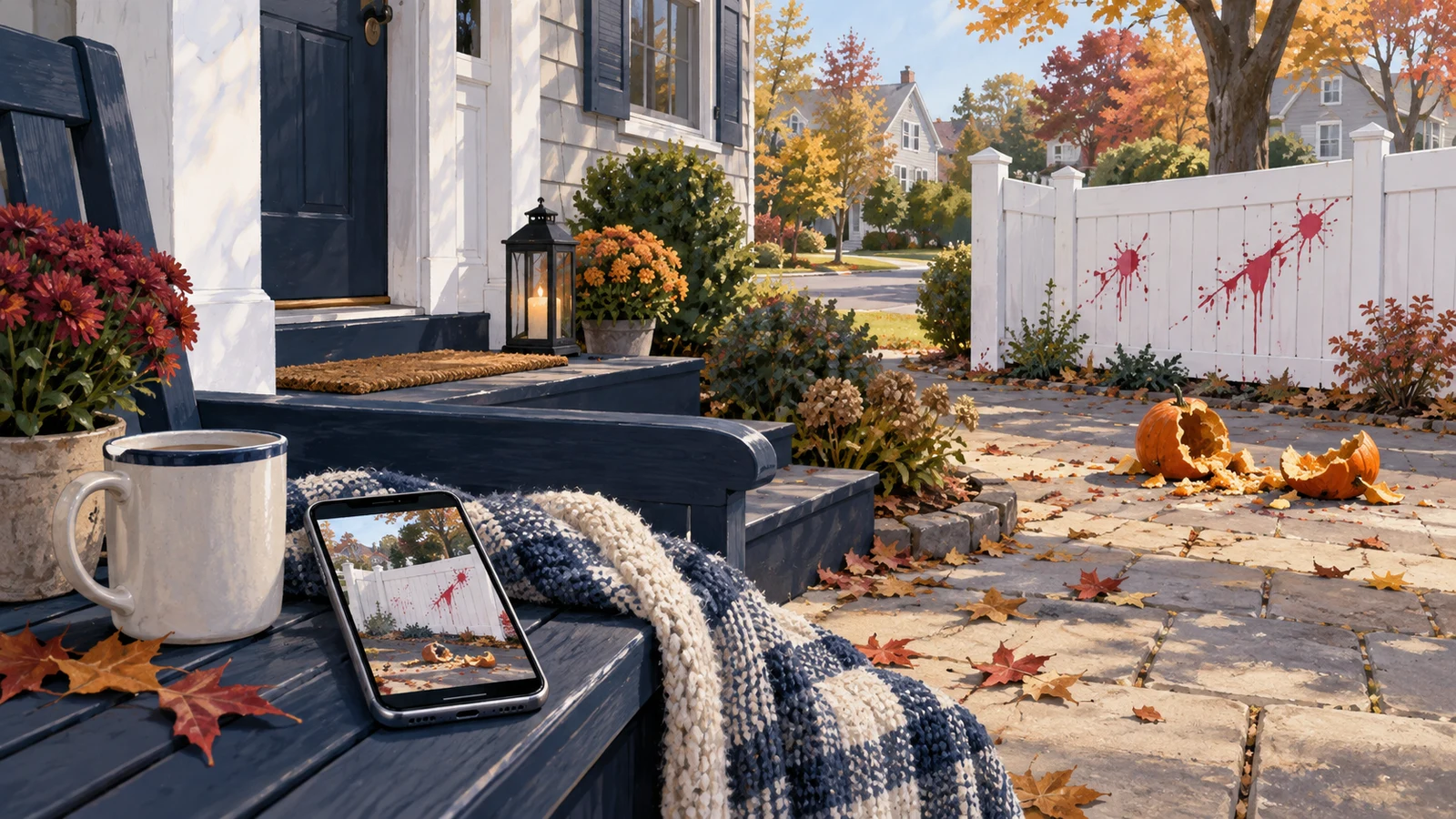
Halloween damage can range from a broken window to paint on siding or damage to outdoor belongings. Whatever the date, a useful claim record should describe the actual incident and affected property without assuming that every cleanup expense is covered.
Pre-loss records can help identify damaged or missing items. In a 2023 Triple-I/Munich Re survey, 47% of homeowners said they had prepared an inventory of their possessions. Insurance Information Institute / Munich Re This United States survey measures self-reported inventory preparation, not Halloween incidents. Current property photographs can provide a useful comparison when an owner later needs to explain what changed.
Address hazards and report the incident
Contact emergency services if there is immediate danger. Keep people away from broken glass, exposed wiring, unstable decorations, or other hazards. Follow police instructions where an investigation is involved.
Report the event to the appropriate authorities and insurer promptly. Save the report reference, discovery time, and claim confirmation. Describe what you observed rather than naming a suspect without evidence.
If you did not witness the incident, distinguish when the property was last known to be undamaged from when you discovered the damage. A broad time window is more accurate than an invented exact time.
Photograph the scene before it changes
Take safe wide views showing the affected building face or area. Then record close details of broken components, markings, stains, or damaged belongings. Include recognizable features so the location is clear.
Save original security footage and note the device's time settings. If the recording clock was wrong, explain the discrepancy rather than silently changing the evidence. Preserve originals before routine retention settings overwrite them.
Connecticut's property-damage guidance recommends safe photographs, prompt reporting, temporary protection, and repair records. These recordkeeping principles also help organize a vandalism loss.
A before-cleanup checklist
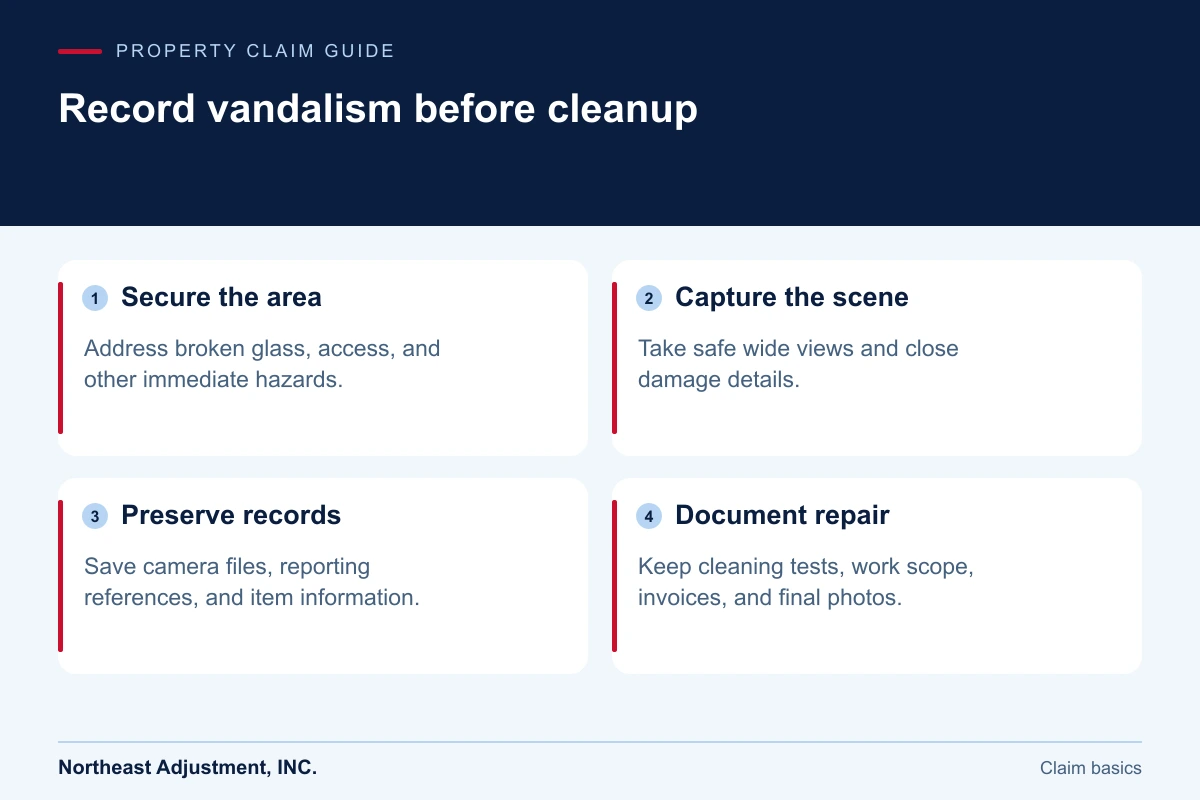
- Scene photographs and a short factual timeline.
- Close views identifying affected surfaces and materials.
- Camera files, police references, and witness contact information where available.
- An item list distinguishing damaged property from missing property.
- Professional cleaning or repair recommendations.
- Temporary securing, cleanup, and restoration invoices.
Do not delay necessary safety work for perfect photographs. If a broken opening needs immediate protection, document what is practical and ask the contractor for additional pictures.
Avoid turning cleanup into more damage
Paint, adhesives, and other substances can affect materials differently. Ask an appropriate professional about cleaning methods before aggressive scrubbing, scraping, or applying chemicals.
Where a cleaning test is performed, record the location, method, and result. A failed test may help explain a replacement recommendation, while successful cleaning may support a narrower scope. Neither outcome should be assumed before the surface is assessed.
Keep ordinary seasonal decoration removal separate from work needed because of the reported incident. The estimate should explain the loss-related task clearly.
A hypothetical attached-home entrance
Suppose a Queens homeowner finds paint on the front door and a broken light fixture after Halloween. The owner secures the area, saves camera footage, and takes wide and close photographs from a safe position.
A qualified professional assesses the door finish and documents a cleaning test. An electrician evaluates the damaged fixture where needed. Their records separate surface restoration from electrical work.
The homeowner also saves an older photograph showing the entrance before the event. This supports the comparison without establishing that every proposed repair or replacement is covered.
Check the policy and repair scope
Ask the insurer which provisions apply to the reported vandalism and any missing items. Deductibles, special property limits, vacancy conditions, and other terms may affect the evaluation.
If the repair estimate includes replacing more than the visibly affected component, request the supporting reason. Keep the technical explanation separate from any optional redesign or seasonal upgrade.
Common questions
Should I clean immediately?
Address health, safety, and damage-prevention needs promptly. Document first when safe and seek appropriate advice about methods that could harm the surface.
Does a police report guarantee payment?
No. It supports the incident record, while the policy and evidence determine the claim.
What if property was stolen as well?
Create a separate missing-item list and gather ownership evidence.
Our burglary documentation guide explains that process. Contact Northeast Adjustment for help organizing vandalism-related property records.