

After a burglary, an insurer may ask you to identify what was taken and support that you owned it. Original receipts help, but many households no longer have them for every item. The task is to assemble the best accurate evidence available and explain any gaps.
In a 2023 Triple-I/Munich Re survey, 47% of homeowners said they had prepared an inventory of their possessions. Insurance Information Institute / Munich Re The United States survey reflects what homeowners said about inventory preparation. It is not a burglary rate or a measure of successful claims. It helps explain why many people need to reconstruct an ownership record after a loss.
Begin with reporting and a factual list
If there is immediate danger or a possibility that an intruder remains, contact emergency services and stay out. Follow police instructions about the scene. Report the burglary to the appropriate authorities and notify the insurer promptly.
Save the police report reference and any information about obtaining the report. An early list may be incomplete; keep versions and promptly report corrections as you verify what is missing.
Do not include an item simply because it cannot be found during an initial search. Mark it as unconfirmed until you have checked safely and reasonably.
Search records that identify the item
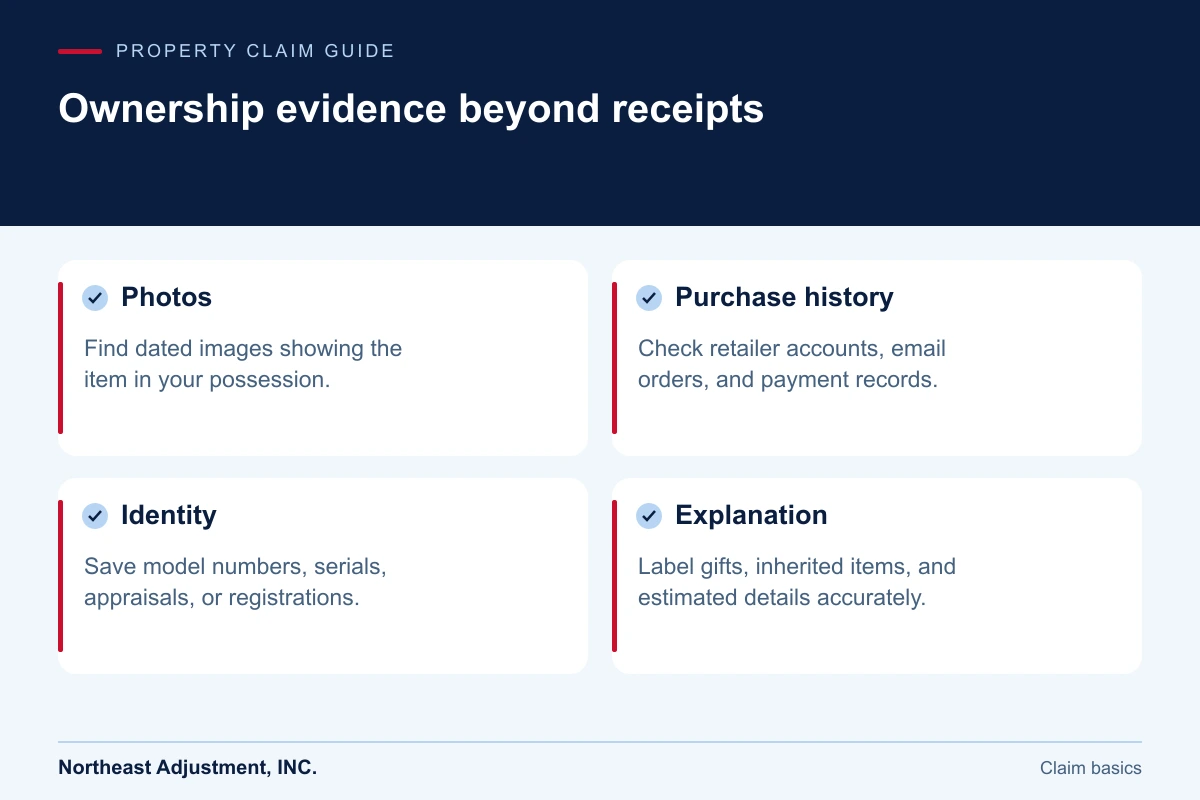
Look through retailer accounts, email order confirmations, warranty registrations, and repair records. A serial number stored with a service appointment can help identify an electronic device. An appraisal may describe a distinctive piece.
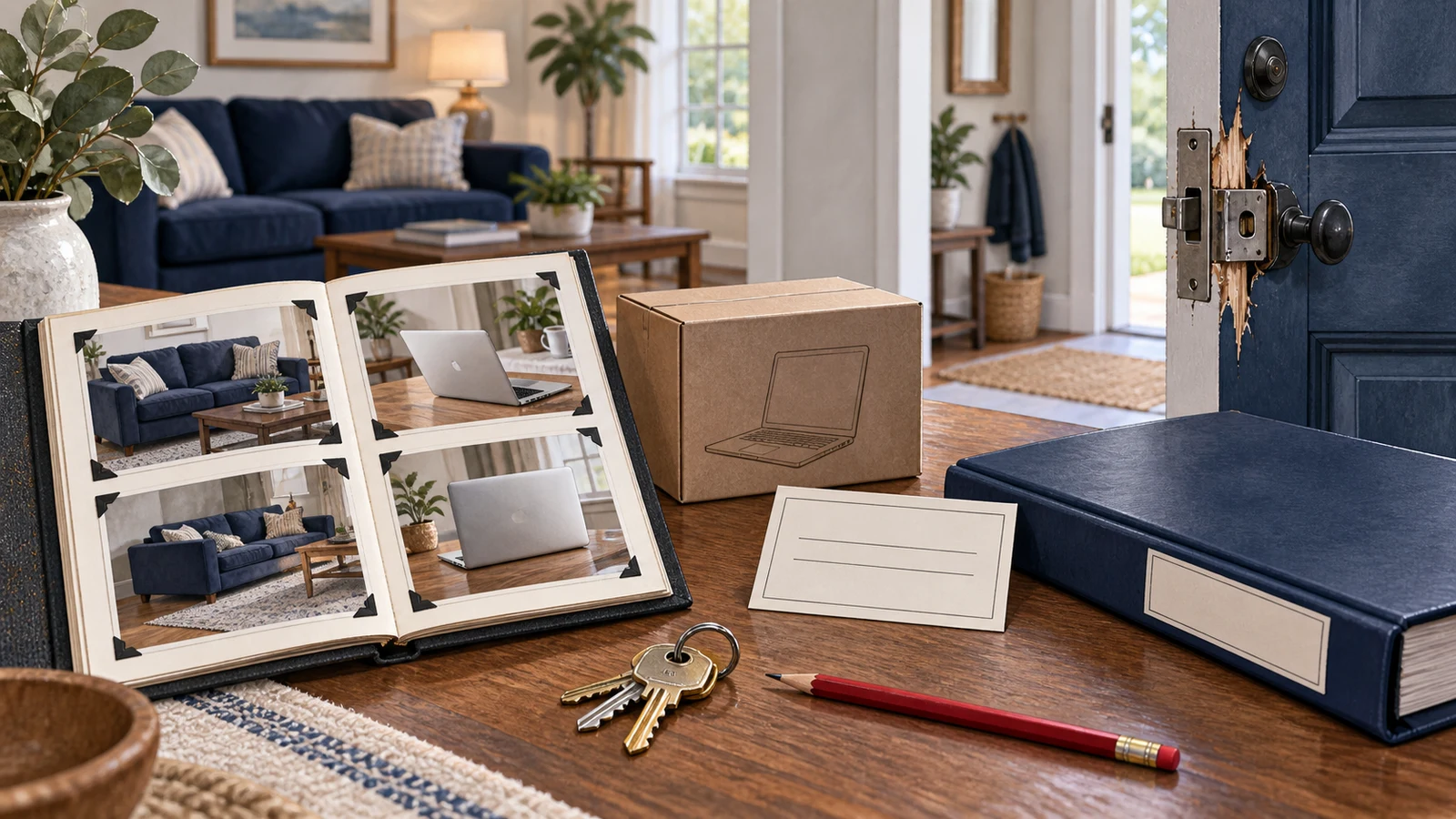
Older family photographs can show furniture, artwork, jewelry, or equipment in your possession. Preserve the original image and note its approximate date. Avoid editing a photograph to make an item appear more prominent without retaining the original.
The Connecticut Insurance Department's homeowners FAQ explains that an insurer can require an inventory and evidence that the claimed property was owned at the time of loss. Ask what documentation the insurer will consider for the specific item.
Build an evidence-backed inventory
- Item description, brand, model, and serial number where known.
- Quantity and the room or storage location.
- Purchase date and cost, with estimates clearly labeled.
- Photographs, order records, statements, or other ownership support.
- Gift, inheritance, or appraisal records where relevant.
- A note explaining missing information and any follow-up planned.
A bank statement may establish a payment to a store but not identify the exact purchase. Pair it with another record when possible. Do not substitute a current expensive product for an unidentified older item.
Preserve security and entry records
Save relevant camera recordings before routine systems overwrite them. Keep the original file and a note identifying the camera and time settings. Share it through appropriate police and insurer channels rather than posting accusations publicly.
Photograph damaged doors, locks, windows, and other entry concerns once police and safety needs allow. Retain locksmith and temporary securing invoices.
The theft of belongings and damage to the building should be listed separately. Different limits or policy provisions may apply, particularly for certain valuables or business property.
A hypothetical apartment burglary
Imagine a New York renter discovers that a laptop and inherited watch are missing. The laptop receipt is gone, but a retailer account and warranty registration identify the model. The watch appears in dated family photographs and an older appraisal.
The renter provides those records, the police reference, and an honest description of each item. The available evidence differs, so the inventory does not pretend both have original purchase receipts.
This scenario illustrates documentation only. Coverage, special limits, valuation, and the insurer's information needs depend on the actual policy and facts.
Common questions
Does a police report prove the value of everything listed?
It documents the reported incident and information supplied. Ownership and valuation support may still be needed.
What if the stolen item was a gift?
Identify it as a gift and gather available photographs, descriptions, or records from the giver. Do not invent a purchase by you.
Should I claim today's retail price?
Save comparable product information and ask how the policy values the item. Replacement cost and actual cash value can produce different calculations.
Our home inventory guide can help with future records. Contact Northeast Adjustment for help organizing a burglary-related property claim.