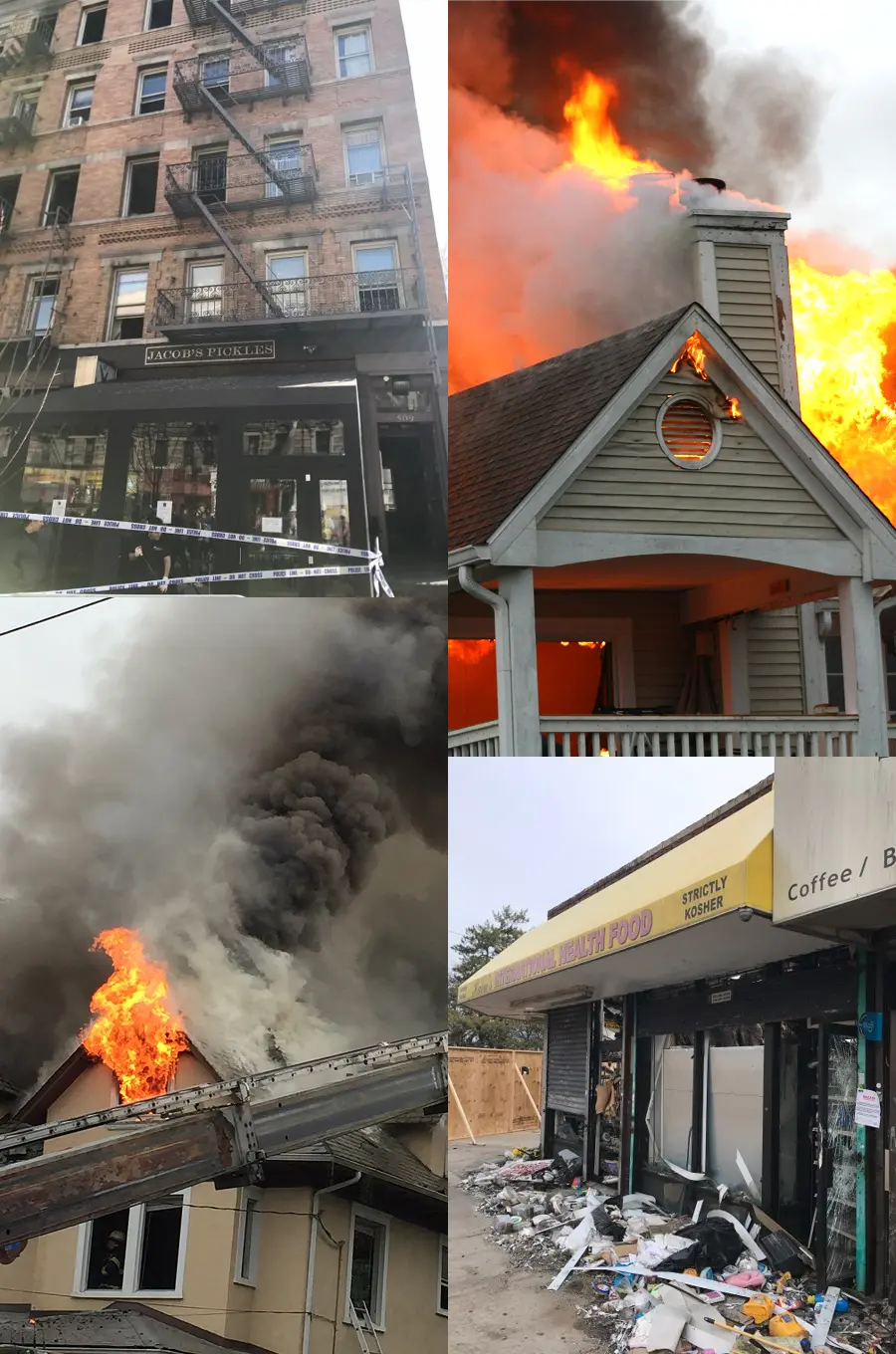



After a fire, damaged belongings may be moved into bags, placed in storage, or removed during cleanup. Once items leave the property, describing their identity and condition can become much harder. The goal is to create a useful record before removal when safe, while allowing necessary health and safety work to proceed.
Pre-loss records are not always available. In a 2023 Triple-I/Munich Re survey, 47% of homeowners said they had prepared an inventory of their possessions. Insurance Information Institute / Munich Re The United States survey reports homeowners' own statements about preparation. If you did not create an inventory, begin with the evidence available now instead of trying to recreate a perfect history from memory.
Decide what can be documented safely
Follow emergency officials and qualified restoration professionals on access and handling. Do not open damaged batteries, power on wet electronics, or keep unsafe food simply for an insurance inspection.
Ask the insurer what it needs before disposal when circumstances allow. New Jersey's claim guidance recommends checking with the insurer before discarding damaged property and keeping photographs and records. When unsafe items must be removed promptly, document the reason and the available evidence rather than delaying necessary action.
A professional's written assessment can help explain whether an item needs cleaning, further evaluation, or disposal. Avoid deciding that everything with smoke odor is beyond restoration without support.
Give each item a stable identity
Create a room-by-room list. Assign a number to each major item or clearly defined group. Use that same number on photographs, storage lists, and any disposal record.
Describe the actual item: manufacturer, model, approximate purchase date, material, size, quantity, and prior condition where known. Mark estimates as estimates. “Wood dining table, purchased around 2018” is more reliable than inventing an exact price and date.
Photograph the entire item and the affected area. Capture labels when accessible. For a group of ordinary goods, show the group and record how the quantity was determined.
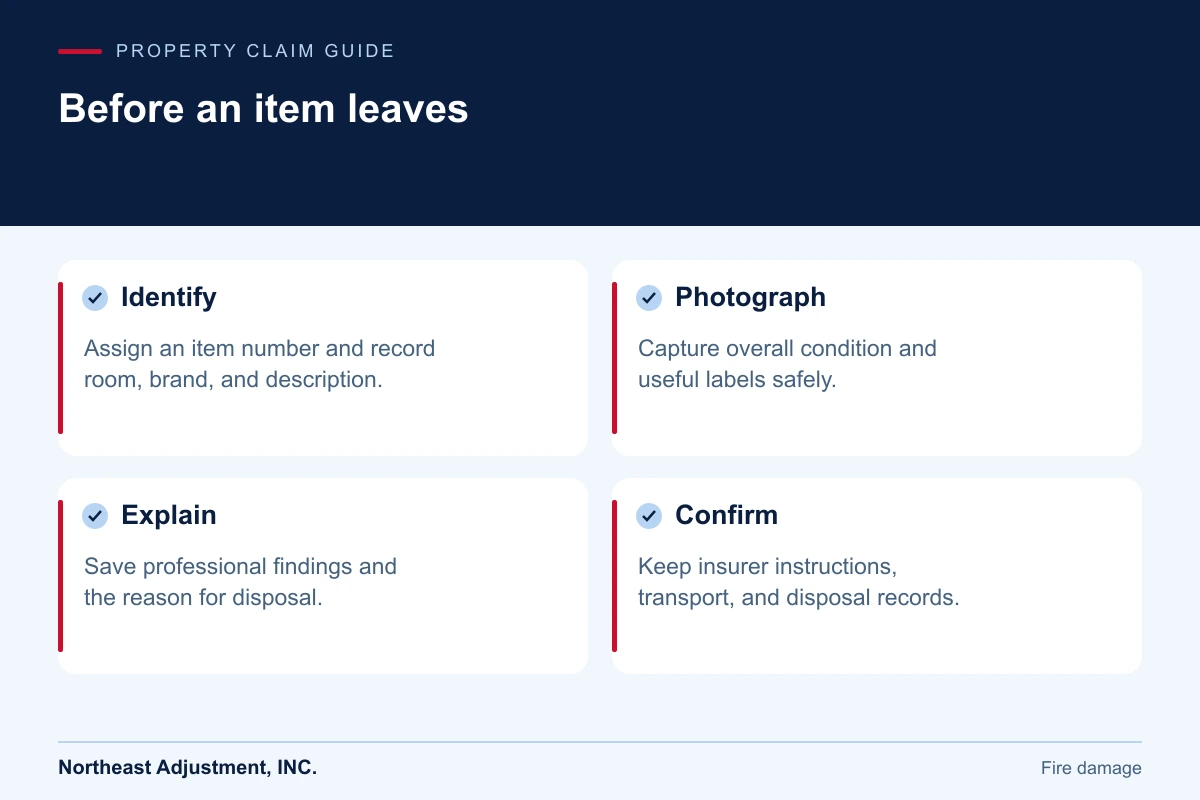
Before-disposal checklist
- Record the item's location and who owns it.
- Save a wide view, damage details, and identification labels when safe.
- Link receipts, order history, older photographs, or warranty information.
- Record the professional recommendation and the reason removal is necessary.
- Retain insurer instructions, pickup records, and any disposal invoice.
Separate “removed for cleaning” from “discarded.” A storage or restoration inventory should show where an item went and who has custody. This avoids mistakenly listing the same property as both a total loss and a cleaned item.
An illustrative Connecticut household
Imagine a Connecticut homeowner has smoke-affected living-room furniture, wet basement storage boxes, and damaged food after a kitchen fire. Each group calls for a different approach.
The owner asks the restoration provider to assess the furniture, photographs identifiable basement items as they are safely unpacked, and records food quantities before necessary disposal. A single entry saying “all household contents” would hide those differences.
This is an illustrative situation. The condition of the belongings, ownership, policy limits, exclusions, and valuation terms will affect an actual claim. A disposal decision does not automatically establish the amount payable.
Reconstruct missing purchase evidence
Search retailer accounts, email confirmations, family photographs, and warranty registrations. Bank or card statements may show a purchase, but they may need another record to identify what was bought.
For gifts, record who gave the item and any available description or photograph. For inherited or distinctive property, keep appraisals or other ownership records. Do not submit another person's receipt as proof of your purchase.
Keep the original inventory version and date later corrections. If an item thought lost is found in storage, update the insurer and the list promptly. Accuracy is more useful than an inflated total.
Common questions
Must I keep dangerous belongings until settlement?
No documentation task should override necessary health and safety action. Obtain professional direction, notify the insurer, and preserve safe records of what had to be removed.
Should I claim a new replacement price for everything?
Record the item's identity and available pricing evidence. Actual cash value, replacement cost, limits, and policy conditions determine valuation; the newest model is not automatically the correct comparison.
Our home inventory guide can help structure the list. For assistance organizing fire-damaged contents and supporting records, contact Northeast Adjustment.