


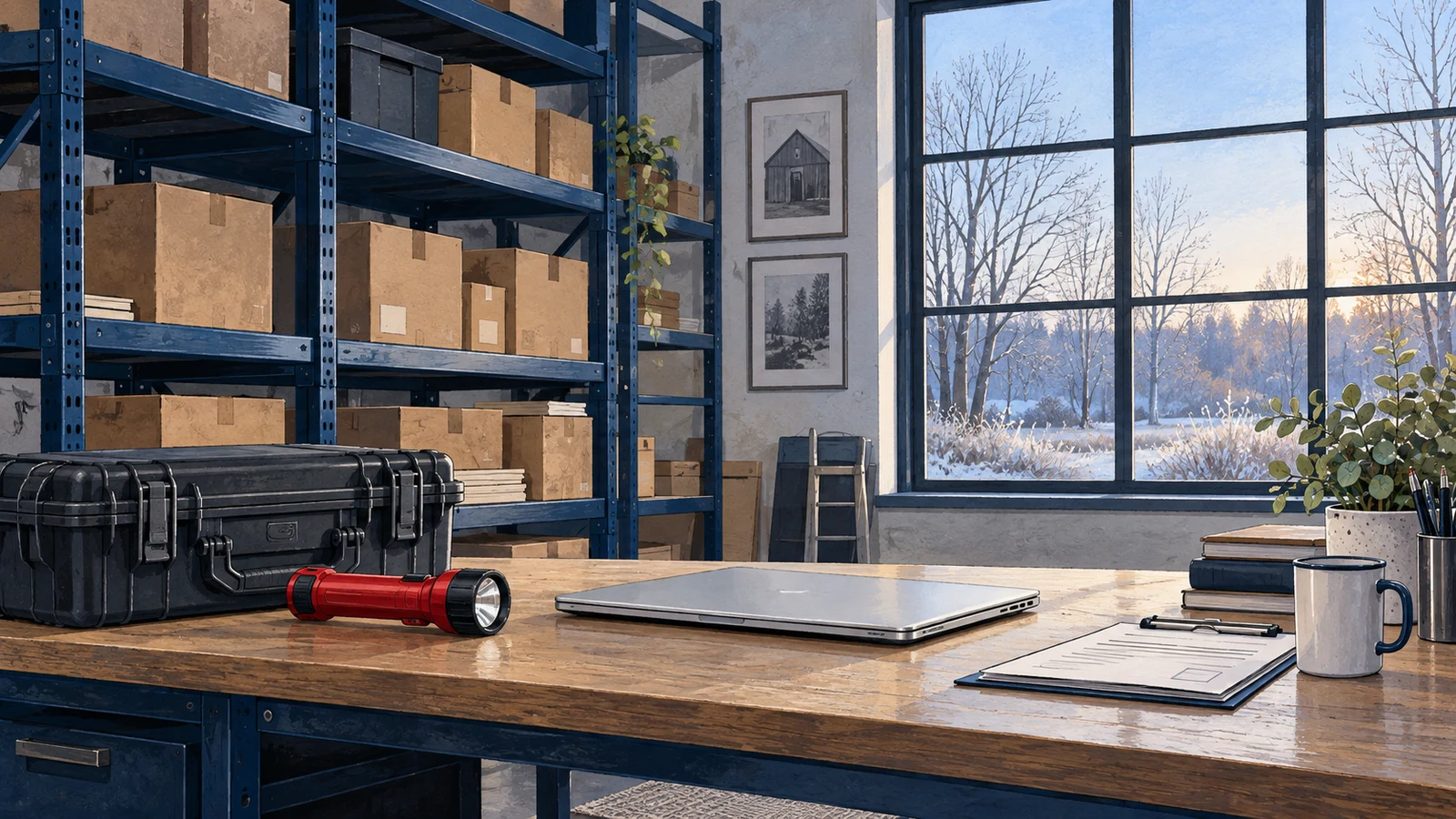
A winter emergency can close the shop and put its records out of reach at the same time. Preparing the property matters, but so does preparing the information needed to protect inventory, maintain communication, and explain an interruption.
New York had about 2.4 million small businesses in the SBA Office of Advocacy's 2025 state profile, based on 2022 Census business data. The count includes firms without employees. That scale makes winter planning relevant to far more than large warehouses or factories. SBA New York profile
Walk through the actual storage layout
Picture an illustrative neighborhood retailer in New York with holiday stock in a lower-level storeroom. A heating failure or plumbing leak could affect boxed merchandise, computers, and paper records in different ways.
List valuable or operationally important items by location. Identify stock stored near plumbing, below roof drainage, or in areas with unreliable heat. Ask qualified building professionals about necessary maintenance and safe storage improvements.
Keep aisles, exits, utility controls, and fire-protection equipment accessible. Moving boxes out of a vulnerable area should not create another hazard. If space is tight, decide which records and critical items need priority.
Photograph the current layout and save a dated inventory export. Record serial numbers for major equipment and distinguish owned, leased, and customer property. Those ownership differences can matter when reviewing insurance.
Test the backups before you need them
A backup is useful only if an authorized person can open it. Test access from outside the premises to:
- Inventory quantities and purchase invoices.
- Sales records and recent accounting reports.
- Payroll, rent, and recurring expenses.
- Equipment schedules and lease agreements.
- Insurance policies and endorsements.
- Supplier, landlord, and emergency-service contacts.
Store sensitive business and customer information securely, with access limited to the people who need it. Do not place passwords in a public emergency binder or share an entire customer database when a claim requires only a focused record.
Keep a note of the last successful backup and the person responsible for checking it. A simple recurring task is easier to maintain than an elaborate plan nobody updates.
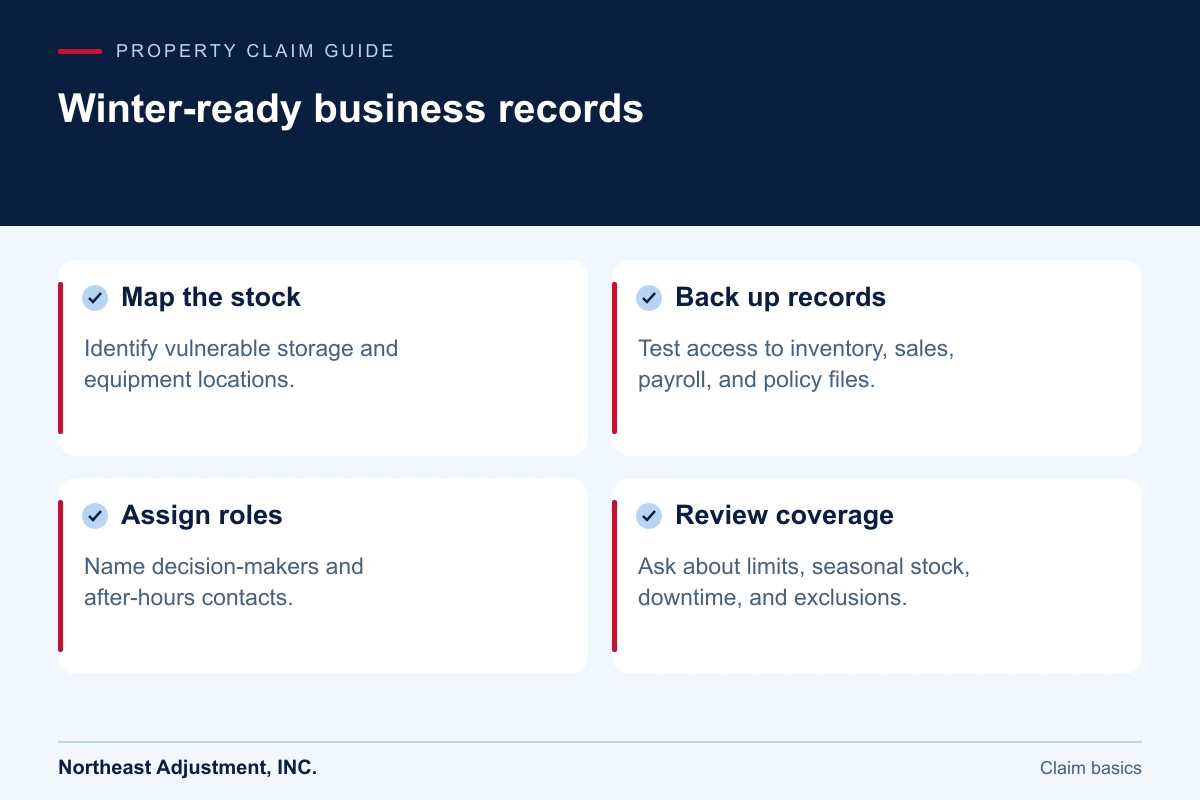
Assign decisions before an after-hours call
Name a primary decision-maker and a backup. Clarify who can authorize emergency stabilization, contact the landlord, speak with contractors, and report an insurance loss.
For leased premises, identify responsibilities using the lease and the actual building systems. A tenant may need the landlord to address a building component while separately protecting business contents. Do not assume one policy or one person's authority covers every part of the response.
Plan how staff will learn whether to report to work and how customers will receive accurate operating updates. Avoid promising a reopening date before the premises and equipment have been evaluated.
Review insurance against winter operations
The NAIC's small-business guidance describes the role of property and business-interruption coverage and the importance of business records. Use it as a starting point for questions about your specific policy.
Ask whether seasonal stock changes affect limits, which premises and property types are listed, and how an interruption is measured. Discuss exclusions, waiting periods, extra expenses, and conditions that may apply. A policy called a business owner's policy is not a guarantee that every water loss or closure is insured.
An illustrative shop with a November inventory increase should not rely on last spring's stock figures to describe what is currently exposed. Update the records and ask the insurance professional how the policy treats the seasonal change.
If an incident occurs
Report the loss promptly, arrange safe protective work, and document the condition before cleanup when practical. Record the time operations stopped, what functions remained possible, and what changed afterward. Keep emergency invoices separate from routine operating expenses.
Preserve normal business records as well as loss-related records. A sales decline by itself does not explain its cause; the file should connect the physical event to specific operational limitations.
Two questions to resolve now
Does the landlord's insurance cover my stock?
Do not assume it does. Review the lease and your business policy with the appropriate professionals.
Should my accountant have access to the plan?
Include the people whose records and advice you will need, using secure access appropriate to their role.
See our commercial claim resources for related topics. Northeast Adjustment can discuss the documentation needed when winter property damage affects your business.