

A strip of siding on the lawn is easy to photograph. Showing where it came from, what happened around it, and what repair is necessary takes a more complete record. The same applies to window damage after strong winds and rain.
NOAA counted 48 billion-dollar severe-storm events affecting New York during 1980–2024. The billion-dollar classification reflects each event's total U.S. losses, not damage within New York alone. That historical record supports preparing for wind-related property questions without predicting what the coming season will bring. NOAA New York summary
Photograph the building before the close-ups
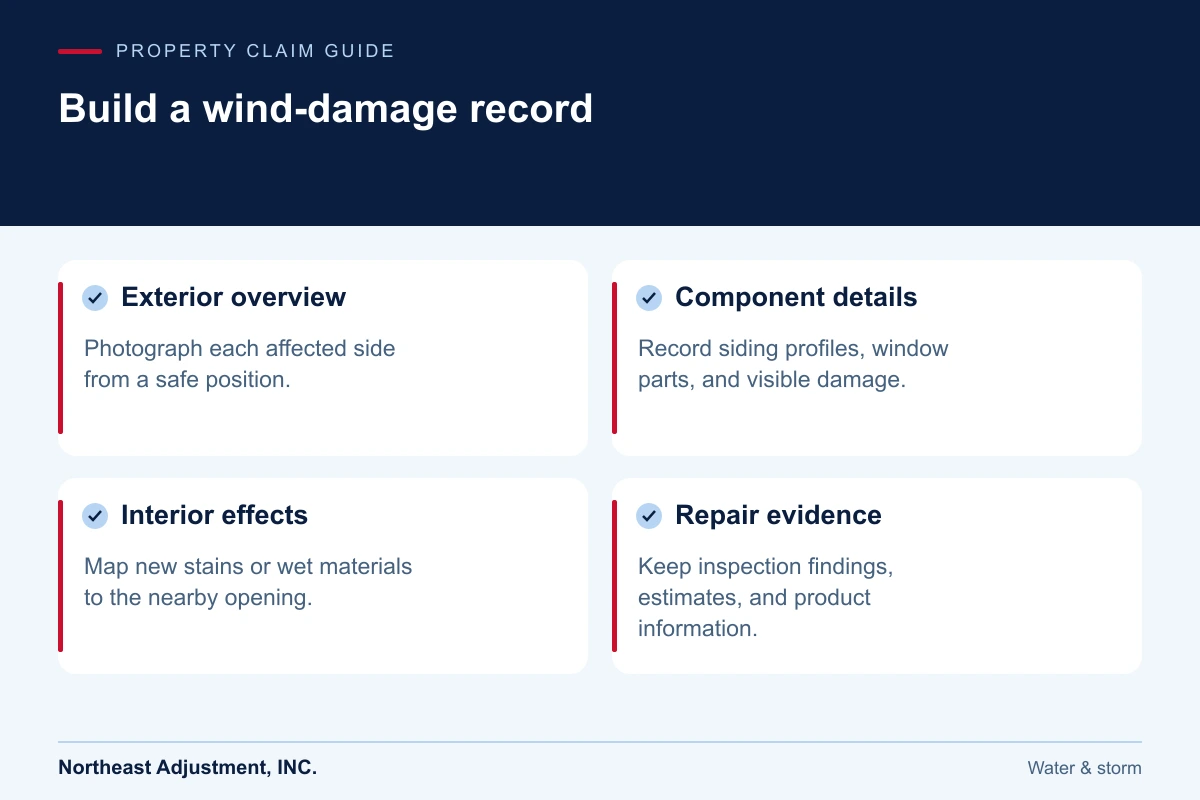
From safe ground, take a broad view of each affected side of the home. Note its orientation or use plain labels such as “street side” and “rear yard.” Then photograph the damaged siding, trim, glass, frame, or opening in more detail.
Do not climb onto a roof or ladder in unsafe conditions. A qualified contractor can document areas that are not safely accessible to you. Record any limitation so the file does not imply that an uninspected surface was undamaged.
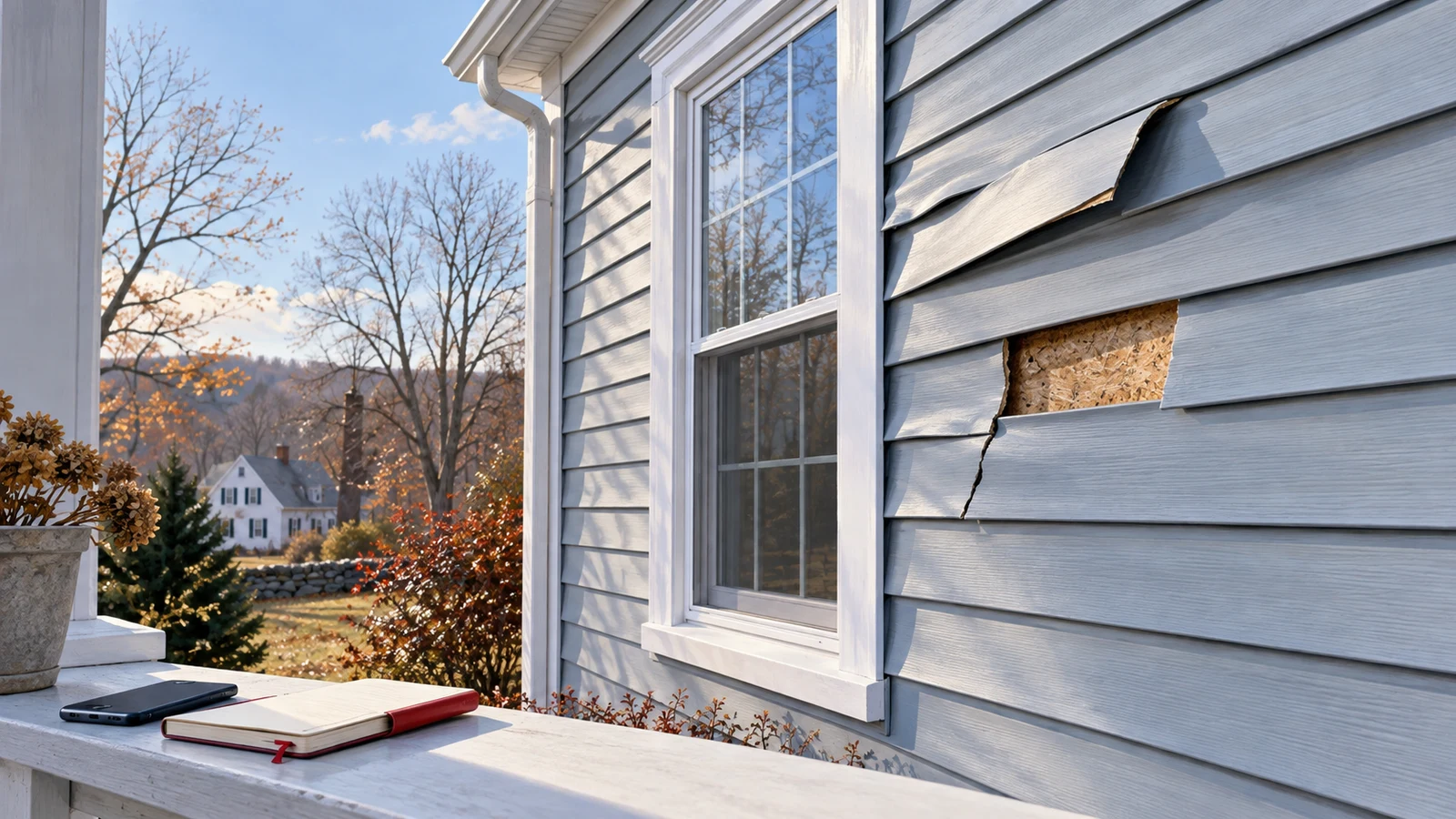
In an illustrative coastal New Jersey house, the rear siding has detached and rain appears near a second-floor window. The photographs should distinguish the siding location, window components, and interior staining. They should not assume all three share an established cause.
Describe components accurately
“Siding damage” can mean a missing panel, a cracked piece, a detached accessory, or damage to material beneath the cladding. “Window damage” can involve glazing, a sash, frame, seal, flashing, or adjacent trim.
Ask the inspecting professional to identify the component and the observed condition. Record measurements, material, product labels, and any available installation records. These details help explain why one repair proposal differs from another.
If a piece has fallen, photograph it and ask whether a labeled sample should be retained. Handle broken glass and sharp material only with appropriate help. Evidence preservation does not require unsafe handling.
Connect exterior observations to interior findings
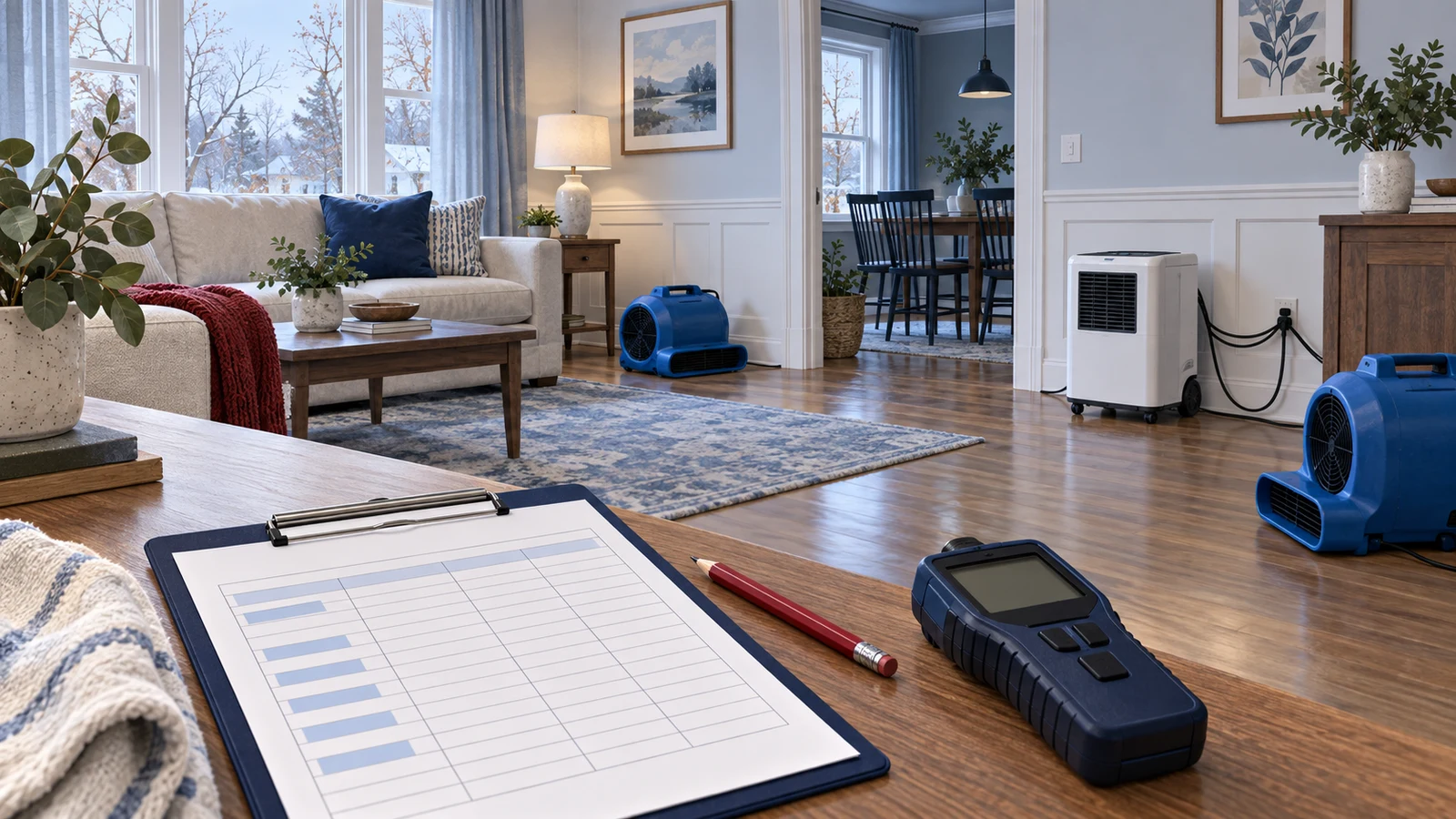
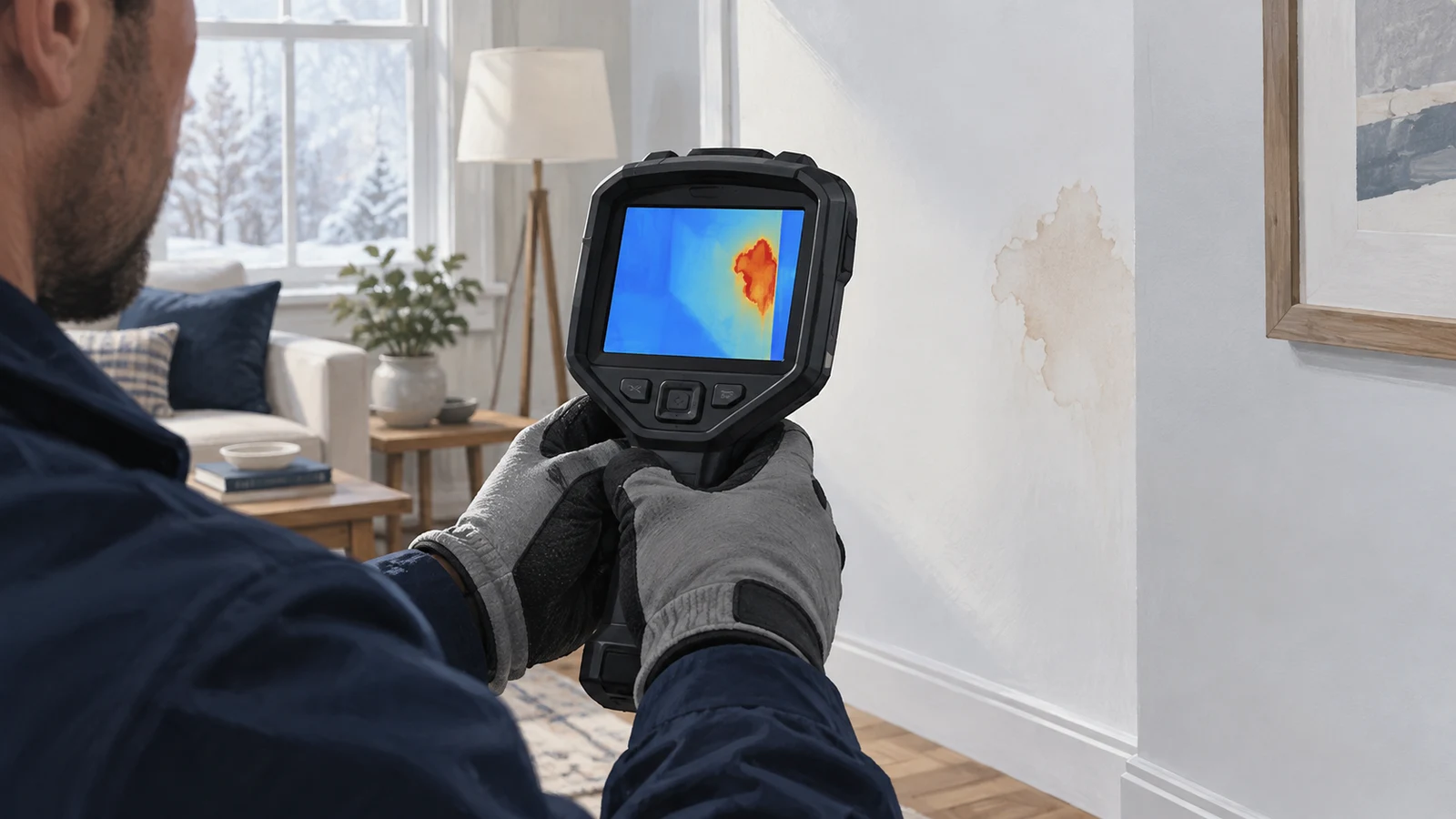
List rooms with new stains, damp finishes, or affected belongings. Photograph the entire wall or ceiling, then the detail. Note when the condition appeared and whether further rain changed it.
The source of water needs investigation. Wind damage, an existing opening, deteriorated sealant, and other conditions can raise different coverage questions. Describe what you observed; let qualified findings support the explanation.
Keep any emergency weatherproofing invoice and before-and-after photos. Ask the contractor to explain what was protected temporarily and what remains for permanent repair.
Review the proposed repair in parts
Use this estimate checklist:
- Which building side and component does each item address?
- Are removal, access, disposal, installation, and finish work described?
- What product or material is proposed?
- Are underlying materials included only where damage is documented?
- What inspection findings support the repair method?
- Are any additional areas awaiting evaluation?
A contractor's complete proposal and the insurer's estimate may use different descriptions. Compare scope and quantities before focusing only on totals.
The New Jersey DOBI storm-claims guidance recommends retaining records and requesting explanations of excluded damage. Ask the insurer to identify the particular disputed item and its reason so the response can be focused.
Handle matching questions with evidence
If replacement siding or a window component appears unavailable, obtain the manufacturer's or supplier's information. Identify the existing profile, dimensions, finish, and proposed substitute.
Product availability is a factual question; the extent of covered replacement is a policy and state-rule question. Do not assume a discontinued product automatically entitles the owner to replace every elevation or every window.
Photographs showing adjoining materials can help explain the issue. Ask for the insurer's written position and the contractor's specific explanation of installation or compatibility concerns.
Questions after a wind event
Should I wait for another storm to test the repair?
No. Ask a qualified professional how temporary protection and permanent work will be evaluated safely.
Do older windows automatically rule out coverage?
Age alone does not explain the entire claim. The actual damage, cause, condition, and policy provisions need review.
What if more damage is found behind siding?
Document the finding before it is concealed, notify the insurer promptly, and request instructions for submitting the updated scope.
Visit our storm-claim articles for related guidance. Northeast Adjustment can discuss the photographs, inspection findings, and estimate questions arising from your property damage.