

Water coming through a ceiling can make every decision feel urgent. Once people are safe, the priorities are controlling the source, preventing additional damage, notifying the insurer, and recording what happened. These activities often overlap; you do not need to finish an inventory before seeking emergency help.
State Farm reported an average payment exceeding $30,000 for its U.S. freeze-related water-damage claims from 2024 through June 2025. That category includes several freezing losses, and the figure reflects one insurer's history rather than a prediction for your claim. It illustrates why documentation should extend beyond the broken pipe. State Farm report
Establish safe access and source control
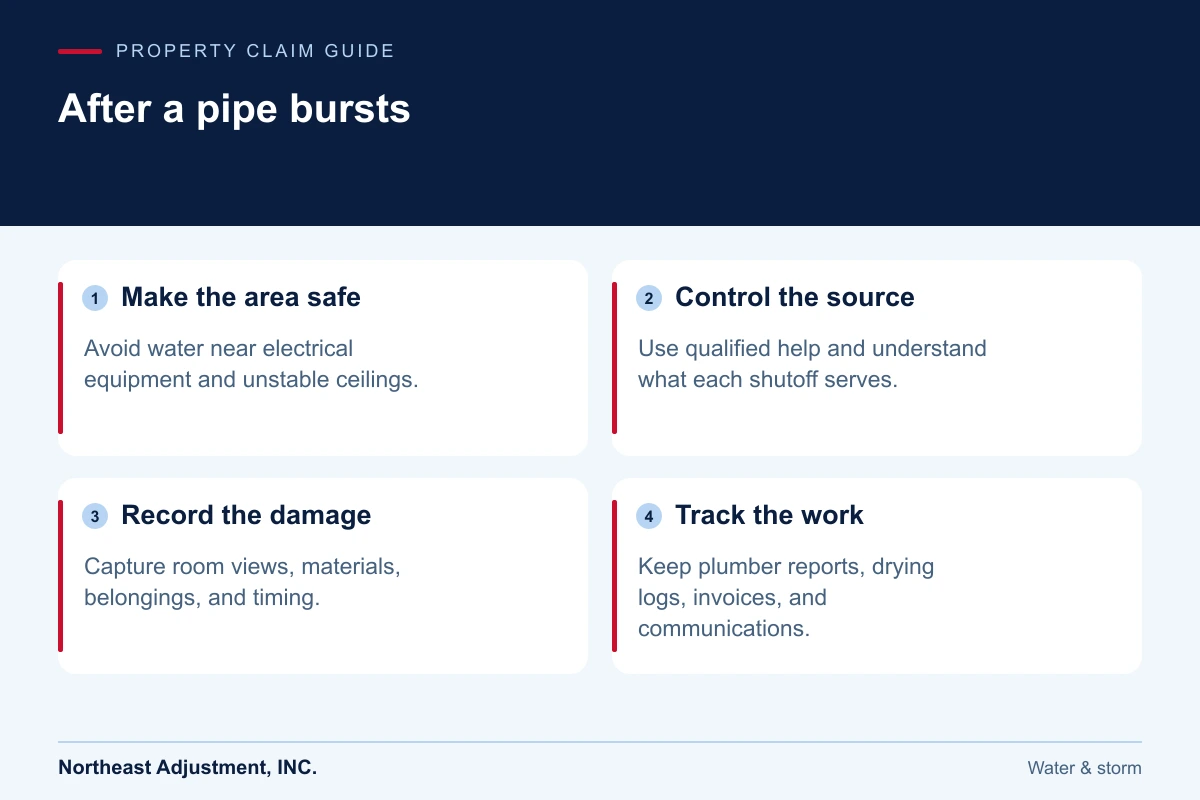
Keep away from standing water near outlets, equipment, or an electrical panel. Do not enter an area with a sagging ceiling or another apparent structural hazard. Contact emergency services, the utility, or qualified trades when the situation requires them.
If you can safely reach the appropriate domestic-water shutoff and understand its function, stopping the flow can limit further damage. Otherwise, ask a plumber or emergency responder for help. Buildings with sprinkler systems or shared utilities need particular care; closing the wrong valve can create a separate hazard.
Never use an open flame to thaw plumbing. Have the plumber identify the failed component and record the observed cause. Request photographs of the pipe before replacement when practical and safe.
Capture what changed, room by room
Consider an illustrative Queens home with a frozen supply line above a finished first-floor room. The failure may affect a wall cavity, ceiling, floor, furniture, and stored belongings downstairs. A photograph of the split pipe alone does not describe that full footprint.
Record the discovery time, who found the problem, the visible flow, and actions taken. Be clear about what you know and what remains uncertain. If you were away, distinguish the time you discovered damage from an unverified assumption about when the pipe failed.
Take wide room photographs, then details showing affected materials. Link close-ups to a room name so a reviewer can understand their location. Photograph belongings before moving them when safe, but move salvageable property out of harm's way rather than waiting for a perfect image.
Keep the plumber and drying records together
Ask each contractor for a description of its work. Useful records include:
- The plumber's findings and replaced components.
- Initial moisture measurements and affected-area diagrams.
- Equipment placement, service dates, and monitoring logs.
- Materials removed and the reason for removal.
- Emergency invoices, payment records, and photographs.
- Notes about rooms or contents awaiting further assessment.
The purpose is to connect each expense to a documented condition. For example, a daily equipment charge is easier to understand when the file also shows where equipment operated and how drying was monitored.
Drying is a process rather than a visual impression. Ask how the contractor will determine completion, particularly in wall cavities, under flooring, and around insulation. Repainting a dry-looking surface does not answer whether concealed materials were evaluated.
Ask focused coverage questions early
The NAIC's burst-pipe guidance explains that policies often cover resulting water damage when frozen pipes burst, subject to maintenance and freeze-prevention requirements. The specific policy and circumstances control.
Ask how the insurer is treating the failed pipe, access work, resulting building damage, belongings, and temporary accommodation if needed. These can raise different questions. Request any disputed portion in writing and identify the policy language involved.
Do not delay necessary protective work solely because an inspection has not occurred. Document the condition and contact the insurer about emergency measures; reserve permanent repairs for an agreed inspection and documentation process where possible.
Common first-day questions
Should I discard wet furniture immediately?
Ask about inspection and evidence requirements. Photograph and inventory it first when safe. Contaminated or unsafe items require prompt professional guidance.
Can I submit more information after the first report?
Ask how to provide additional findings. Initial notice may precede a complete repair scope, but later information should be reported promptly.
What if I do not have receipts?
Gather other ownership and value records, including prior photographs, purchase histories, model numbers, and available statements.
Our claim articles explain related documentation issues. Contact Northeast Adjustment for help reviewing the evidence and questions surrounding your property's water-damage claim.