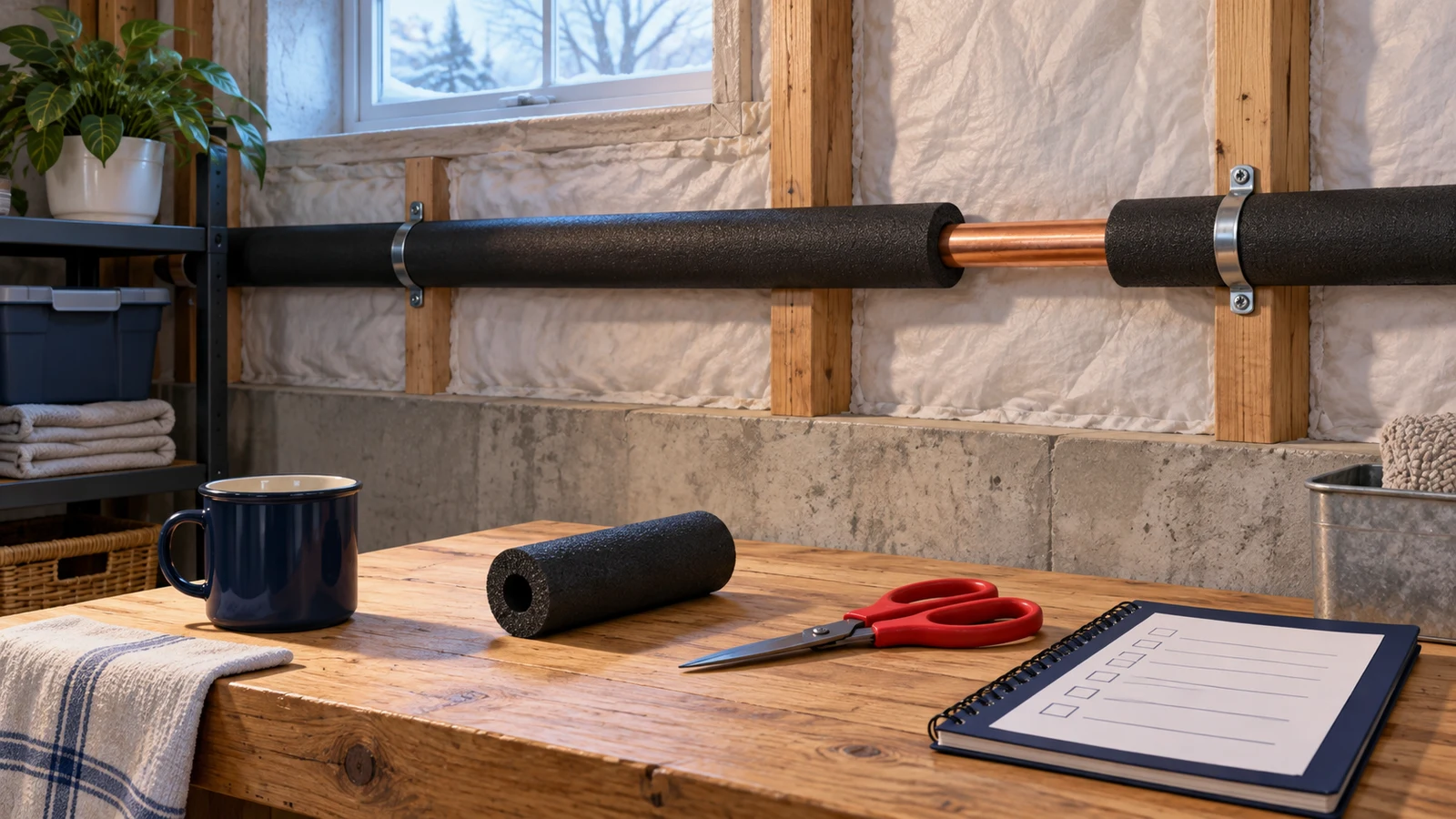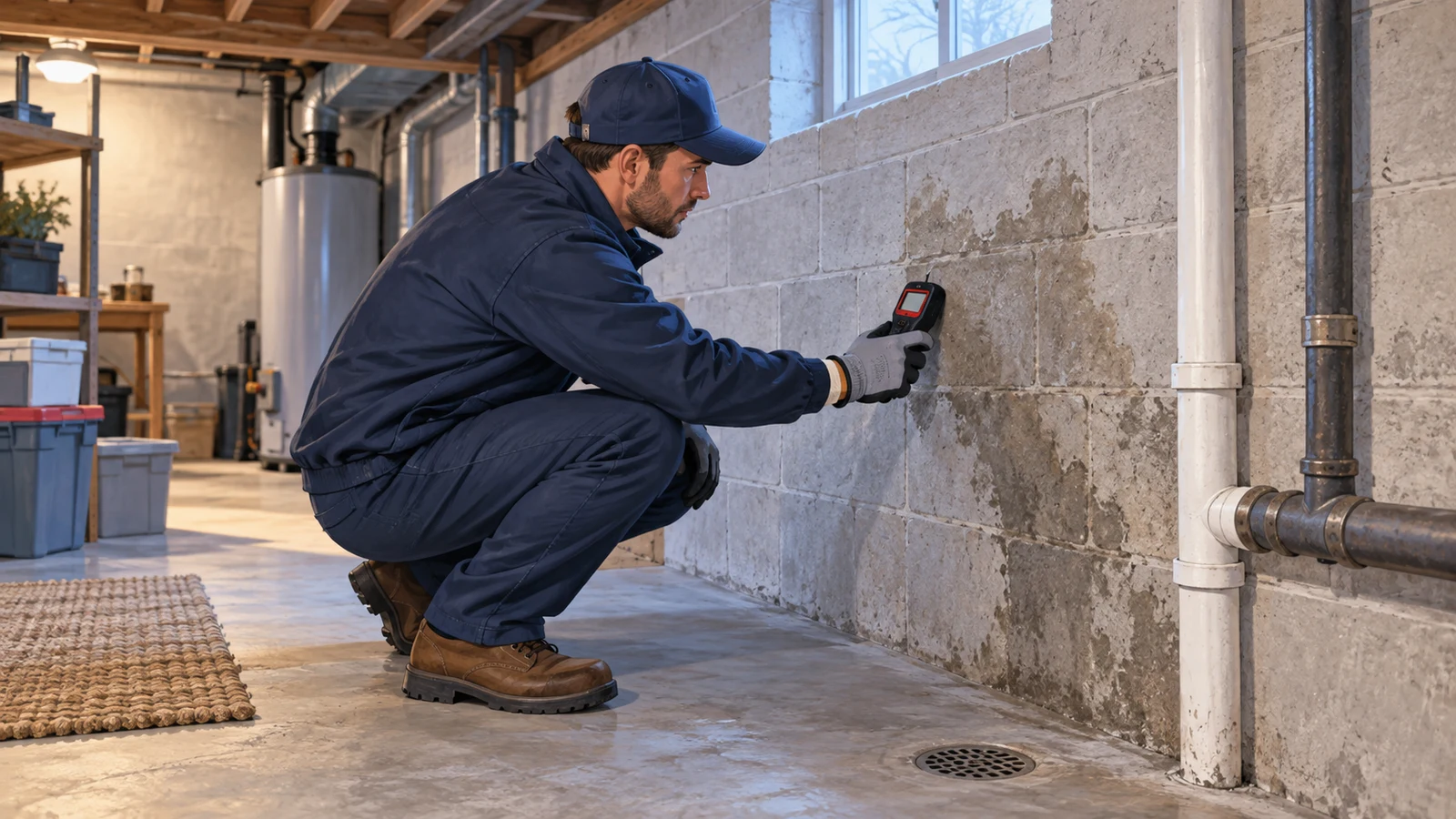


A repaired supply line stops new water from entering a wall. It does not remove water already absorbed by materials or trapped in an adjoining space. When the visible leak ends, ask the next question: where did the water travel, and how will the affected materials be evaluated?
This matters during Northeast freezing weather, when plumbing failures may begin inside walls or above finished rooms. State Farm's national freeze-related water-damage claims averaged more than $30,000 in payments from 2024 through June 2025. That single-insurer figure covers several types of freezing damage and does not predict any particular claim. It provides context for looking beyond the immediate repair. State Farm report
Start with a documented water path
Consider an illustrative New Jersey basement with finished walls. A supply line leaks behind a laundry area, and the owner notices damp flooring in the next room. The visible wet spot may be only one part of the affected area.
Give the restoration professional the source-repair report and your discovery timeline. Identify rooms above, below, and beside the observed damage. Describe new staining, swollen trim, lifting flooring, or odors without diagnosing their cause yourself.
A useful inspection record connects observations to locations. “Elevated moisture behind laundry wall” is more informative when accompanied by a room diagram, material description, photograph, and measurement date. Ask the professional what was checked and what could not be assessed.
Understand what the equipment can show
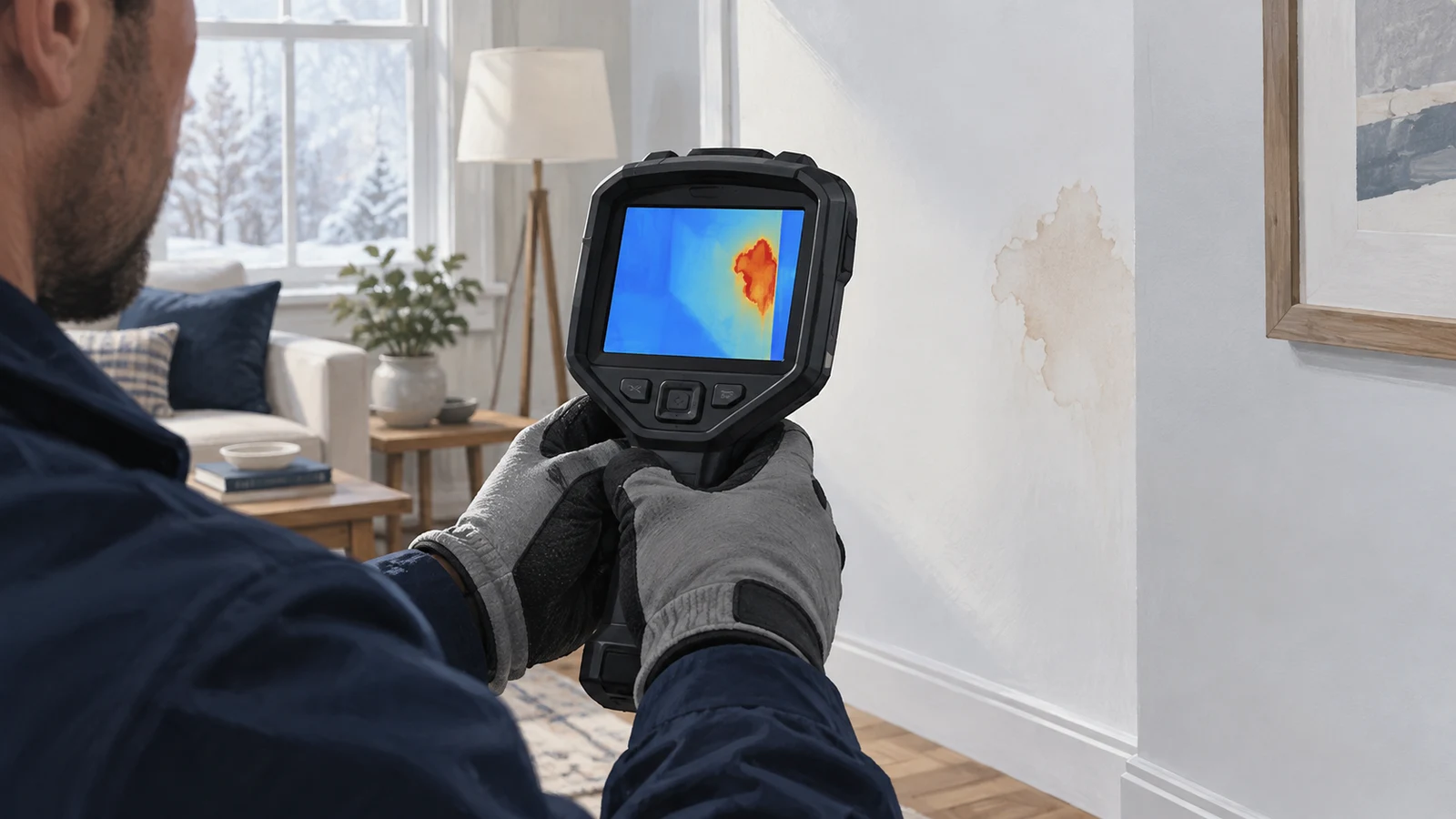
Moisture meters and thermal cameras can support an investigation, but their findings need interpretation. Ask what the readings mean for the specific material and whether a comparison area was used. An image or number without context can be misleading.
A thermal image can identify a temperature pattern that deserves investigation; it does not by itself prove water, determine the cause, or establish a repair price. Similarly, one measurement at a surface does not necessarily describe every concealed layer.
If opening a wall is recommended, ask why, how much access is proposed, and how the condition will be documented. Coordinate with the insurer about evidence and inspection needs while addressing necessary mitigation. Qualified professionals should consider hazards associated with older materials before disturbing them.
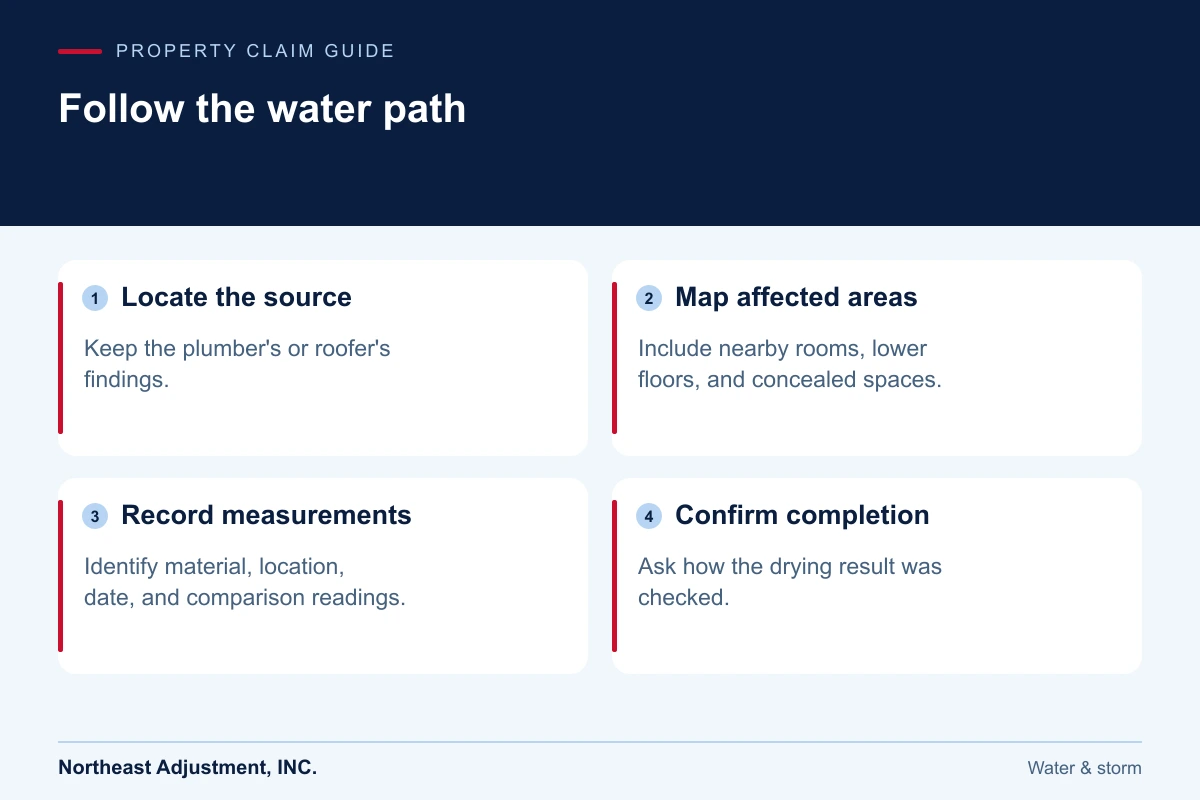
Keep a record of the assessment and response
Request a file containing:
- The source of water, if established, and supporting repair findings.
- Affected-room diagrams and material descriptions.
- Initial readings and dated follow-up measurements.
- Photos before and during any removal.
- Drying equipment locations and service records.
- The contractor's explanation of completion criteria.
These records help distinguish the original damage, work required to investigate it, and the eventual repair scope. Keep invoice descriptions aligned with the actual rooms and activities. If a contractor's report refers to an area you do not recognize, clarify it before forwarding the file.
The EPA's moisture guidance recommends prompt drying to help prevent mold. Its 24–48-hour advice is a prevention target, not a guarantee that every assembly can dry that quickly or an insurance filing deadline.
Avoid closing the repair too soon
Before drywall, flooring, or paint conceals the affected area, ask what evidence supports readiness for reconstruction. If materials remain inaccessible, request an explanation of the assessment's limits.
Coverage for access, drying, damaged building materials, and mold-related work can involve different policy terms. A professional finding of moisture supports the physical condition; it does not resolve those coverage questions automatically.
If new damage appears after an earlier inspection, notify the insurer promptly. Describe the new finding, when it became visible, and the supporting evidence. Avoid assuming that the original estimate is final or that every later condition belongs to the same event.
Questions about hidden moisture
Can I judge dryness by touching the wall?
Touch may reveal an obvious wet surface, but it cannot reliably evaluate concealed layers. Ask a qualified professional about the necessary assessment.
Does an odor prove mold?
No. Record it and seek appropriate evaluation rather than making a diagnosis from smell alone.
What if the first contractor did not provide readings?
Request the existing documentation and ask how the drying conclusion was reached. Do not create measurements retrospectively.
Our water-damage resources explain related claim records. Contact Northeast Adjustment to discuss how the assessment and repair documentation fit your property's claim.