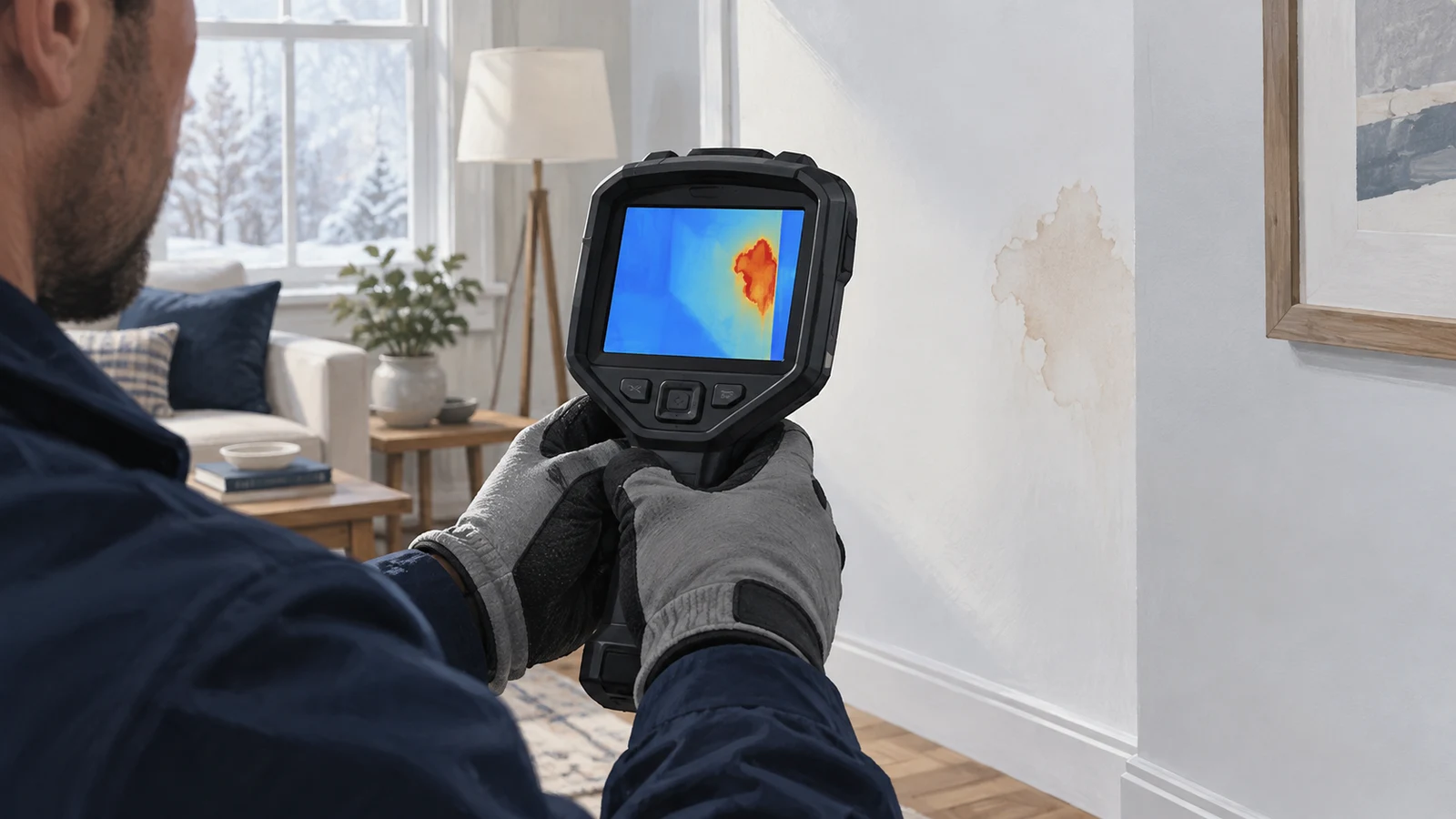


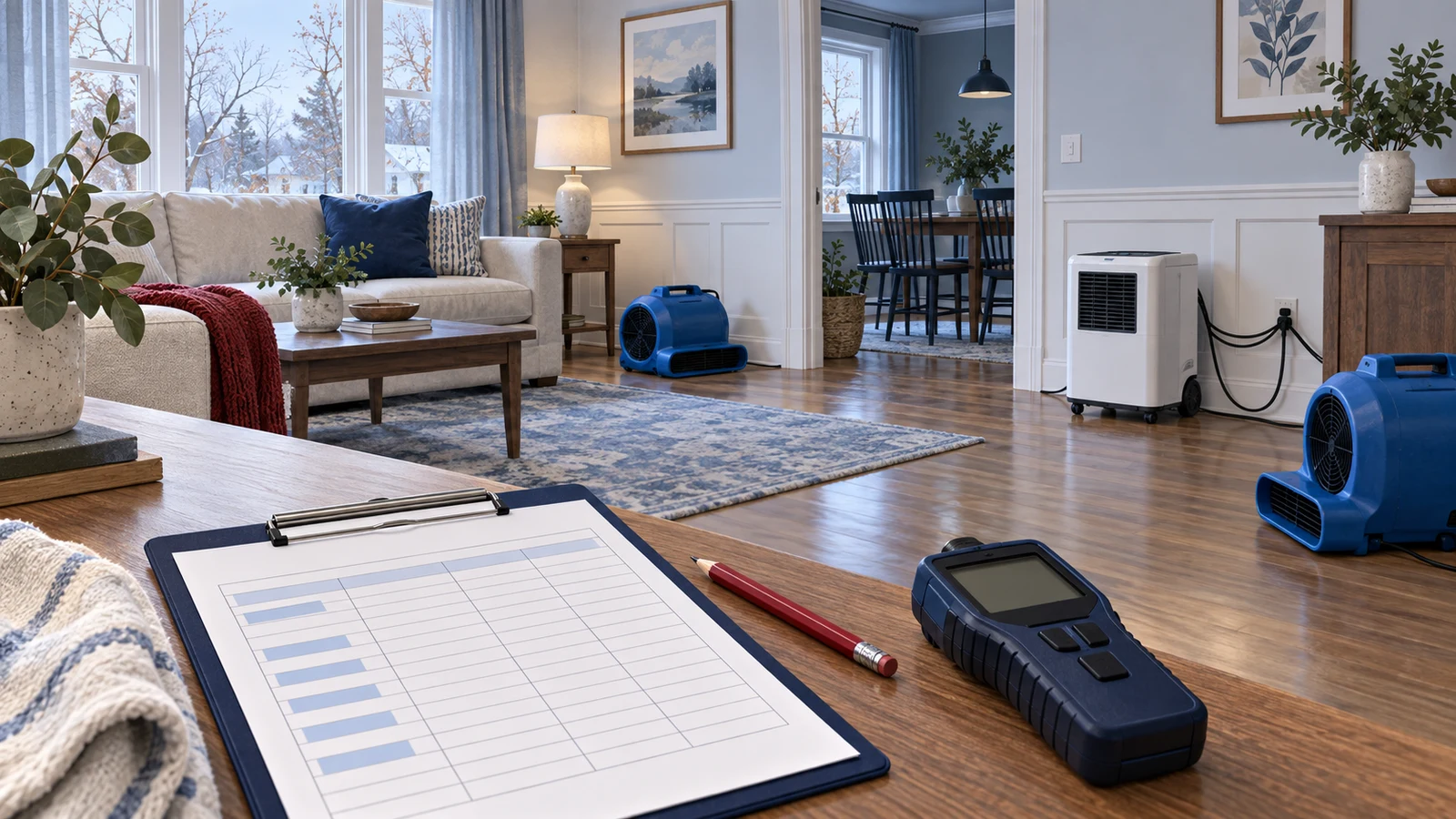
The fans are gone and the floor looks better. Before filing away the cleanup invoice, ask for the drying report. It should help explain what the contractor found, what work occurred, how conditions changed, and why the project moved toward repairs.
Freeze-related water damage is financially significant. State Farm reported paying more than $628 million nationally for those claims from 2024 through June 2025. The total includes several freezing-related damage categories and only that insurer's experience. It is not a Northeast loss estimate, but it underlines the value of records that explain emergency work. State Farm claims data
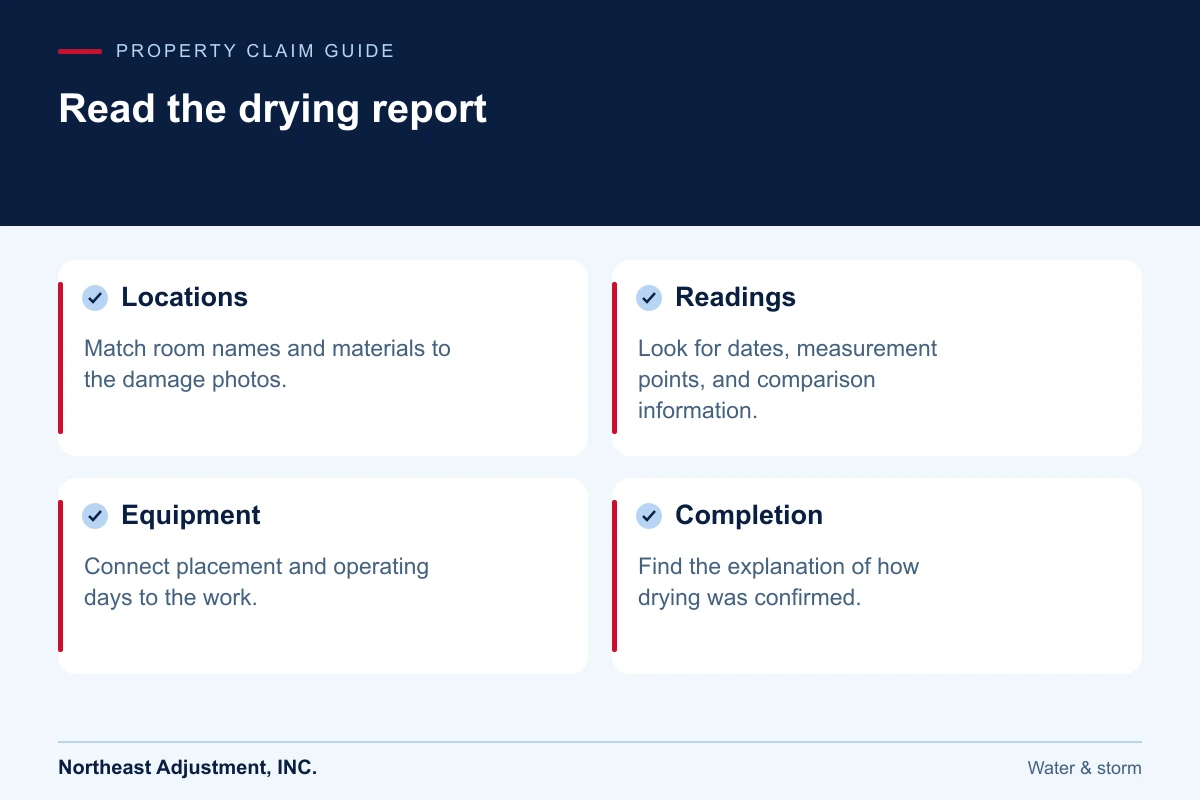
Begin with the property and room details
Check the address, loss date, inspection dates, and room names. A report that labels two different spaces “basement” can become difficult to compare with a repair estimate.
In an illustrative Pennsylvania duplex, a leak in one unit affects a shared wall and part of the other unit's ceiling. The records should identify each inspected area and any access limits. They should not imply that the entire building was assessed if one apartment was unavailable.
Ask for a diagram or photo key showing the measurement points. Note the materials involved: drywall, framing, insulation, carpet, subfloor, or cabinetry. The material matters when a professional explains a reading and decides whether drying or removal is appropriate.
Look for a sequence, not an isolated number
A helpful record shows the initial condition and subsequent checks. Ask whether the report includes dates, measurement locations, comparison readings, and relevant environmental conditions.
Do not compare numbers from different devices or materials as though they measure exactly the same thing. Ask the contractor to explain the scale and the conclusion. A homeowner does not need to become a drying specialist to request understandable records.
If a reading rises or a location is missing from later checks, ask about it. There may be a practical explanation, such as a material being removed or a previously inaccessible area becoming available. The explanation belongs in the project file.
Connect equipment to the work performed
An invoice may list dehumidifiers, air movers, labor visits, monitoring, and disposal. The supporting report should make it possible to connect these charges to the work.
Review:
- Where each piece of equipment was placed.
- When it was installed, checked, moved, and removed.
- Whether access or electricity interruptions affected operation.
- Which materials were removed and why.
- Which areas remained for later evaluation.
- What photographs document the work.
This review is about clarity, not deciding that equipment was unnecessary merely because a room seemed dry. If a charge does not match the reported dates or locations, ask the contractor for a correction or explanation.
Keep approved changes, invoices, and payment records together. Preserve the earlier version when a bill changes so the claim file shows what was corrected.
Ask what supports completion
The EPA's guidance on moisture emphasizes prompt drying and addressing the water source. Ask how the contractor determined that the affected materials were ready for the next stage of work.
A drying report may have limits. It might document only accessible areas, exclude contents, or leave certain assemblies for another specialist. Read those qualifications before treating the report as a blanket assurance about the property.
Insurer review can involve both the physical need for work and policy coverage. A complete report helps explain the work; it does not guarantee reimbursement of every charge. Request specific reasons if the insurer questions particular items, and give the contractor an opportunity to supply the relevant records.
Practical questions
Is an invoice the same as a drying report?
No. An invoice lists charges. The report should describe the conditions, work, observations, and basis for completion. They should complement each other.
What if equipment ran while I was away?
Ask for service logs and the project's monitoring history. Document any known power outage or access issue accurately.
Should I accept a report I cannot understand?
Ask the contractor to explain it in plain language, especially the affected areas and completion findings. Keep both the technical report and the explanation.
For broader documentation guidance, browse our property-claim library. If the mitigation records and insurance estimate do not seem to align, contact Northeast Adjustment to discuss the questions your file needs to answer.