


A public adjuster represents the policyholder in preparing and presenting a property insurance claim. For a homeowner, that can mean help organizing damage evidence, reviewing policy provisions, developing a documented repair scope, and communicating with the insurance company.
The work starts with facts. A damaged room may contain building materials, furniture, electronics, and temporary protection costs that need different supporting records. In a 2023 Triple-I/Munich Re survey, 47% of homeowners said they had prepared an inventory of their possessions. Insurance Information Institute / Munich Re This was a United States consumer survey about self-reported preparation. It helps explain why reconstructing a contents record can become a substantial part of claim work.
Understand who is doing what
The insurer assigns an employee adjuster or an independent adjuster working for the insurer to investigate its claim. A public adjuster is retained by the policyholder. A contractor determines and performs repair work within the contractor's expertise. An insurance agent or broker may assist with policy questions and reporting; their relationship and responsibilities depend on their role.
These people can contribute different information. A contractor's opinion about how to rebuild a wall is not the same as an insurer's coverage determination. A public adjuster helps present the connection between documented damage, necessary work, and the applicable policy.
New York's Department of Financial Services explains that public adjusters represent insureds and are paid by them. It also states that an insurer is not required to accept a public adjuster's estimate. Hiring representation does not guarantee a particular payment.
What the work may include
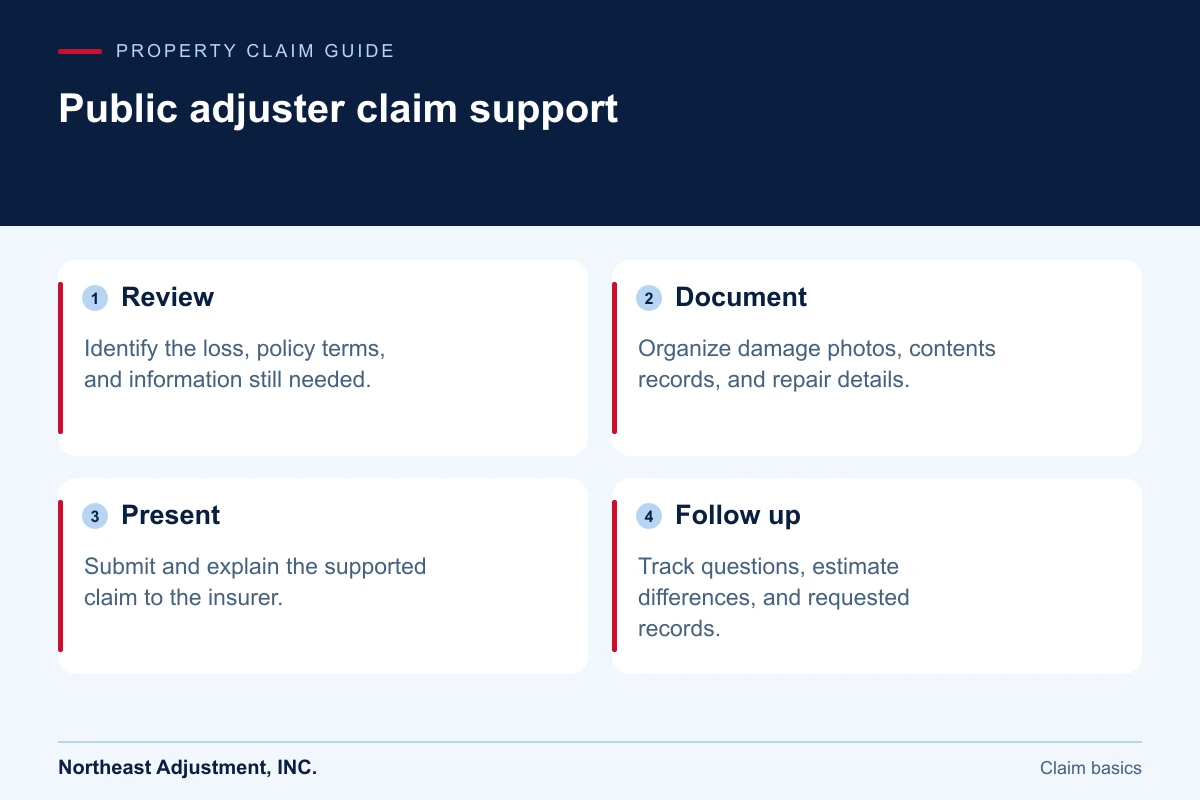
An initial review can identify the rooms, systems, and belongings affected; the known cause and unresolved questions; and which documents are missing. The adjuster may then assemble an inventory, compare estimates, arrange access for inspections, and respond to requests for more information within the agreed engagement.
Ask how the proposed services apply to your actual loss. A small, well-documented repair and a fire affecting several floors call for different levels of effort. Clarify who will inspect, who will prepare the estimate, and who will be your contact.
Questions to ask before signing
- Scope: Which portions of the claim will the agreement cover?
- Credentials: How can you verify the person's current license for the relevant state?
- Fees: How are charges calculated, when are they due, and which payments are included?
- Communication: Who submits documents and how will you receive copies?
- Responsibilities: What records, approvals, or decisions remain yours?
Read the contract and applicable state disclosures before agreeing. Fee rules and cancellation rights are state-specific; a rule from New York should not be assumed to apply across the Northeast. Ask for unclear terms to be explained in writing.
An illustrative homeowner situation
Consider an attached Queens home where a kitchen fire leaves visible damage downstairs and possible smoke effects upstairs. The owner has a contractor's kitchen estimate but no organized list of damaged upstairs belongings.
A public adjuster might help separate the building scope from contents documentation, identify rooms requiring further assessment, and present supporting records to the insurer. The owner still needs to report the loss promptly, provide accurate information, and make practical decisions about safe access and repairs. Qualified restoration professionals evaluate cleaning methods; the adjuster's role is not to replace their technical work.
This example is illustrative, not a client result. Whether particular smoke damage, living expenses, or repair items qualify depends on the actual facts and policy.
What to bring to a first conversation
Gather the complete policy, claim number, insurer letters, photos, estimates, and invoices already received. Prepare a short timeline and a list of your main concerns. If a figure is uncertain, label it rather than guessing.
A useful first discussion should leave you understanding the proposed work and cost. It should also identify what information is needed next, not promise an outcome before the evidence has been reviewed.
Common questions
Can I hire a public adjuster after reporting the claim?
Ask about the stage of your claim and the proposed agreement. Existing submissions, payments, and deadlines should be reviewed before deciding how representation would work.
Does hiring one replace my insurer?
No. The insurance company remains responsible for evaluating coverage and payment under its policy. A public adjuster represents your interests in that process.
Explore our claim education articles, or contact Northeast Adjustment to discuss the documentation and questions surrounding your property loss.