


Water entering a co-op apartment can quickly become a coordination problem. Building management may control access to a shared line, a shareholder may own improvements, and personal belongings may fall under another part of the insurance review. Notify the appropriate people promptly, then organize the damage by what was affected.
Freezing is one possible source during a Northeast winter. State Farm reported more than 20,000 U.S. freeze-related water-damage claims from 2024 through June 2025. Those single-insurer figures include several freezing categories and are not co-op-specific. They illustrate why shared plumbing and cold-weather maintenance deserve attention. State Farm report
Start with management and safe access
Report active water to the building's emergency contact. Avoid operating shared valves or entering mechanical areas without authorization and appropriate expertise.
Tell your own insurer about the loss promptly. Do not wait for management or a neighbor to decide which policy will respond before making your report.
In an illustrative Queens co-op, water appears at a bathroom ceiling below another apartment. Management arranges access and a plumber investigates. At that stage, the location of the water does not by itself establish fault, responsibility for every repair, or which insurer must pay.
Obtain the source and incident records
Ask management how to obtain the incident report, plumber's findings, and relevant photographs. Record discovery, notifications, access attempts, and emergency work.
Keep your own description factual. “Water was visible near the ceiling light” is an observation; “the upstairs shareholder caused the loss” is a conclusion that may require additional evidence.
If the source remains uncertain, state that clearly. Ask what further inspection is planned and who coordinates it. Keep records from both your apartment and building professionals so the chronology is consistent.
Gather the documents that define responsibilities
Have your apartment policy, declarations, and endorsements available. Ask management which portions of the proprietary lease, alteration agreement, house rules, or building insurance information address the affected work.
The New York DFS homeowners and tenants guide explains that apartment owners need to understand their own coverage alongside the building's arrangements. Do not assume all co-ops use identical boundaries.
Questions about the legal meaning of a proprietary lease, responsibility allocation, or a demand from another party may require an attorney. An insurance estimate is not a substitute for interpreting those obligations.

Divide the damage into useful lists
Create separate records for:
- Building components and shared systems.
- Apartment finishes and improvements.
- Personal belongings.
- Emergency work and temporary protection.
- Any displacement-related expenses being considered.
For improvements, collect alteration plans, approvals, contractor invoices, and material details if available. A custom bathroom renovation may need a different description from the apartment's original finishes.
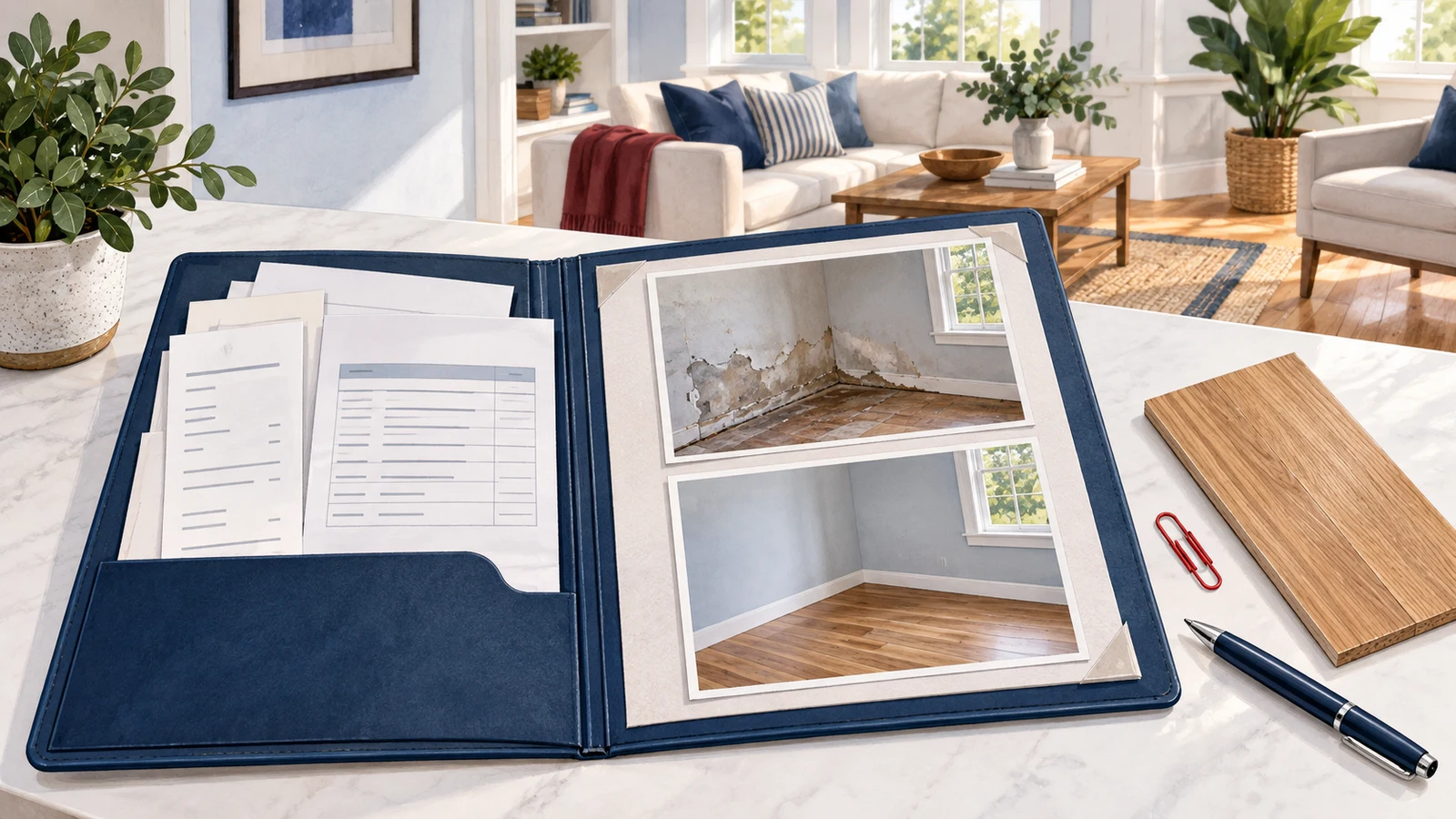
Photograph room overviews and details, and identify the location of each item. Avoid submitting one unlabeled photo folder that mixes structural elements with furniture and clothing.
Ask how damaged materials should be retained or documented before disposal, while protecting health and preventing further damage.
Coordinate inspections and repair decisions
Find out who needs access, which areas each inspector will evaluate, and who authorizes work. Share relevant findings without assuming that every party has received the same documents.
If management handles emergency removal, request photographs and a description of what was removed. If your contractor proposes reconstruction, ask whether building approvals or specific work procedures are required.
Keep payment responsibilities clear. The fact that one party arranges a contractor does not necessarily settle who ultimately bears the cost. Request written explanations and avoid signing unfamiliar reimbursement or release language without advice.
Questions co-op shareholders ask
Will the building's insurance cover my belongings?
Do not assume it does. Identify ownership and review your own policy.
Should I claim against the upstairs neighbor first?
Report the loss to your insurer and management promptly. Liability and recovery questions can be evaluated separately from necessary response.
What if I receive a building assessment?
Ask what it is for and obtain the supporting documents. Any loss-assessment coverage depends on policy terms and circumstances.
Visit our property-claim articles for related water documentation. Contact Northeast Adjustment to discuss organizing the findings and policy questions surrounding your co-op damage.