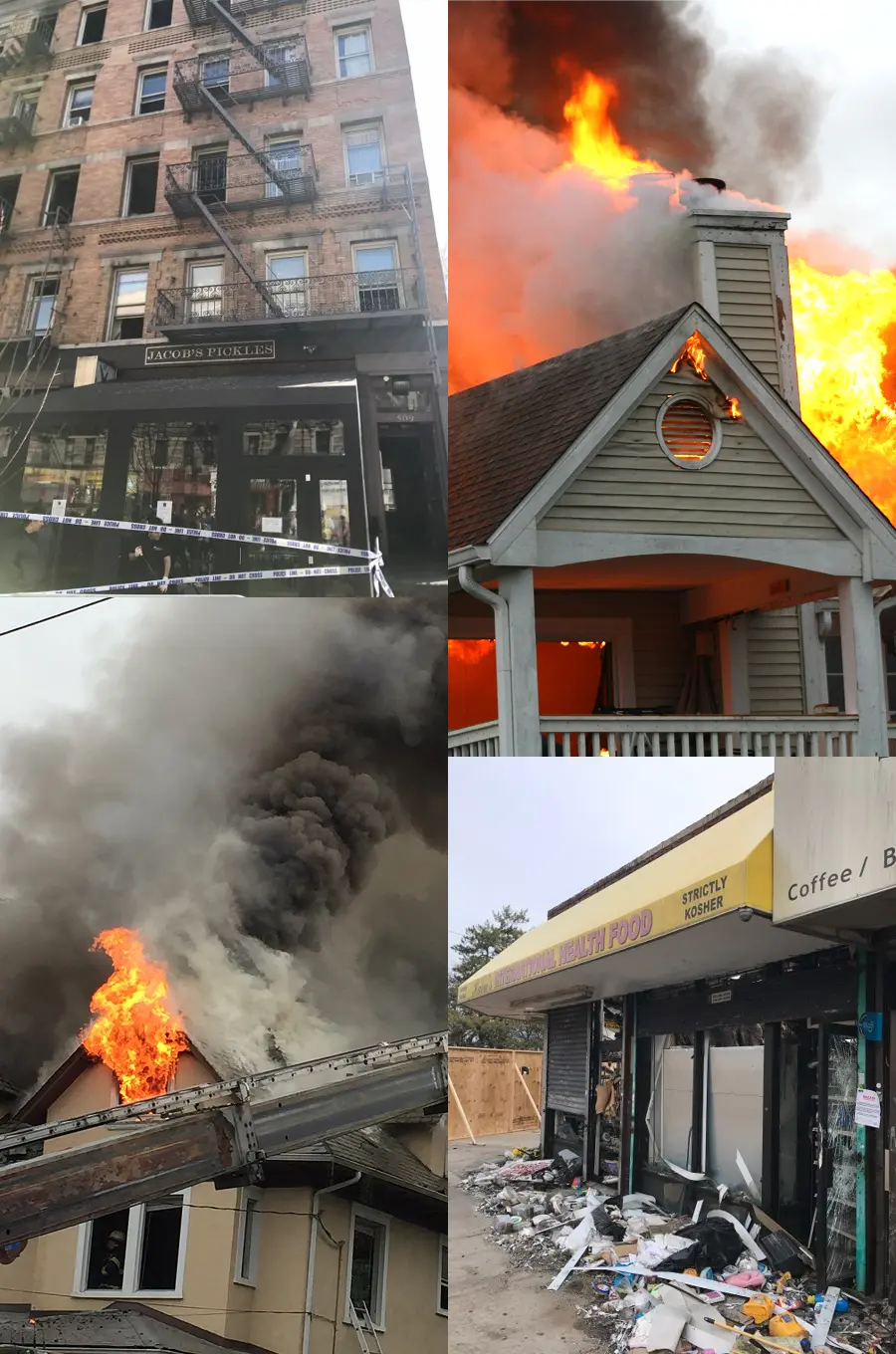


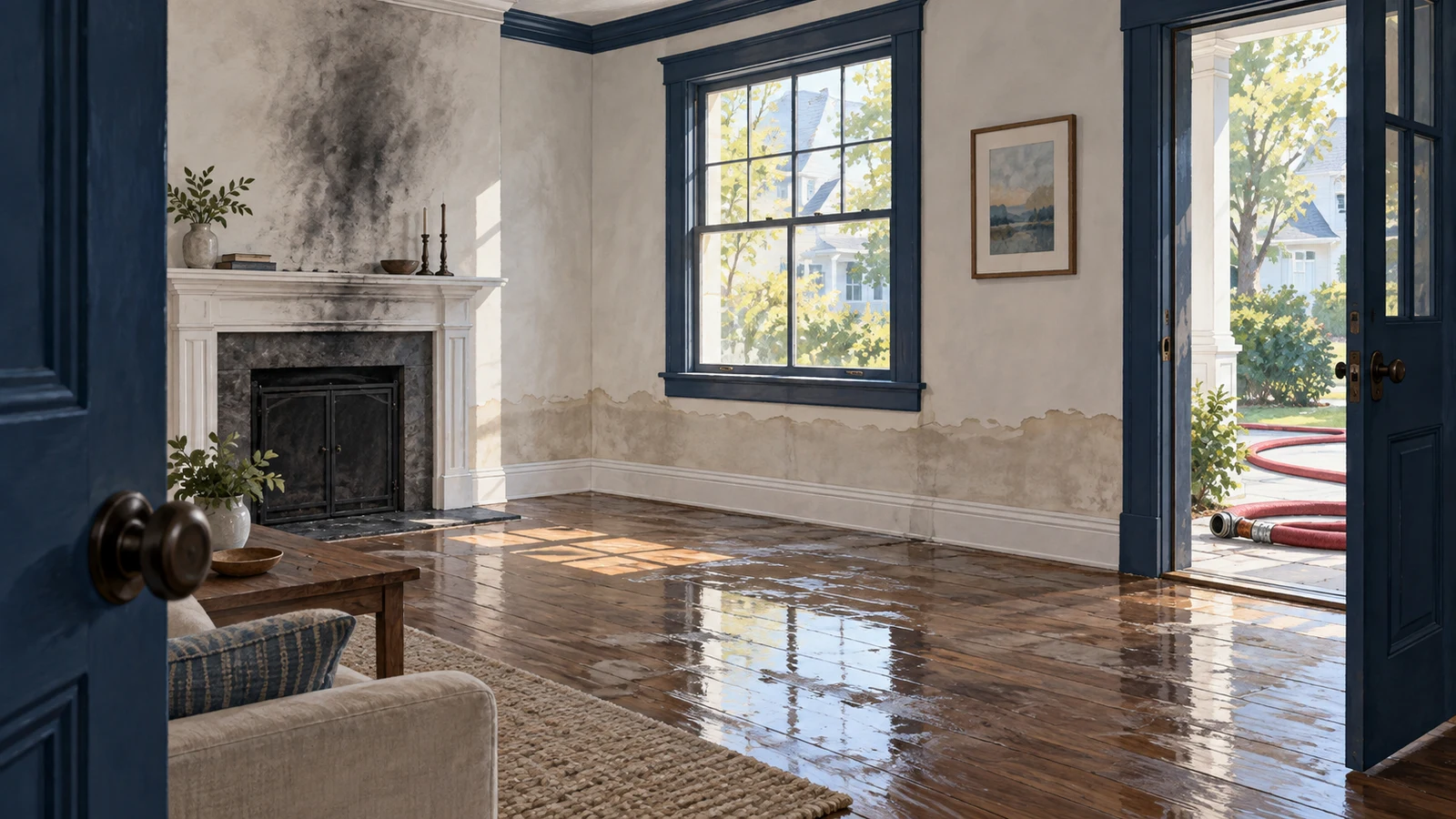
Once firefighters control a fire, the property may still have a second visible problem: water in floors, ceilings, walls, and belongings. That water needs its own record, connected to the event and the professional work performed afterward.
USFA estimates that 343,000 residential building fires occurred nationally in 2024. U.S. Fire Administration The estimate covers United States residential building fires in 2024, not the number of properties with firefighting-water damage. It provides context for why post-fire assessment should consider the building as a whole instead of limiting the file to charred materials.
Wait for safe access, then trace affected areas
Fire officials and qualified professionals determine when access is safe. Wet electrical components, damaged stairs, and water-laden ceilings can pose hazards. Do not walk through a building simply because the visible fire is out.
When entry is permitted, document each accessible affected area. Start with the fire room, then record wet conditions on adjacent and lower floors. Water marks do not always reveal the full extent of moisture, so photographs should be paired with professional assessment where needed.
Keep observations separate from conclusions. Record “water on the basement floor beneath the kitchen” rather than assuming every basement condition came from firefighting. Prior seepage or another source may need to be distinguished.
Ask for a useful mitigation record
A restoration invoice should explain more than the presence of equipment. Request the locations treated, materials assessed, extraction or removal performed, equipment used, and the monitoring period.
The EPA's moisture guidance recommends drying water-damaged areas and items within 24–48 hours to help prevent mold. That is practical guidance, not an insurance deadline or a promise that every material can dry in that time. Extensive or contaminated conditions require appropriate professional assessment.
Ask the restoration provider how drying decisions will be supported and what findings will be recorded at completion. Save reports even when the contractor submits them directly to the insurer.
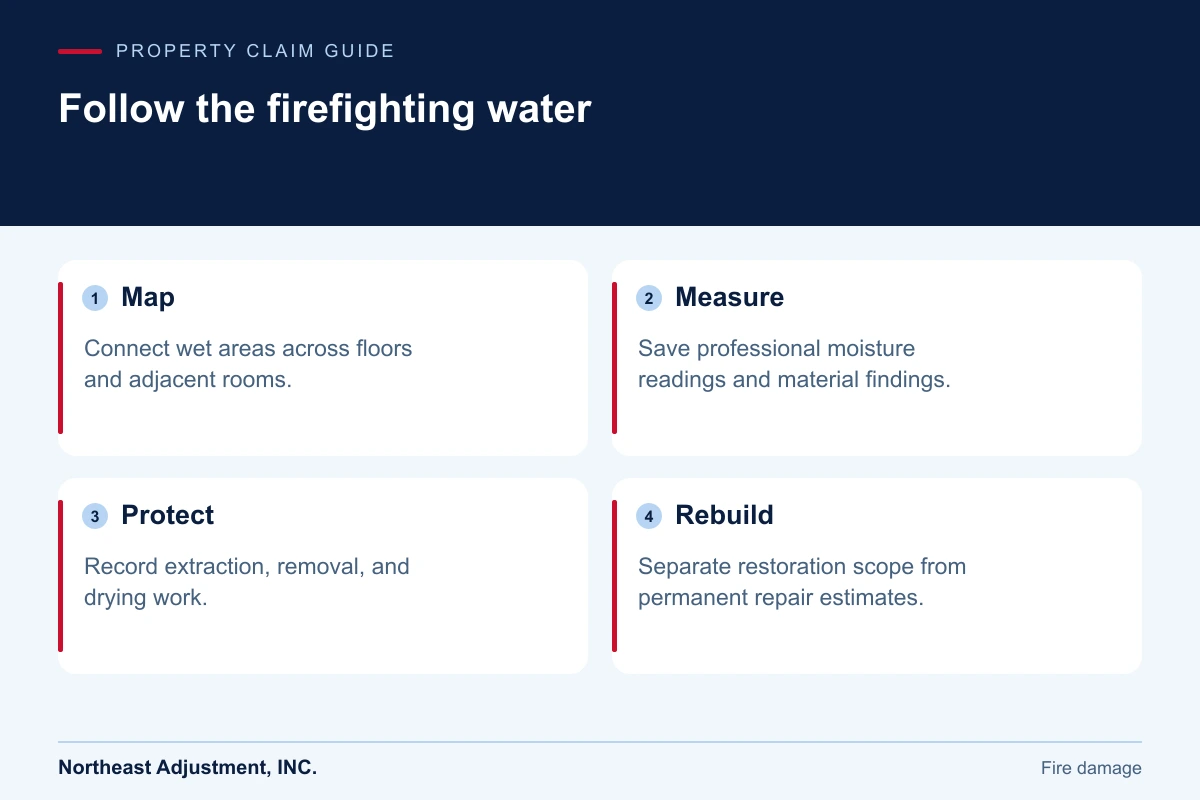
What to include in the water-damage file
- Locations: Floor, room, wall, ceiling, and any connecting spaces.
- Materials: Flooring layers, insulation, cabinetry, trim, and other affected components identified by the professional.
- Contents: Items moved, dried, cleaned, stored, or discarded, with inventory references.
- Work: Extraction records, moisture readings, equipment logs, removal photographs, and invoices.
- Follow-up: Areas still inaccessible, unresolved moisture questions, and planned reassessment.
Separate the emergency drying expense from the permanent rebuild proposal. This helps reviewers understand what has already occurred and what remains estimated. It also reduces accidental duplication when removal appears on both invoices.
An illustrative Northeast building
Imagine a fire on the upper floor of a Pennsylvania duplex. Water is visible in the apartment below and in part of the basement. The owner creates a room map and asks the restoration contractor to document each level individually.
A damp ceiling downstairs and a damaged couch need different descriptions and evidence. The owner's file identifies the building materials, the tenant's belongings, and the known ownership of each item. Separate policies and responsibilities may apply; a single building claim does not automatically include everyone's property.
This example illustrates recordkeeping, not a conclusion about coverage or the cause of every wet area.
Connect the evidence to the repair scope
As wet materials are assessed, ask which can remain, which require removal, and what supports that decision. Preserve safe samples or detailed photographs when materials must be removed. Do not delay necessary protection merely to keep damaged materials in place.
Notify the insurer of additional affected areas as they are discovered. Policy terms and the documented circumstances govern payment for mitigation, resulting damage, and reconstruction. A contractor's scope is supporting evidence, not a coverage decision.
Common questions
Should I wait for the adjuster before starting extraction?
Report the loss promptly and coordinate documentation, but do not delay necessary safety or damage-prevention work solely to wait for inspection. Record why urgent work was needed.
Are drying and repairs the same thing?
No. Drying addresses moisture conditions; repairs restore affected materials and finishes. Both should have clear, separate records where applicable.
Our smoke damage guide addresses another part of the post-fire survey. If you need help assembling the full loss record, contact Northeast Adjustment.