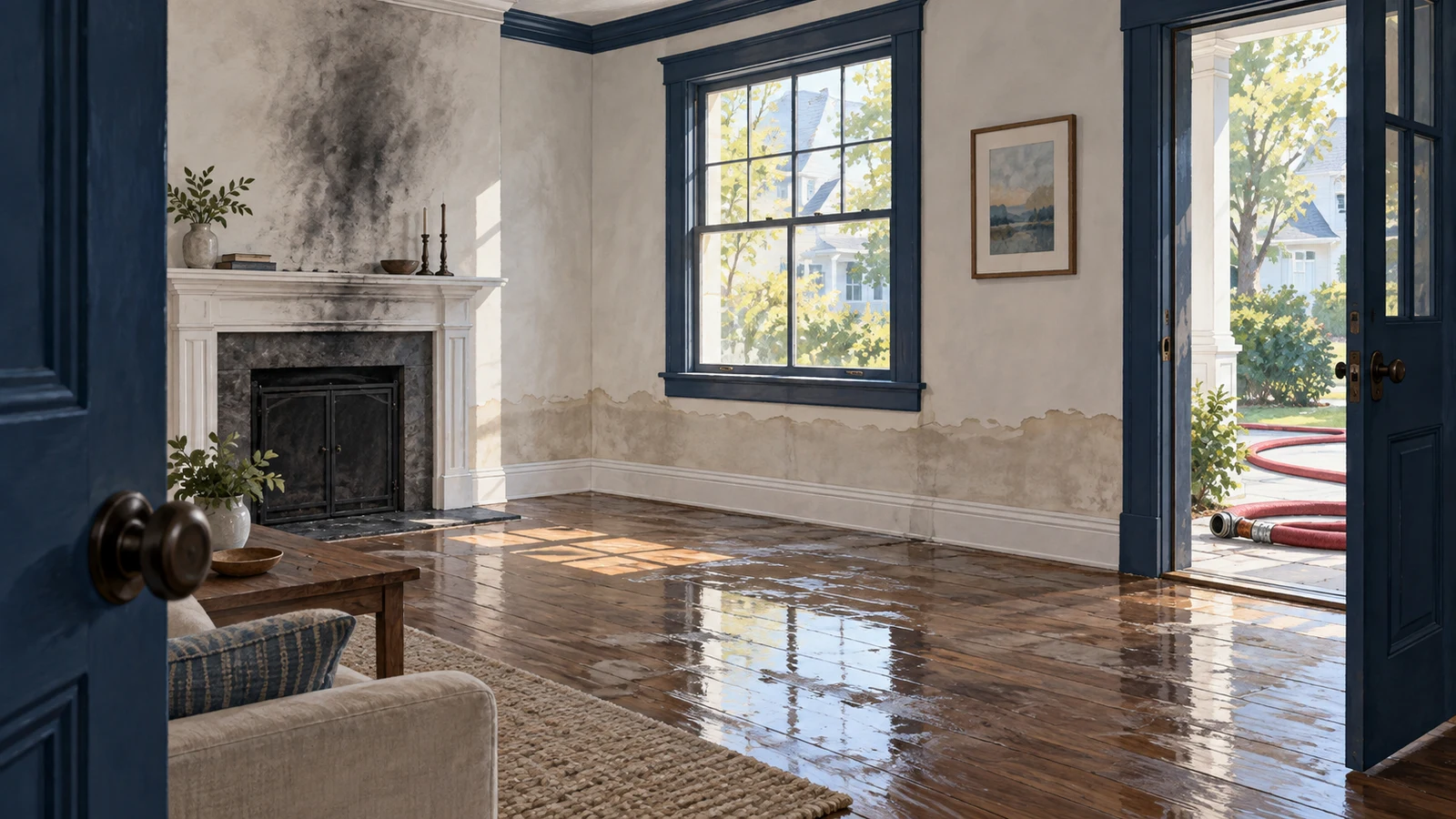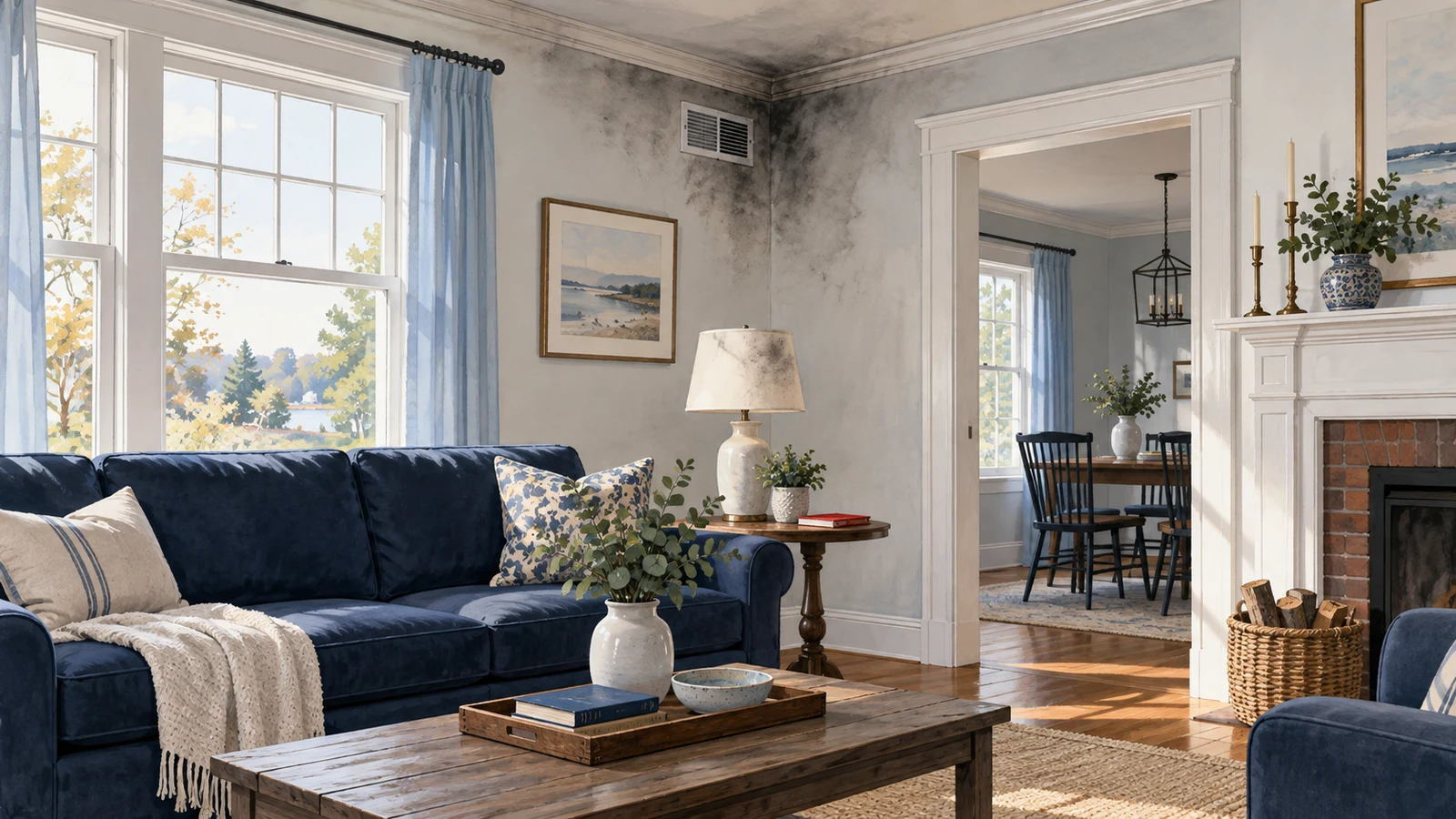


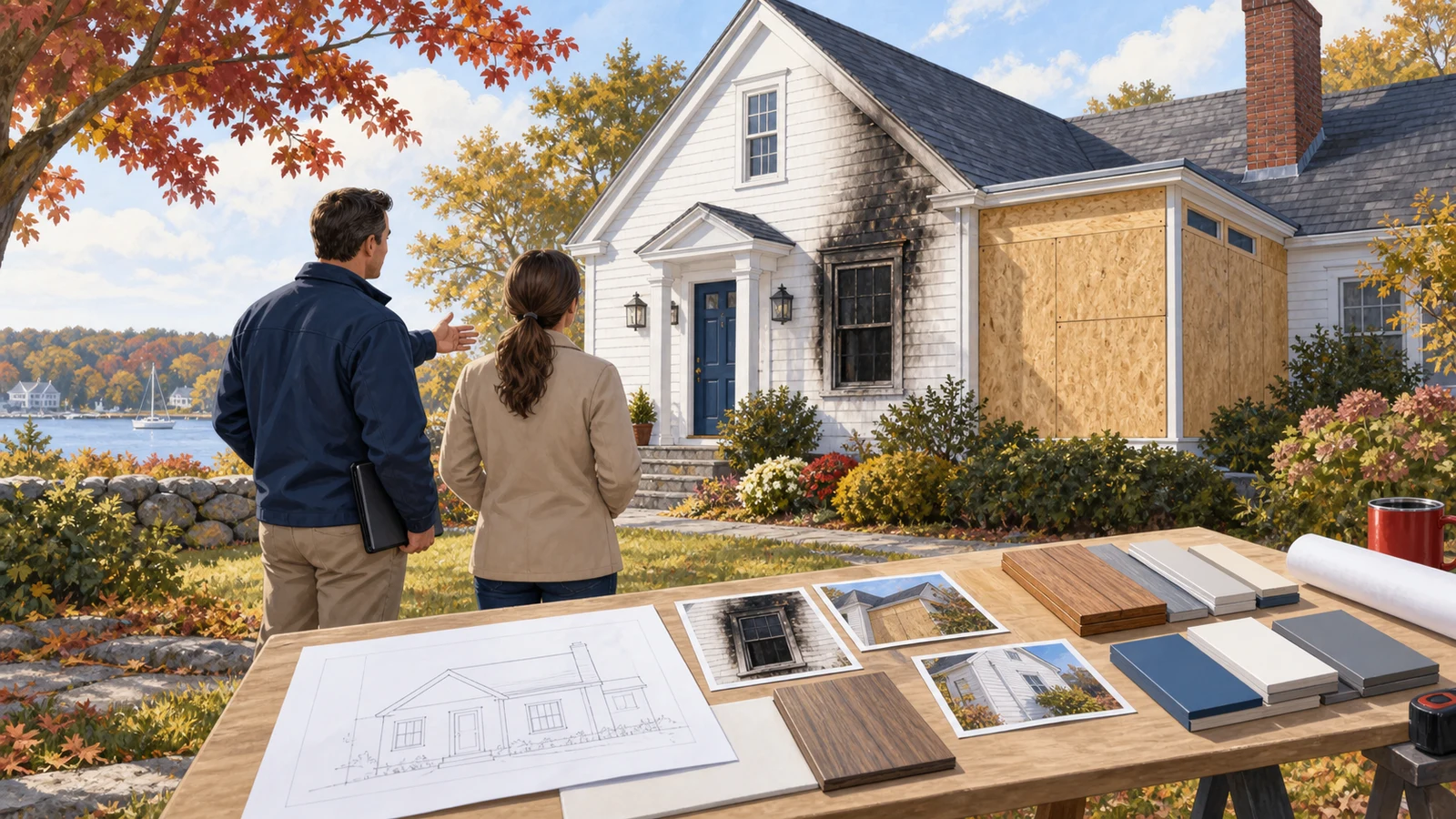
A house fire claim is a process of identifying damage, applying the policy, and documenting the work needed to restore the property. Inspections, contents lists, emergency cleanup, and temporary living arrangements often overlap. Understanding the main stages helps you organize decisions without expecting every claim to follow the same timetable.
USFA estimates that 343,000 residential building fires occurred nationally in 2024. U.S. Fire Administration This United States estimate concerns residential building fires, not paid claims. For an individual Northeast household, the important questions are much more specific: which parts of the building and belongings were affected, what work is necessary, and what the policy provides.
Reporting and immediate protection
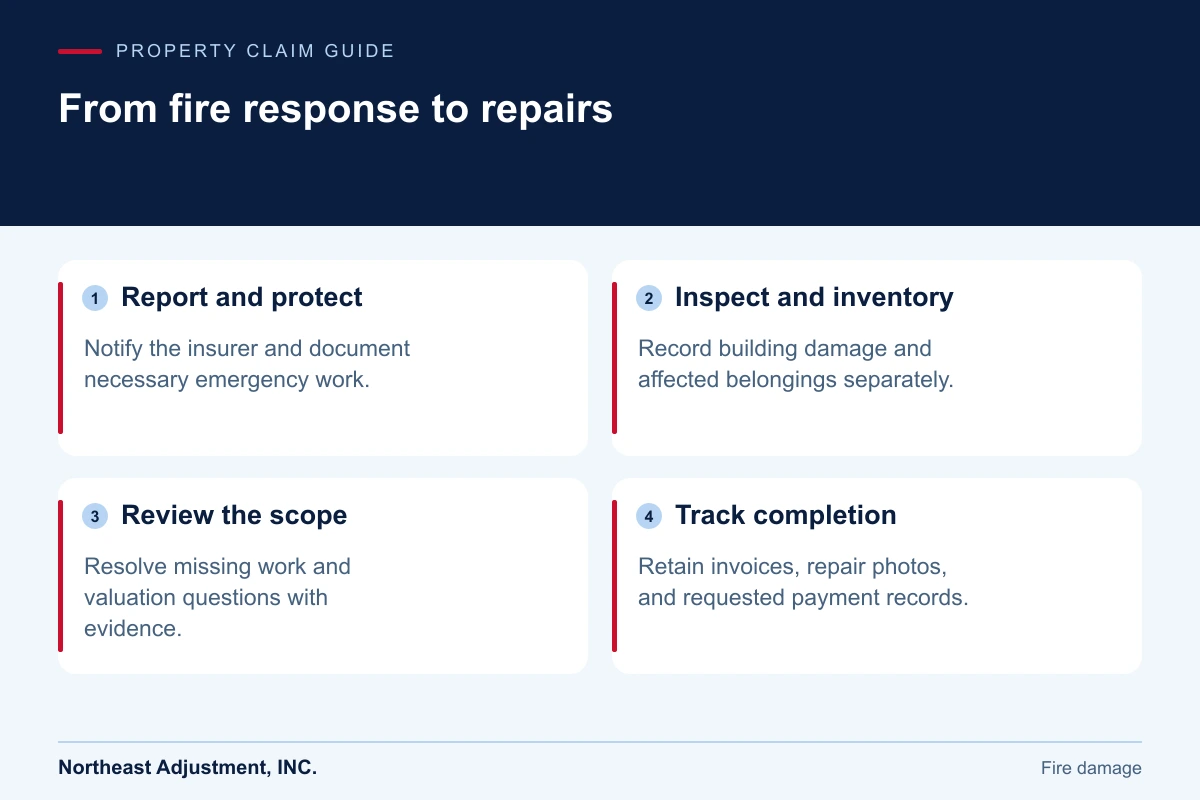
Once everyone is safe, notify the insurer promptly and save the claim reference. Follow officials' access instructions. Arrange appropriate emergency protection and document the work, including board-up, extraction, or other necessary measures.
Ask the insurer what information it needs first and how inspections will be arranged. If the home cannot be occupied, request an explanation of any applicable temporary living expense provisions. Keep receipts and normal household expense records so additional costs can be identified.
The Connecticut Insurance Department's claims guide describes reporting, damage assessment, coverage review, and rebuilding as connected stages. The guide is an overview; the actual policy and circumstances control your claim.
Inspection and damage development
The first inspection may identify visible damage while leaving inaccessible areas for later assessment. Keep a room list showing what was inspected, which professionals attended, and what remains unresolved.
Building damage and personal belongings usually need separate records. A kitchen wall belongs in the building scope; a freestanding dining table belongs in the contents inventory. Ownership and policy definitions still matter for particular items.
Ask professionals to explain smoke, water, electrical, or structural findings within their expertise. If additional damage is discovered during necessary removal, document it and inform the insurer promptly.
Review estimates by the work described
Compare repair estimates room by room. Look at material type, dimensions, quantities, labor tasks, removal, access, and restoration of finishes. A difference in totals may come from missing work rather than a different price for the same task.
Keep a list of questions and supporting documents. Ask for the explanation of any coverage decision separately from the explanation of repair pricing. These are related but distinct issues.
Do not assume a first payment equals the final available amount, or that more money will automatically follow. Replacement-cost conditions, depreciation, limits, deductibles, and completion requirements must be reviewed in the actual policy and claim correspondence.
A practical progress checklist
- Save every estimate with its date and version.
- Identify who is responsible for each inspection or missing document.
- Track building, contents, and temporary expense records separately.
- Record requested forms and actual deadlines without relying on a generic schedule.
- Keep repair contracts, change orders, invoices, and completion photographs together.
Make a short weekly review of open questions. A single clear list is easier to manage than searching through scattered texts when a contractor needs a decision.
How this can look in an older home
Consider a hypothetical Pennsylvania house with plaster walls and a kitchen fire. Initial photos show the kitchen, but professional assessment later identifies wet materials beneath it. The repair scope changes as those conditions become accessible.
The owner preserves the earlier estimate, adds dated photographs and findings, and asks the insurer to review the additional work. This creates a traceable update. It does not guarantee approval or mean every hidden condition resulted from the fire.
Common questions
How long will the claim take?
The extent of damage, access, investigations, repair availability, and documentation can all affect timing. Ask for the next expected action and who owns it rather than relying on a promised universal completion date.
Can permanent repairs start immediately?
Coordinate inspection and documentation needs before permanent work covers evidence. Necessary emergency protection and safety work should not be delayed solely for a routine inspection.
Who checks the final paperwork?
Review it with the appropriate claim representative and contractor. Ask about unresolved items before signing documents you do not understand.
For a related task, see documenting belongings before disposal. Contact Northeast Adjustment for help organizing the evidence and questions in a fire claim.