


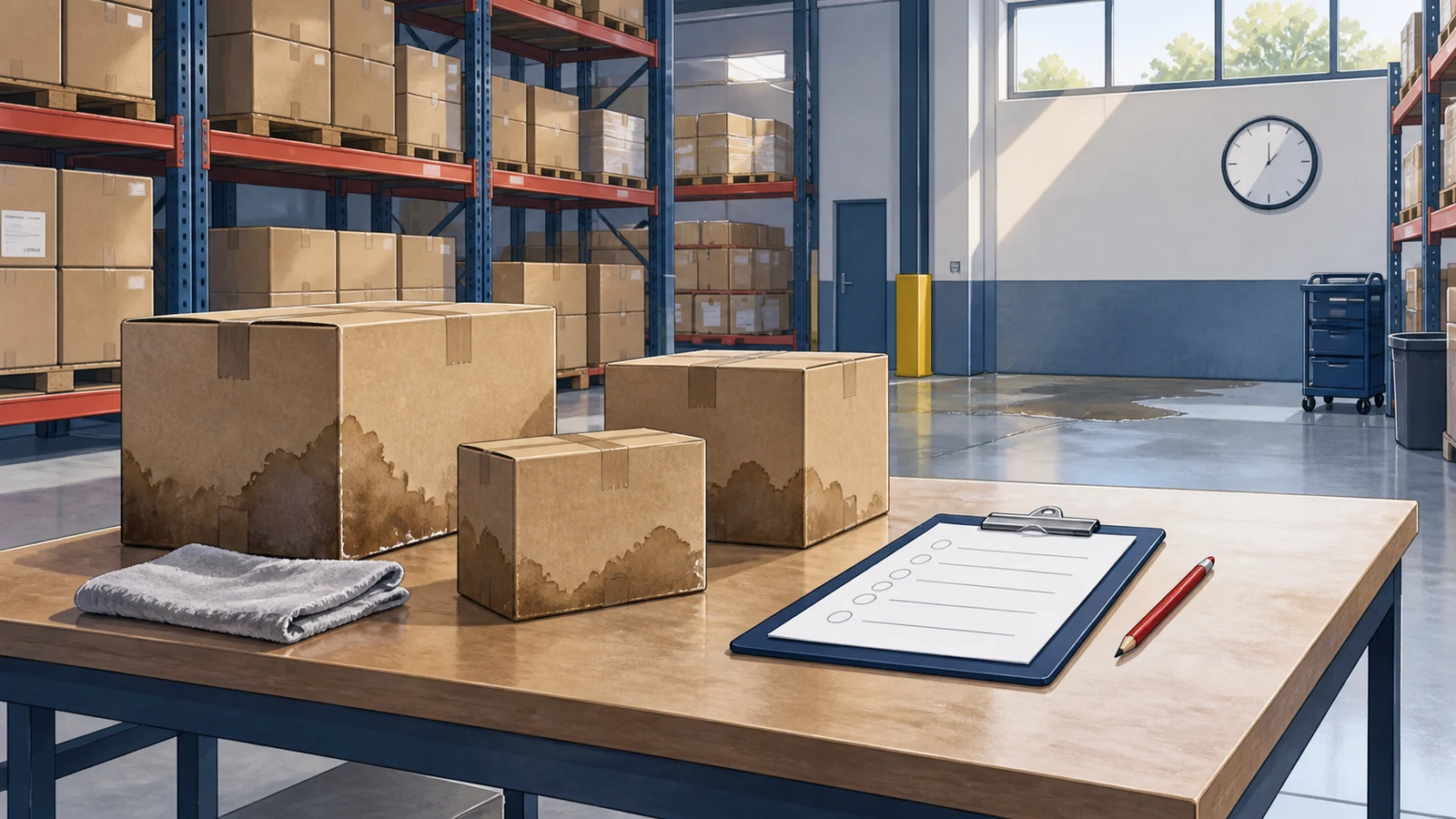
When water reaches a business stockroom, the owner may need a plumber, restoration team, inventory count, and revised opening plan on the same day. Organizing the claim into separate parts helps keep those responsibilities manageable.
SBA's 2025 Connecticut profile lists 27,277 small retail-trade businesses in its underlying 2022 business data. These are businesses, not properties or claims, but the figure gives local context to the need for practical stock and interruption records. SBA Connecticut profile
Start with the premises and source
Arrange safe access and source control through the appropriate professionals. Avoid standing water near electrical equipment and do not compromise fire protection by closing an unfamiliar valve.
In an illustrative Connecticut store, water from an upstairs pipe reaches a sales area and stockroom. The business leases the space and owns the merchandise. The landlord's building responsibilities and the tenant's contents interests may need separate attention.
Notify the relevant insurers and landlord promptly. Preserve the plumber's findings and photographs. Describe the observed source rather than assuming every type of water damage is treated alike under the policy.
Build a stock record that can be checked
Photograph affected goods in place when safe, then identify items by stock code, description, quantity, location, and condition. Save the inventory export closest to the event and the supporting purchase records.
Distinguish:
- Goods physically damaged by water.
- Goods moved to prevent damage.
- Items held for professional assessment.
- Stock returned to a supplier.
- Items discarded under appropriate safety directions.
- Any recoverable value or credit.
Keep retail prices and purchase costs separately. The policy's valuation terms determine which figures are relevant; a shelf-price total is not automatically the insured loss.
If goods cannot be sold safely, follow applicable requirements. Document them without delaying safe disposal merely to preserve physical evidence. Ask the insurer how to handle inspection and disposition records.
Preserve the emergency-work evidence
Request the restoration contractor's affected-area diagrams, readings, equipment logs, removal records, and completion explanation. Match invoices to the documented work.
If building materials or fixtures must be removed, record the condition before and during the process. Ask who authorizes permanent reconstruction, especially in leased premises.
Do not let one broad “cleanup” total swallow unrelated tasks. Separate emergency stabilization, contents handling, storage, reconstruction, and ordinary maintenance so each can be reviewed on its facts.
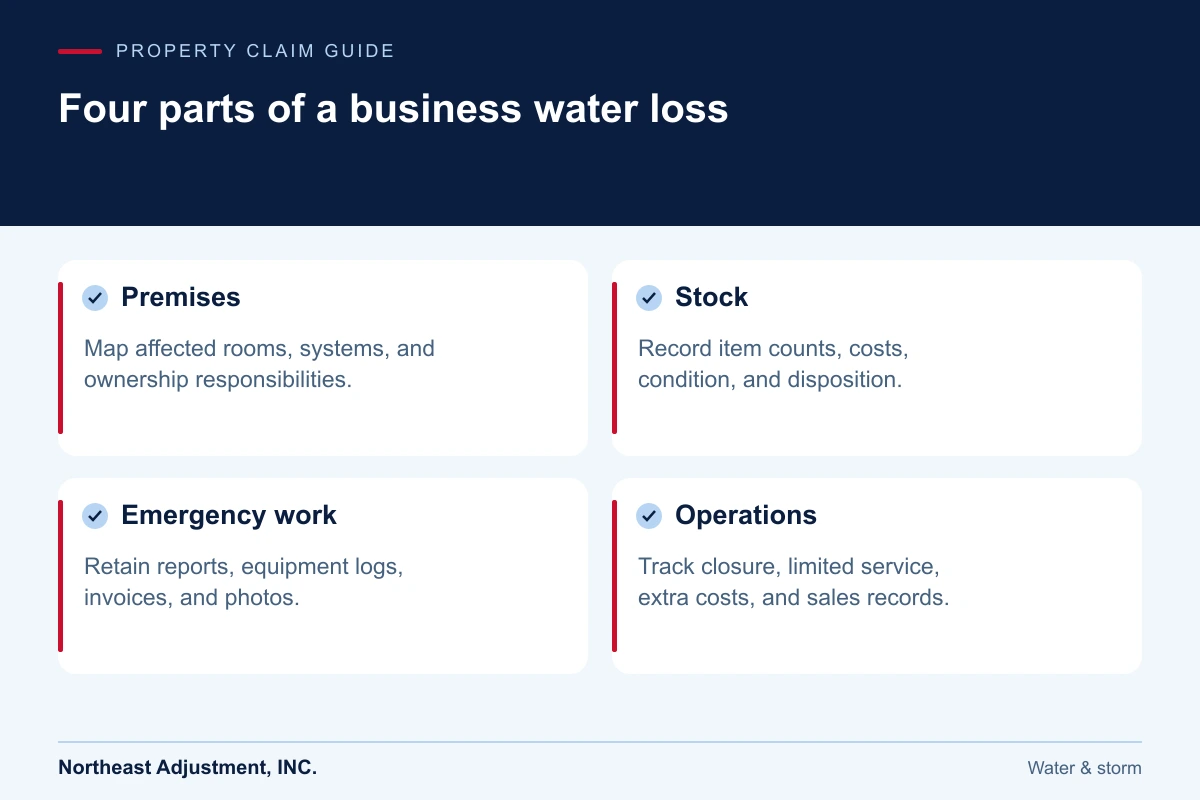
Record what the business could and could not do
A closed door is only part of an interruption story. Note when operations stopped, which functions were unavailable, whether some sales continued, and when service resumed.
For the illustrative store, online orders might continue while walk-in sales stop. Record both. Keep normal sales history, canceled orders, inventory shortages, staffing changes, and temporary-location expenses.
The NAIC's business-income guidance distinguishes business interruption and related coverages. Whether they apply depends on the policy, cause of loss, and conditions. Lost revenue alone does not prove the insured amount.
Ask the accountant to help explain seasonal patterns and continuing versus avoided expenses. Do not count the same stock loss again as lost sales without understanding the policy's calculation.
Maintain one event timeline
Use a shared timeline for discovery, source repair, inspection, cleanup, stock disposition, repair work, and changes in operations. Each entry should point to its evidence.
Record reasons for delays accurately. A supplier's late delivery, an unavailable inspection, and unrelated business decisions are different facts. Preserve messages that explain them rather than reconstructing the story months later.
If a revised scope is needed, identify the new finding and submit it promptly. Keep the earlier version so the insurer can see what changed.
Questions for business owners
Does the landlord's claim handle everything?
Usually several interests need review. Check the lease and your own policies rather than assuming merchandise or income is included.
Should I use retail value for damaged stock?
Ask which valuation basis applies. Keep acquisition costs, selling prices, and any credits available.
Can I claim every day sales were lower?
The policy and evidence determine the covered period and calculation. Explain the connection to the physical loss.
Browse our commercial claim articles for related records. Contact Northeast Adjustment to discuss the building, inventory, and interruption documentation for your business.