


A burst pipe, damaged window, or kitchen fire can interrupt a holiday when regular offices are closed. You can still take useful steps: protect people, arrange necessary safe help, report the loss through available channels, and keep a record that the next person can follow.
Thanksgiving has a specific fire connection. Cooking caused about 74% of residential building fires on the holiday in USFA's 2017–2019 analysis. This is historical U.S. data for incidents with sufficient cause information, not a forecast for this Thanksgiving. USFA holiday-fire study
Safety comes before the claim file
Use emergency services for fire, active smoke, hazardous conditions, or other urgent threats. Stay clear of water near electrical equipment, unstable materials, and damaged utility connections.
Do not reenter an unsafe property to retrieve a policy or photograph. Many records can be obtained later. If a professional must remove or secure something immediately, ask for documentation when practical without delaying necessary work.
In an illustrative Pennsylvania home, a holiday guest notices water coming through a ceiling. The family moves away from the affected area, contacts appropriate help, and reports what is visible. They do not need to decide whether the loss is covered before addressing the immediate problem.
Use the insurer's available reporting channel
Look for claims information on the policy, insurer's website, or existing account. Record the time of the report and obtain a claim number or confirmation.
If you reach an answering service or submit an online report, preserve the confirmation and identify the next step. Do not assume a message to an individual employee has been received simply because it was sent.
Provide the address, contact details, observed damage, and actions already taken. State uncertainty accurately. If you discovered the damage after being away, distinguish discovery from an unknown failure time.
Authorize necessary work with clear terms
Emergency vendors may be busy. Ask what work is proposed, how pricing is calculated, and who is responsible for payment. Read the authorization, including equipment, storage, and follow-up charges.
Separate urgent stabilization from permanent reconstruction. A temporary roof covering, water extraction, or securing an opening may be needed before a full estimate is available.
The New Jersey DOBI storm-claims guidance recommends keeping receipts and documenting damage. Ask contractors for photographs and written findings that show what they encountered and did.
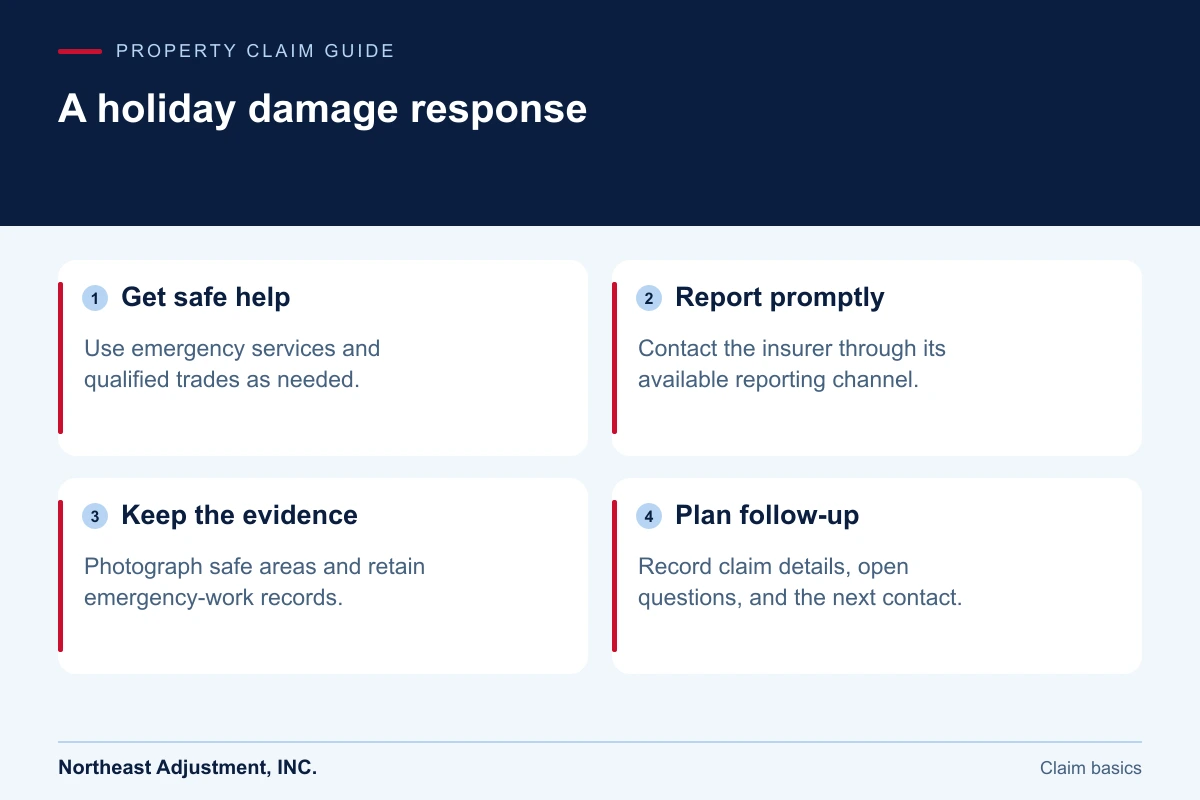
Keep a small first-day evidence folder
You do not need a perfect filing system. Start with:
- The reporting confirmation and claim number.
- Safe wide photographs of affected areas.
- Close-ups linked to room names.
- Contractor findings and work authorizations.
- Receipts for emergency work and necessary temporary arrangements.
- A short timeline of discoveries, calls, and decisions.
Preserve damaged items when safe and consistent with professional instructions. Unsafe food, contaminated materials, or hazards need appropriate handling. Record them without postponing safety measures.
If family members or staff help, ask them to send their photos and notes to one person so the evidence is not scattered across several phones.
Ask what can be decided now
The insurer may need further inspection before resolving coverage or repair scope. Ask which immediate questions can be answered: evidence requirements, emergency-work documentation, access arrangements, or temporary accommodation procedures.
A holiday surcharge or emergency expense is not automatically covered merely because it was incurred. Keep the invoice and reason for the action, then ask how the policy applies.
Likewise, a delayed callback does not necessarily mean the claim has been denied. Record open questions and follow up through the appropriate channel when offices reopen.
Prepare the next working-day handoff
Write a short summary identifying the damage, protective work, outstanding safety or access issues, and documents available. Note who is expected to call whom next.
If another household member will speak with the insurer, share the same factual record. Correct mistakes promptly rather than allowing different versions of the event to circulate.
Common questions
Should I wait until Monday to report?
Use available reporting channels promptly and retain confirmation.
Can I book temporary accommodation?
Choose safe necessary arrangements, document the reason, and contact the insurer about policy terms and expense requirements.
Must I know the final repair cost?
No. Initial reporting often occurs before the scope is complete. Continue providing accurate findings as they become available.
Our claim resources explain the next stages. Contact Northeast Adjustment to discuss organizing the evidence and follow-up questions for your property damage.