


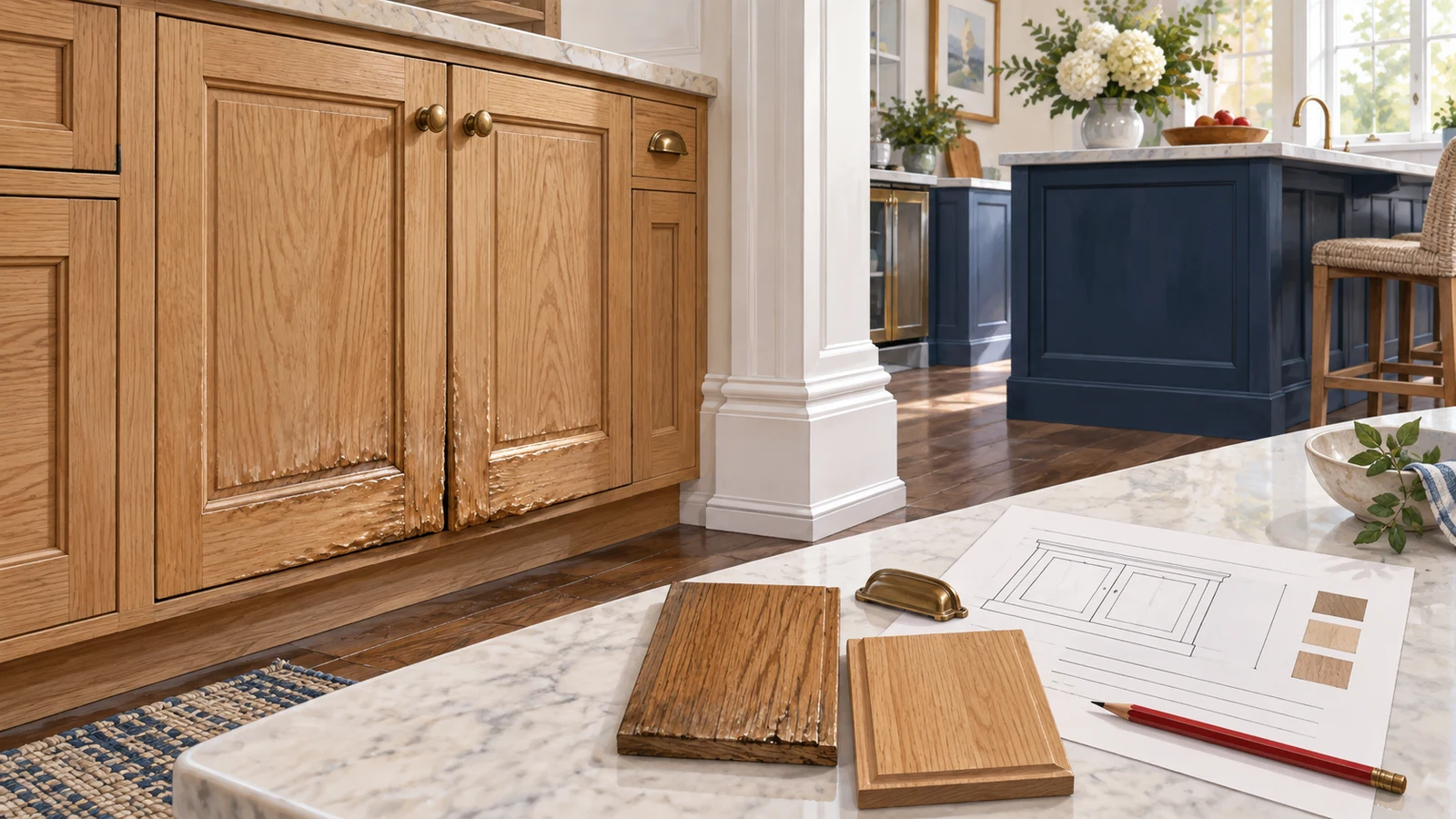
Two kitchens with the same number of cabinet doors can have very different construction and repair needs. After property damage, a useful estimate starts with what is actually there: materials, dimensions, finishes, installation details, and the specific components affected.
USFA estimated $572.7 million in U.S. residential cooking-fire property losses during 2023. That national figure includes more than cabinetry and is not a guide to an individual kitchen's repair price. It provides context for documenting high-detail areas carefully after a fire. USFA cooking-fire estimates
Identify the existing construction
Photograph the kitchen or built-in area as a whole, then individual units, doors, drawer fronts, panels, trim, and hardware. Record accessible manufacturer labels or product information.
Ask the contractor to describe the cabinet-box material, door style, finish, dimensions, and installation. A general description such as “wood cabinets” may omit meaningful differences.
In an illustrative renovated Long Island kitchen, custom-height cabinets meet an older ceiling and a stone countertop spans several units. The repair proposal should explain the relationship among those parts rather than pricing a standard replacement package without context.
Save renovation contracts, drawings, invoices, and earlier photos when available. These can help establish specifications even if the original manufacturer is no longer known.
Show damage component by component
Create a labeled list of affected pieces. For each, record the location and condition: swelling, separation, staining, heat effects, visible deposits, or another observed issue.
Avoid saying every cabinet is damaged because one unit is affected. Equally, do not assume that a clean-looking door proves the box or material behind it is unaffected.
Ask qualified professionals to assess concealed or material-specific concerns. Do not remove a countertop or built-in appliance yourself merely to inspect what is underneath. Access can involve weight, utilities, and risk of additional damage.
Ask for the repair method and its basis
The estimate should explain whether cleaning, refinishing, component repair, or replacement is proposed. Ask what evidence supports that approach and what result the contractor expects.
If an existing finish or component is unavailable, request supplier or manufacturer information. Identify proposed substitutes and any compatibility or installation issue.
Matching and the extent of covered replacement depend on the policy and applicable rules. A discontinued finish does not automatically establish a right to replace an entire kitchen. The factual availability problem still deserves a clear record.
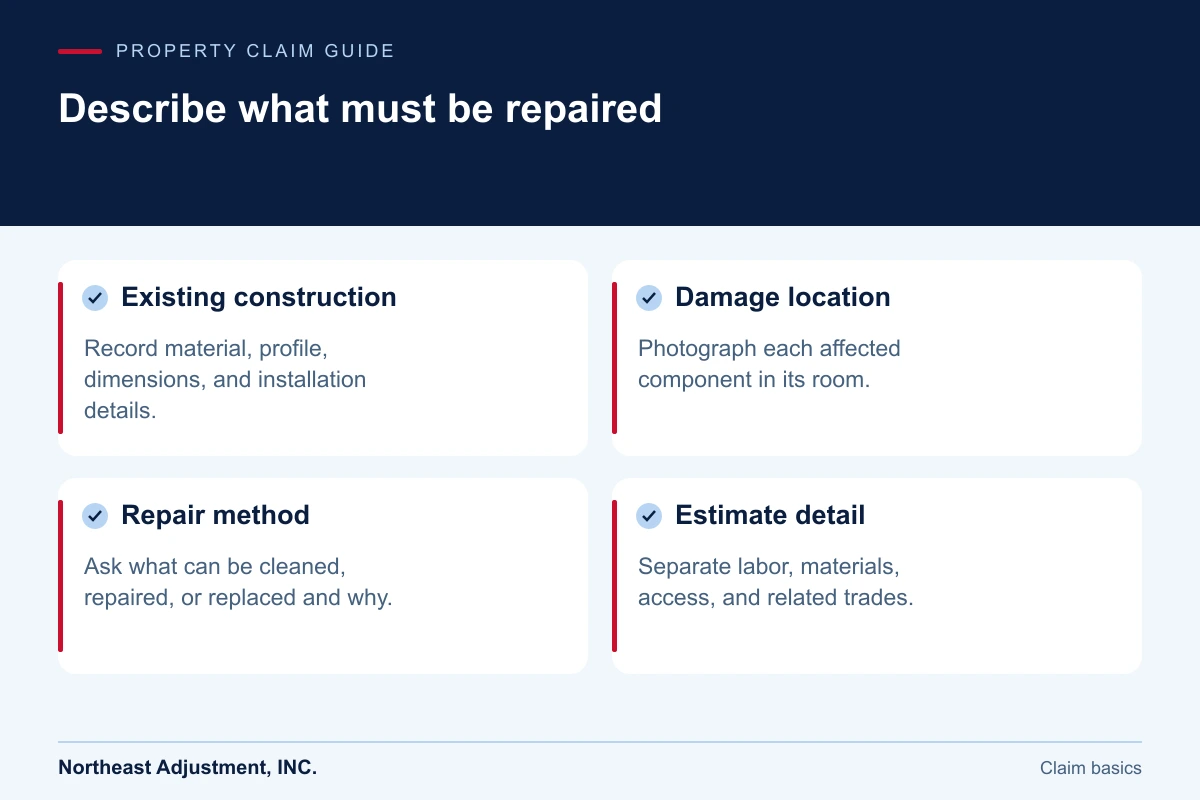
Include related work without hiding it
A cabinet project may involve disconnecting appliances, plumbing work, countertop handling, wall repair, trim, or finish work. Each item should explain why it is needed and where it occurs.
Review the estimate for:
- Affected quantities and measurements.
- Material and finish specifications.
- Removal and disposal.
- Installation and adjustment.
- Access or protection work.
- Related trades and inspections where needed.
Separate elective improvements from damage repairs. If you choose upgraded hardware or a different layout, document that choice and its cost rather than assuming the insurer will fund it.
The FTC's contractor guidance recommends written estimates that describe the work and materials. That clarity is useful when comparing a contractor's proposal with the insurance estimate.
Compare differences at the item level
If the estimates disagree, identify the precise issue: material, quantity, method, labor, or omitted work. Ask both parties to explain the basis for their position.
A supplier's specification sheet may resolve a material question. A photograph may clarify an affected panel. A contractor's explanation may show why adjoining work is necessary. A larger total by itself does not resolve any of those issues.
Preserve revised estimates and submit new findings promptly. If removal exposes additional damage, photograph it before reconstruction conceals it and ask how the scope should be updated.
Questions about custom finishes
What if I have no original invoice?
Use earlier photographs, contractor records, labels, measurements, and professional identification where possible.
Can I replace only the damaged door?
That depends on construction, availability, damage, and the proposed repair. Ask for an item-specific assessment.
Does “custom” guarantee a higher payment?
No. The claim needs evidence of the existing property and covered repair cost, subject to policy terms.
Explore our repair-estimate articles for related documentation. Contact Northeast Adjustment to discuss the materials, findings, and scope questions in your property claim.