


The declarations page is the summary near the front of your insurance policy. It identifies the insured property, policy period, and selected coverage information. It is a helpful starting point, but it does not contain every definition, exclusion, condition, or endorsement that could affect a claim.
A review before a loss can be useful in a region with varied hazards. NOAA counted 95 billion-dollar weather and climate disasters affecting New York from 1980 through 2024. NOAA National Centers for Environmental Information The billion-dollar threshold refers to each event's total U.S. losses. The historical count does not forecast future damage. It helps explain why a New York owner should understand which documents address wind, water, and other events before an urgent coverage question arises.
Confirm the people, property, and dates
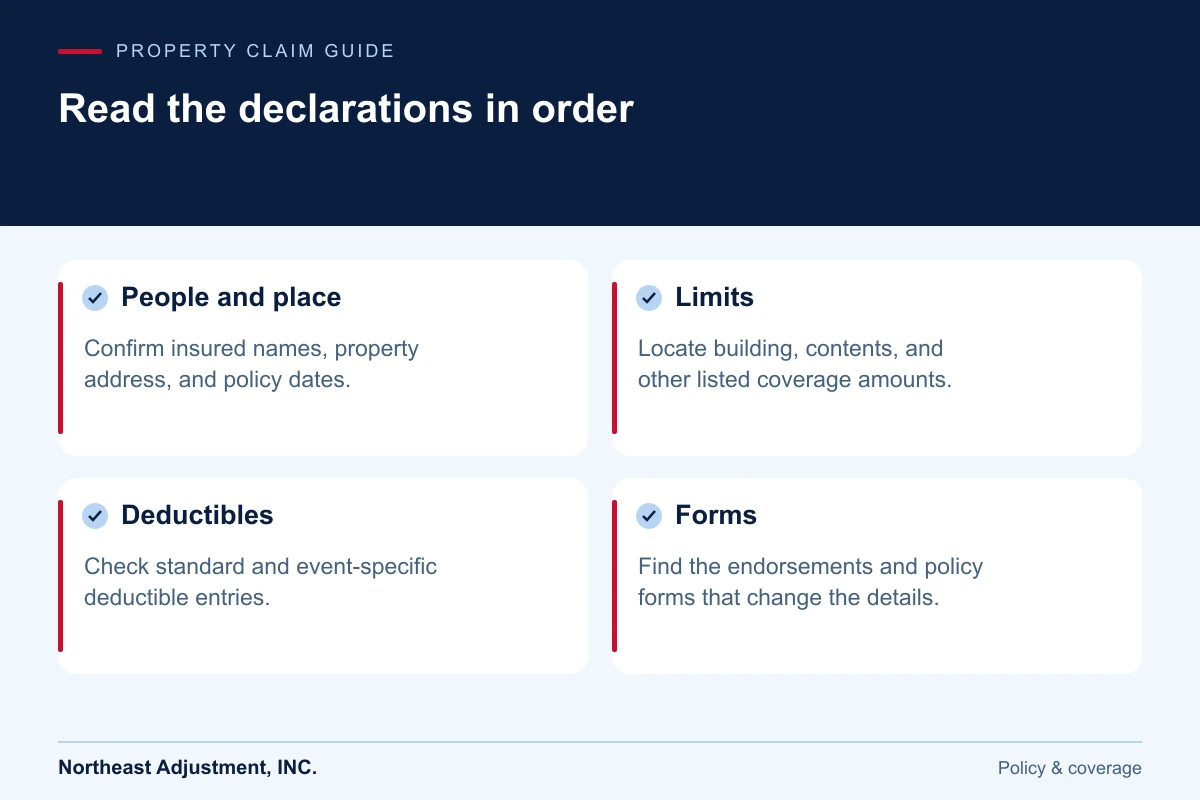
Check the named insured, property address, mailing address, and policy period. A mailing address may be different from the insured location, so read both carefully.
Look for mortgagee or other interested-party entries and confirm they reflect your current situation. If you purchased the home, changed ownership, or moved into a different occupancy arrangement, ask your agent or insurer how the records should be updated.
The relevant policy is the one applicable to the date of the event, including its endorsements. Keep older versions in your records rather than replacing every file with the newest renewal.
Find the coverage amounts
Look for the limits listed for the dwelling, other structures, personal property, and loss of use or similar categories. Names and presentation vary by policy form.
A limit is not a promised payment after any damage. It operates with covered causes, exclusions, valuation provisions, deductibles, and other conditions. The dwelling limit also should not be mistaken for the property's market sale price.
The Connecticut Insurance Department's claims guide explains that coverage and claim payments require policy review in addition to estimating the physical damage.
Read deductibles and endorsements together
Locate the standard deductible and any separate wind, hurricane, or other event-specific entry. If a deductible is expressed as a percentage, ask which amount the percentage applies to and what triggers its use.
Next, find the forms or endorsements list. These documents may add, remove, or change coverage. A sewer backup endorsement, special item schedule, or valuation change may matter more to a particular question than the large coverage total on the front page.
Request a complete policy package if you only have the declarations. A form number by itself does not explain what that form says.
Your declarations review checklist
- Are the insured names and property location correct?
- Does the policy period match the documents you intended to review?
- Which limits apply to the building, belongings, and additional expenses?
- Are there separate deductibles for particular events?
- Which listed endorsements should you obtain and read?
- Has a renovation, rental arrangement, or valuable purchase created a question for the insurer?
Write questions beside the relevant entry. Asking “What does form XYZ change?” is more useful than asking whether the policy covers everything.
A hypothetical coastal property review
Consider a Long Island homeowner reviewing a renewal after renovating a detached garage. The declarations show the property address and several coverage categories, but the owner is unsure how the garage and stored equipment are treated.
The owner requests the full policy and asks about the building's use, applicable limits, and any separate deductible conditions. The declarations guide the conversation; they do not resolve the questions alone. This example does not assume that the renovation is covered or that a particular adjustment is necessary.
Common questions
Is the declarations page proof of every coverage?
It is evidence of selected policy information, but the full contract and endorsements determine the details. Keep them together.
Can I use the renewal page for an older claim?
Ask for the policy and forms in force on the loss date. Renewal changes may make the current page different.
What if I spot an error?
Contact the agent or insurer promptly, explain the facts, and save the response. Do not edit the policy document yourself.
See what a public adjuster does for the claim role. If you need help organizing a policy and loss record, contact Northeast Adjustment.