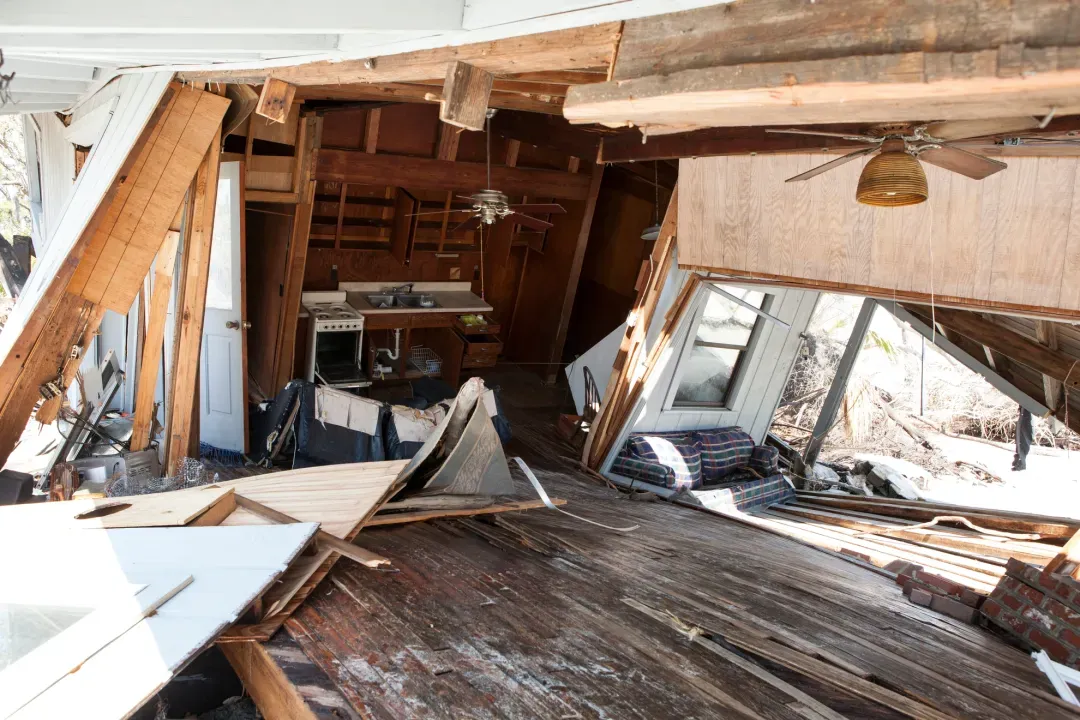



A roof leak after a storm raises two connected questions: where did water enter, and what property did it affect? A photograph of a ceiling stain answers neither question completely. The most useful record combines safe interior documentation with a qualified roof assessment and the property's recent history.
NOAA recorded 48 billion-dollar severe-storm events affecting New York during 1980–2024. NOAA National Centers for Environmental Information This threshold applies to each event's U.S. losses. NOAA's count is historical and does not identify the cause of a leak at a particular home. Even after a documented storm, the roof's condition and the actual entry route need to be investigated.
Start below the roof
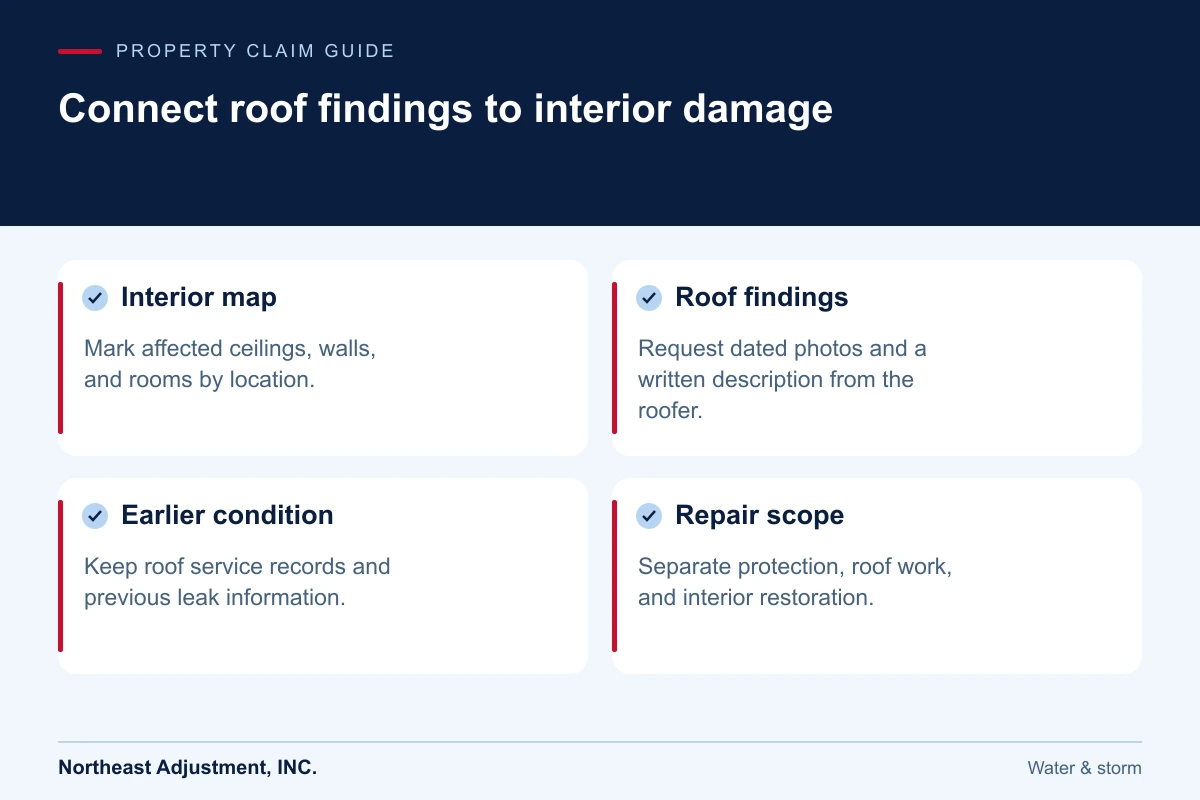
Photograph each affected room from a safe position. Include the full ceiling or wall and closer views of staining, peeling finishes, wet trim, or affected belongings. Mark the location on a rough floor plan.
Keep people away from sagging ceilings and other questionable areas. Do not puncture a ceiling or enter an attic with structural or electrical concerns to improve the documentation. Ask the relevant professional to assess those hazards.
Record when the leak was discovered, whether water was active, and what changed during the event. If no one witnessed the first entry, state that clearly.
Request specific roof findings
Have a qualified roofer inspect areas that require roof access. Ask for dated photographs and a written report identifying the affected slope or section, visible condition, proposed entry point, and any limits on the inspection.
The report should distinguish observed storm-related changes from wear, prior repairs, or uncertain conditions. An estimate labeled “storm roof replacement” without supporting observations leaves important questions unanswered.
Ask whether flashing, roof coverings, penetrations, drainage components, and nearby exterior details were considered as relevant. The appropriate assessment depends on the building; a flat-roof addition and a steep main roof may need separate attention.
Assemble the before-repair package
- Interior photographs labeled by floor and room.
- The roofer's location-specific photographs and written findings.
- Roof age information if known, installation records, warranties, and maintenance invoices.
- Prior leak or repair history, including areas that had been addressed.
- Temporary protection records and the proposed permanent scope.
New Jersey's insurance guidance recommends documenting damage and retaining repair records. Report the event promptly and coordinate inspection before permanent work removes or covers evidence. Necessary protection should proceed safely when needed.
Separate the repair tasks
A roof estimate, a water mitigation invoice, and an interior painting proposal may all relate to the same leak. Keep them distinct and check how the scopes connect.
For example, ask whether the interior estimate addresses wet material assessment before cosmetic finishing. If a contractor proposes replacing a larger roof area, request the technical reason rather than assuming visible interior damage proves that scope.
The insurer evaluates coverage under the policy, including cause and applicable exclusions. Neither a contractor's diagnosis nor a recent storm automatically guarantees payment.
Picture a mixed-roof home
In a hypothetical Pennsylvania home, a rear addition has a different roof system from the main house. Water appears near the point where the two sections meet.
The owner photographs the interior location and provides older invoices for work at that junction. A roofer documents the current findings and explains what can and cannot be concluded. The claim file now contains more useful information than a general statement that “the whole roof leaked.”
This example is about connecting evidence, not recommending a particular repair or predicting coverage.
Common questions
Should I climb up for photos before the roofer arrives?
No. Use safe ground-level and interior views. Ask the roofer to document areas that require professional access.
Does a storm date prove storm damage?
It establishes context. Physical findings and the property's history are still needed to evaluate the source and timing.
What if another leak appears during repairs?
Record the new location and notify the insurer with professional findings. Preserve the original scope and explain what changed.
Our guide to emergency and permanent repairs explains the handoff. If the roof and interior records need to be assembled into a clear claim, contact Northeast Adjustment.