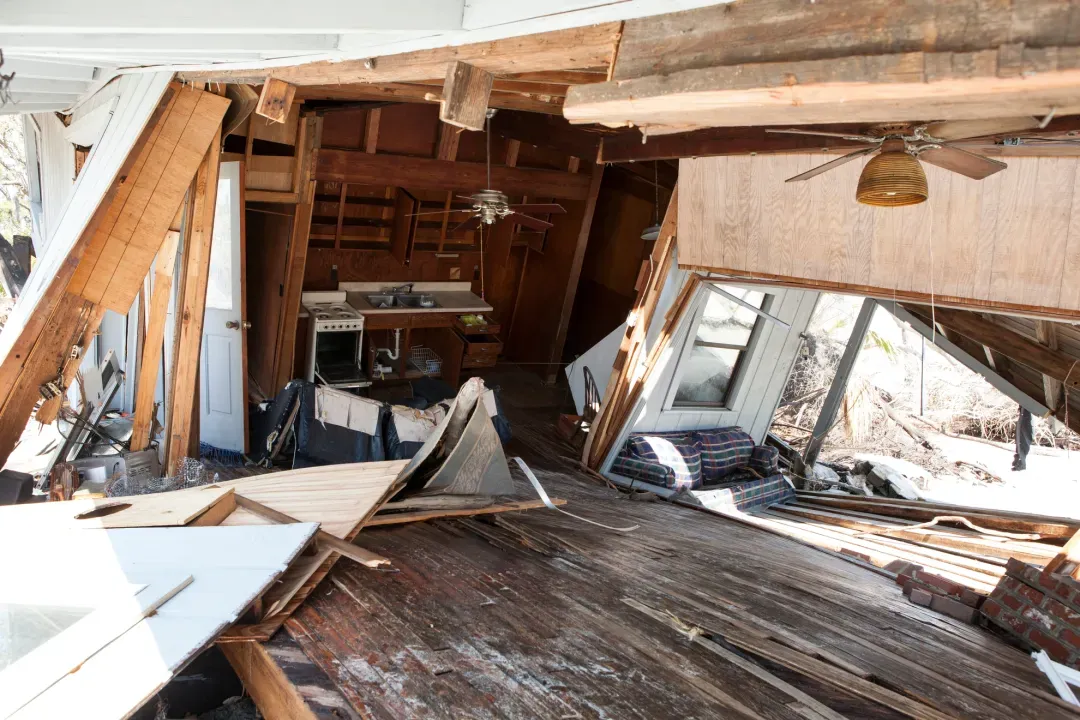



After a storm, “the house flooded” may simply mean there is water inside. For insurance purposes, the route water took can matter considerably. Rain entering through a damaged roof or window presents different questions from water accumulating on the ground and entering a basement.
Regional weather research makes careful documentation worthwhile. The Fifth National Climate Assessment shows a 60% increase in Northeast precipitation falling on the heaviest 1% of days over 1958–2021. U.S. Global Change Research Program; NOAA-hosted copy The measure concerns precipitation on the heaviest one percent of days, not all rainfall and not a sixty-percent increase in an individual property's flood risk. It is historical regional context for understanding water pathways.
Describe the route before choosing a label
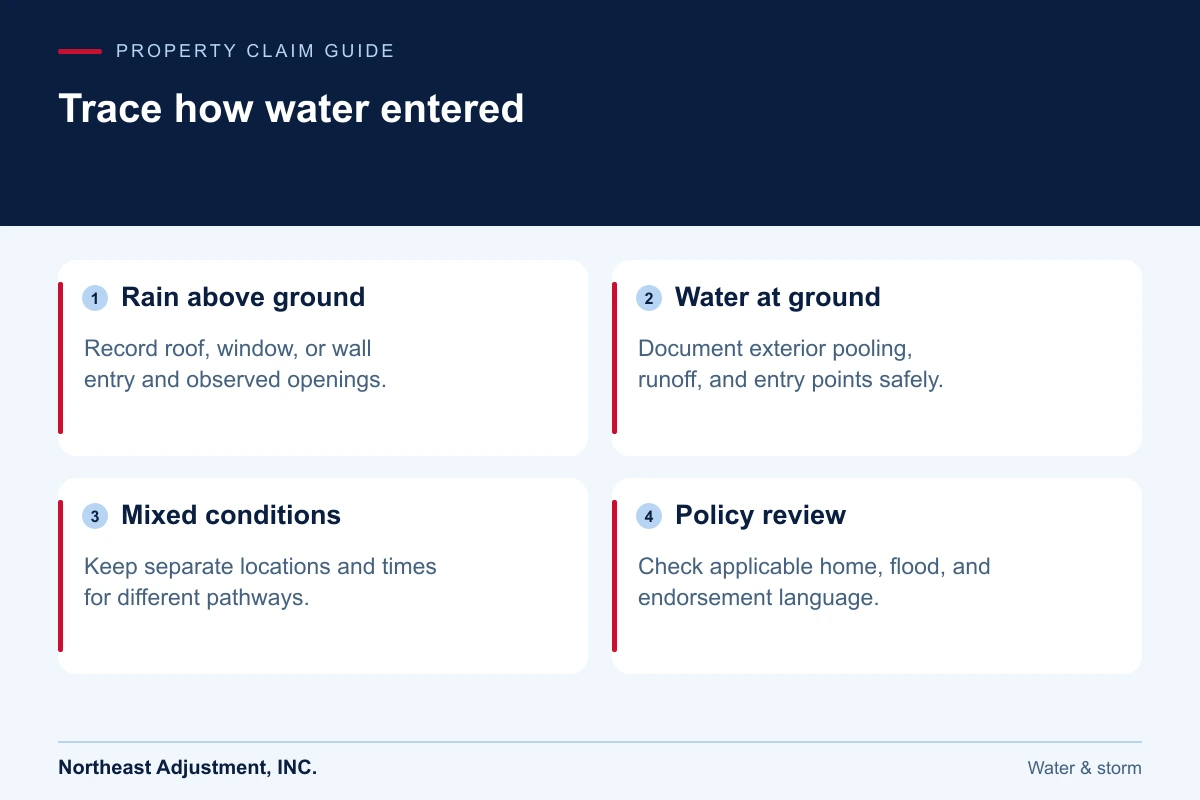
Write down the location and sequence of observed water. Did staining begin around an upper window? Was water running down an interior wall? Did the yard fill before water appeared at a basement opening?
Photograph exterior conditions only from safe locations. Include roof or wall concerns, window wells, downspout outlets, and ground-level entry areas where visible. Do not enter moving water or approach downed lines to establish a water mark.
Professional inspection may be needed to connect an entry point to interior damage. A ceiling stain is an observation; it does not by itself prove wind created a roof opening.
Understand the policy distinction
Standard homeowners policies generally exclude flood, while separate flood coverage may be available through the National Flood Insurance Program or private insurers. Rain-related damage still requires review of the policy's covered causes, conditions, and exclusions.
The Connecticut Insurance Department's storm-water guidance discusses homeowner and commercial coverage questions and the claim process. Use the actual policies in force, including endorsements, to determine which insurer should receive the information.
If several sources may be involved, report the facts accurately to the relevant insurers. Do not select a convenient cause before the investigation is complete.
Collect evidence for each pathway
- Above-ground entry: Photograph the affected roof, window, or wall area and save professional findings.
- Ground-level water: Record exterior pooling, visible water lines, and basement entry points.
- Timing: Note when each condition was first observed and when water receded or was removed.
- Interior effects: Map affected rooms and materials without assuming they all share one source.
- Prior condition: Retain maintenance records and earlier images that may help explain changes.
Keep weather information as context. A nearby storm report can support the event timeline, but it does not prove the exact cause of damage at your address.
A coastal home with two wet areas
Imagine a hypothetical Long Island home after heavy wind and rain. The owner notices water around a second-floor window and separate water entering a basement window well from outside.
The owner labels the two areas independently and asks appropriate professionals to assess them. Upper-window damage and ground-level entry may require different explanations and policy review. One event does not guarantee that all resulting water is treated the same way.
The owner saves temporary protection and extraction records while keeping the cause questions open. This helps prevent a single broad description from hiding important distinctions.
Ask precise follow-up questions
If the insurer describes the loss as flood, ask which evidence and policy definition support that finding. If a contractor describes wind damage, request the observed physical basis and the area involved.
Where sources overlap, preserve the timeline and reports rather than editing them to create a simpler story. Coverage questions involving multiple causes can be complex and require review of the applicable language.
Arrange necessary safety and protection work promptly. Photograph conditions beforehand when safe, but do not wait for a perfect record while more water enters the building.
Common questions
Does rain entering a house always count as flood?
No. The actual pathway and relevant policy definitions matter. Describe the observations and let the evidence support the cause analysis.
Does flood insurance cover every item in a basement?
Do not assume it does. Flood policies can have important location and property limitations that need individual review.
What if I only saw water after the storm ended?
Record the discovery time and what was visible. Professional findings and other records may help, but avoid inventing an earlier sequence.
See our guide to sudden and accidental water damage. For help organizing a storm-water claim, contact Northeast Adjustment.