


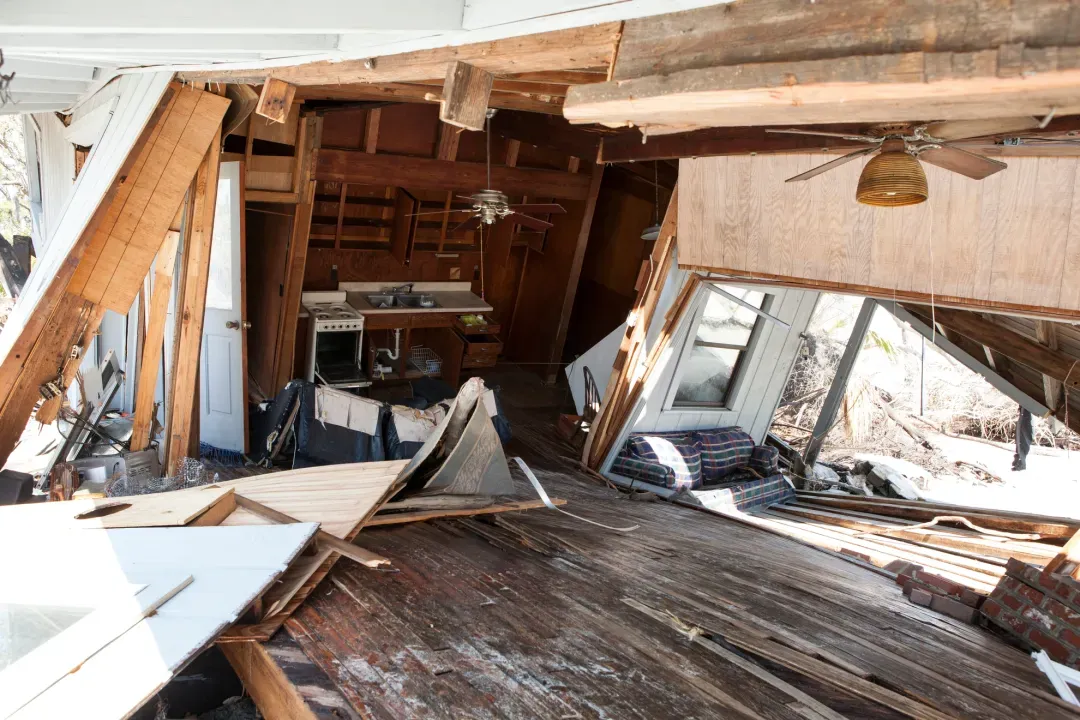
Coastal New York (the South Shore of Long Island, Staten Island's East Shore, the Rockaways) sits squarely in the path of Atlantic hurricanes and nor'easters. Since Sandy, insurers have rewritten their coastal policies, and the fine print now matters more than ever. This guide covers what homeowners in Nassau, Suffolk, and Staten Island need to know before and after a storm claim.
The single most important concept: wind vs. flood
Storm damage in coastal New York is split between two entirely different insurance systems:
- Wind, rain through storm-created openings, fallen trees → your homeowners policy
- Rising water, storm surge, tidal flooding → a separate flood policy (usually NFIP, sometimes private flood)
A standard homeowners policy excludes flood, as explained in New York DFS's coverage guide. If surge water entered your home and you don't carry flood insurance, that flood damage generally is not covered by your homeowners policy. When wind and flood both cause damage, coverage depends on the cause, evidence, and policy terms. That's why documentation (below) matters so much.
Know your hurricane deductible before the season starts
Coastal New York homeowners policies may carry a separate hurricane or windstorm deductible, commonly 1% to 5% of the dwelling value or insurance amount. On a home insured for $600,000, a 5% deductible based on that coverage equals $30,000. The triggers differ: New York DFS says a hurricane deductible requires a hurricane to make landfall in New York, while a windstorm deductible can apply to other wind losses. Check the declarations page, endorsement, and applicable trigger before calculating your share.
Before the storm: an hour of prep that pays for itself
- Walk your home with a phone camera: every room, the roof, siding, fences, and landscaping. Pre-loss condition photos are the strongest evidence you can own.
- Save digital copies of your homeowners declarations page and flood policy off-site.
- Note your policy's emergency mitigation and ALE (additional living expense) provisions so you know what's reimbursable when you're displaced.
After the storm: the first week
- Report both claims immediately: homeowners and flood, if you have both. They are separate claims to separate entities with separate deadlines.
- Mitigate: tarp the roof, board openings, extract standing water, run dehumidifiers. Keep receipts; reasonable mitigation is reimbursable, and unchecked moisture leads to mold claims that carriers fight harder.
- Document the waterline. Photograph the high-water mark inside and outside, on every elevation. This is the key evidence in wind-vs-flood allocation.
- Keep damaged materials until every adjuster (homeowners and flood) has inspected. Flood adjusters in particular want to see cut-out drywall and flooring samples.
- Track displacement costs: hotels, meals above normal, storage. Homeowners ALE coverage may reimburse eligible increases in living costs when a covered loss makes your home uninhabitable. NFIP flood insurance does not cover ALE.
NFIP flood claims have their own strict rules
If your flood policy is through the National Flood Insurance Program:
- You generally must submit a signed, sworn proof of loss within 60 days of the loss. FEMA can extend that deadline or approve a waiver; confirm what applies to your claim in the NFIP Claims Manual.
- NFIP contents claims are paid at actual cash value, and building replacement-cost payment depends on eligibility. Basement coverage is restricted; see the NFIP Summary of Coverage.
- A denial may be appealed to FEMA within 60 calendar days of the denial-letter date. A lawsuit is a separate option, generally subject to a one-year deadline from the first written denial. Filing an appeal does not extend the lawsuit deadline. See FEMA's appeal and lawsuit guidance.
Where coastal storm settlements go wrong
- Everything gets called "flood." Wind-driven rain through a roof opening is a homeowners claim even if surge also entered the first floor. Roof and upper-story damage rarely comes from rising water.
- Roofs get patched, not replaced. Widespread shingle loss and lifted seams compromise the whole system; matching and code requirements often mandate full replacement.
- Hidden moisture is missed. Wall cavities, sill plates, and insulation hold water long after surfaces dry. Insist on moisture mapping.
- The hurricane deductible is misapplied. If its trigger was not met, check whether the policy's windstorm deductible or standard deductible applies.
Getting help
After a regional storm, carriers are handling tens of thousands of claims at once with out-of-state catastrophe adjusters who may spend twenty minutes at your home. A licensed public adjuster works only for you, prepares the wind/flood allocation evidence, and negotiates the claim. In New York, the total public-adjuster fee is capped at 12.5% of the full claim payment; certain supplemental claims can use a higher percentage within that overall cap. Northeast Adjustment, INC. handles hurricane and water damage claims across Long Island and Staten Island, and offers a free claim review if you think your storm settlement came in low.