



A fallen tree can affect a roof, fence, shed, parked vehicle, or several properties at once. The immediate priority is safe access. After that, a clear record should show where the tree landed, what it contacted, and which work was necessary to remove it and address the damage.
NOAA recorded 48 billion-dollar severe-storm events affecting New York during 1980–2024. NOAA National Centers for Environmental Information This threshold applies to each event's U.S. losses. That historical New York count concerns qualifying severe-storm events, not fallen-tree claims. It supports keeping a storm response plan, while the actual tree condition and damage at your property remain individual questions.
Keep your distance from hazards
Stay away from downed lines, unstable trunks, hanging branches, and structures carrying a tree's weight. Contact emergency or utility services when appropriate and use qualified tree and building professionals.
Do not stand beneath the tree to capture a dramatic image. Photograph from safe locations and ask the removal contractor for views that require controlled access. If professionals restrict an area, save that instruction.
Notify the insurer promptly with the facts available. Avoid delaying the report until you know who owns the tree or whether another party may be involved.
Document the scene before removal when safe
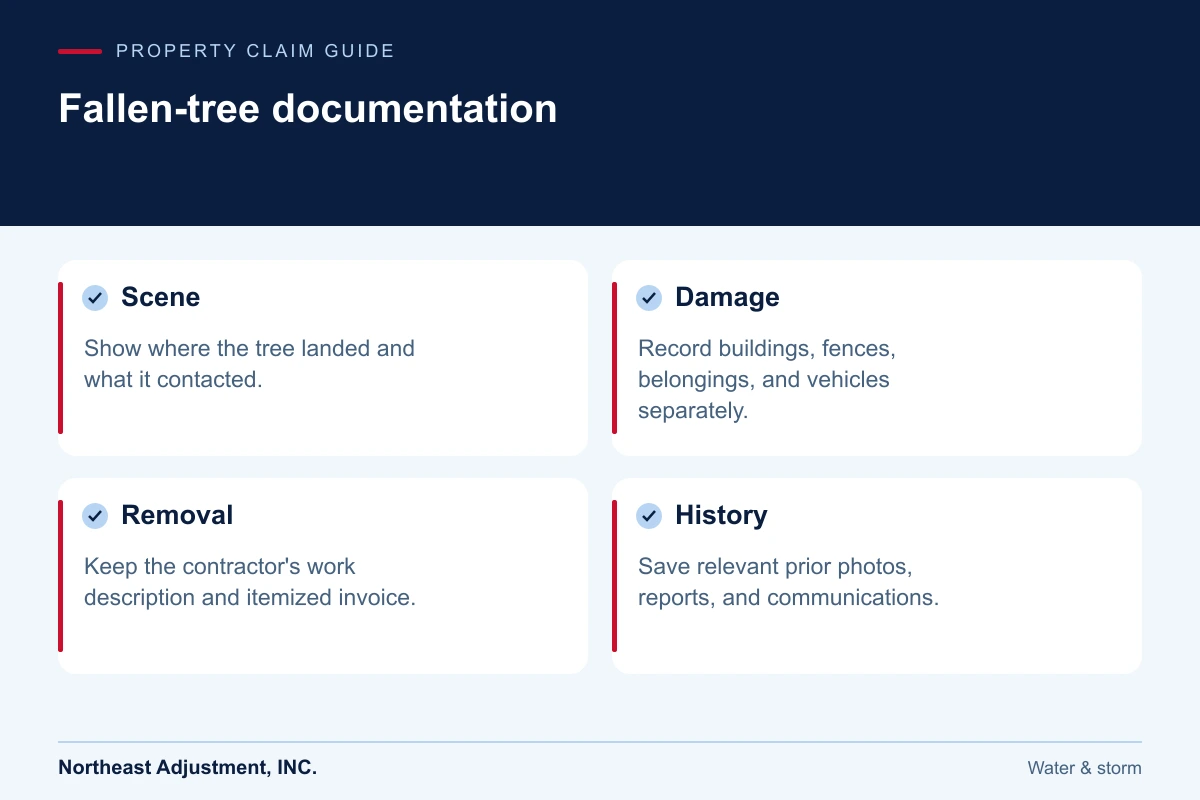
Take wide photographs showing the tree in relation to buildings, fences, driveways, and property features. Record which parts of the tree made contact and where access is blocked.
Then identify the affected property separately. A roof, a garden shed, and a car may involve different policies or provisions. Do not assume that the policy covering the home also pays for vehicle damage.
New York DFS's disaster guidance emphasizes loss documentation and notes that vehicle damage can raise separate auto coverage questions. The applicable policies should be reviewed individually.
Records worth gathering
- Scene photographs showing location, contact points, and visible damage.
- A list of affected structures and items, with known ownership.
- The tree contractor's scope, equipment needs, work dates, and itemized charges.
- Building inspection findings and temporary protection records.
- Relevant prior photographs, professional tree reports, or existing communications.
Keep removal charges distinguishable from stump work, landscaping, hauling, and structural repairs. Ask the contractor to describe the work actually required. A bundled invoice can make it difficult to understand which expense relates to the damaged building and which is a separate service.
Handle responsibility questions carefully
A tree originating next door does not, by itself, settle who is legally responsible for every cost. The facts, policies, and applicable law matter. Save relevant communications and provide them to the insurer without making unsupported accusations.
If prior condition is relevant, preserve genuine records such as dated photographs or an arborist's report. Do not reconstruct a warning that was never given. Record new conversations factually and keep any professional assessment in its original form.
Questions involving liability or legal obligations may need advice from the appropriate professional. The documentation task is to preserve facts, not determine blame.
A hypothetical shared boundary
Imagine a tree falls across a New Jersey property line, contacts a detached garage, and blocks a driveway. The homeowner first follows utility safety instructions, then hires an appropriate contractor to address the tree.
The invoice separates work needed to reach and remove the tree from the garage from other cleanup. A building professional assesses the roof and wall damage. The owner keeps photographs of the scene and reports the event to the relevant insurer.
These records help explain the work and damage. They do not establish that every removal charge or damaged item is covered.
Common questions
Is tree removal always covered?
No. The policy may distinguish removal associated with damaged insured property from other cleanup. Ask which provision applies and retain an itemized scope.
Should I contact my insurer if the tree was a neighbor's?
Report the damage promptly and accurately. Let the insurer explain the relevant claim process rather than waiting for the neighbors to resolve responsibility.
What if removal reveals more damage?
Ask the contractor to photograph newly exposed conditions and notify the insurer with the supporting findings.
See roof-leak documentation if the building was affected. For help organizing a fallen-tree property loss, contact Northeast Adjustment.