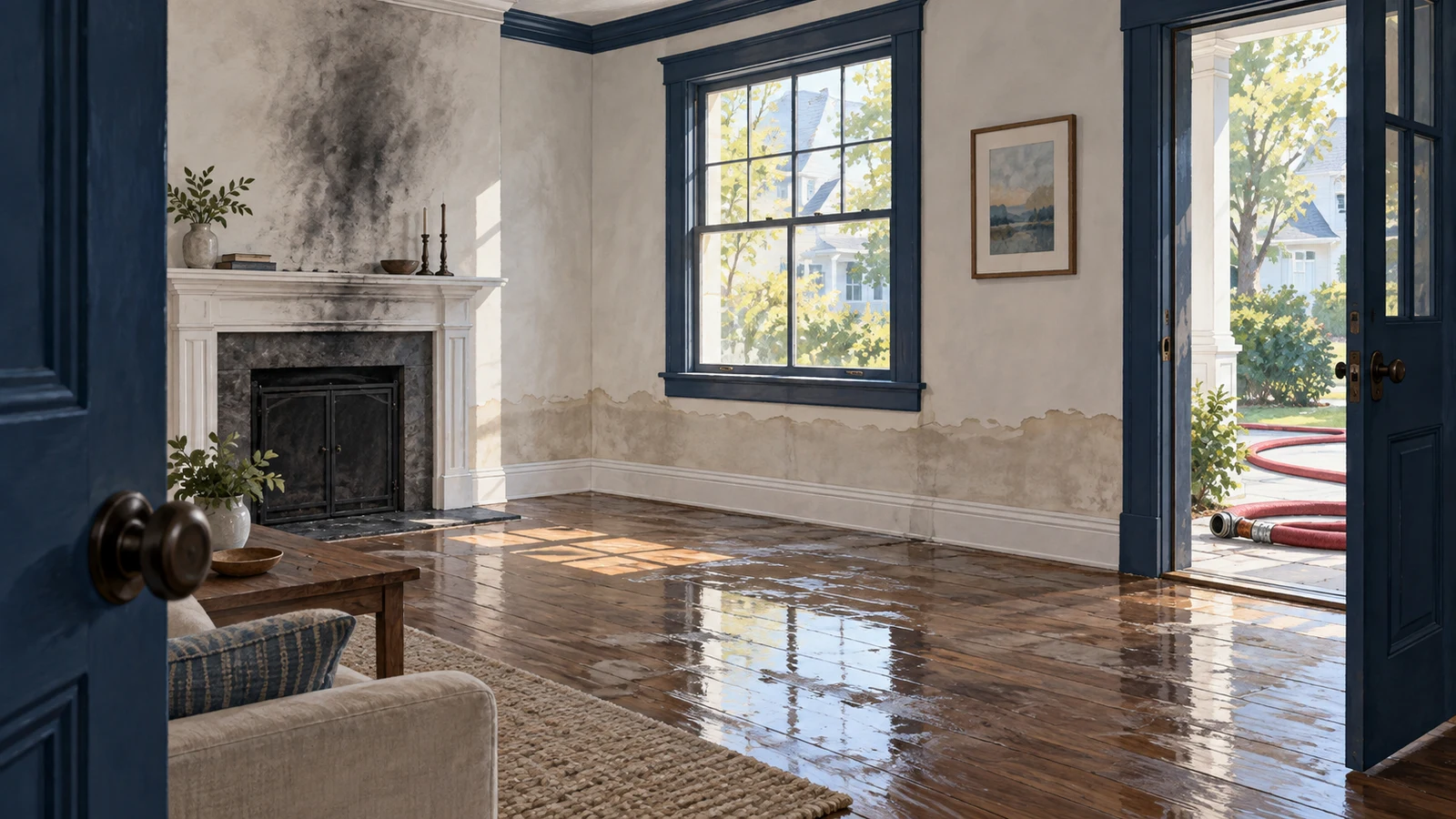


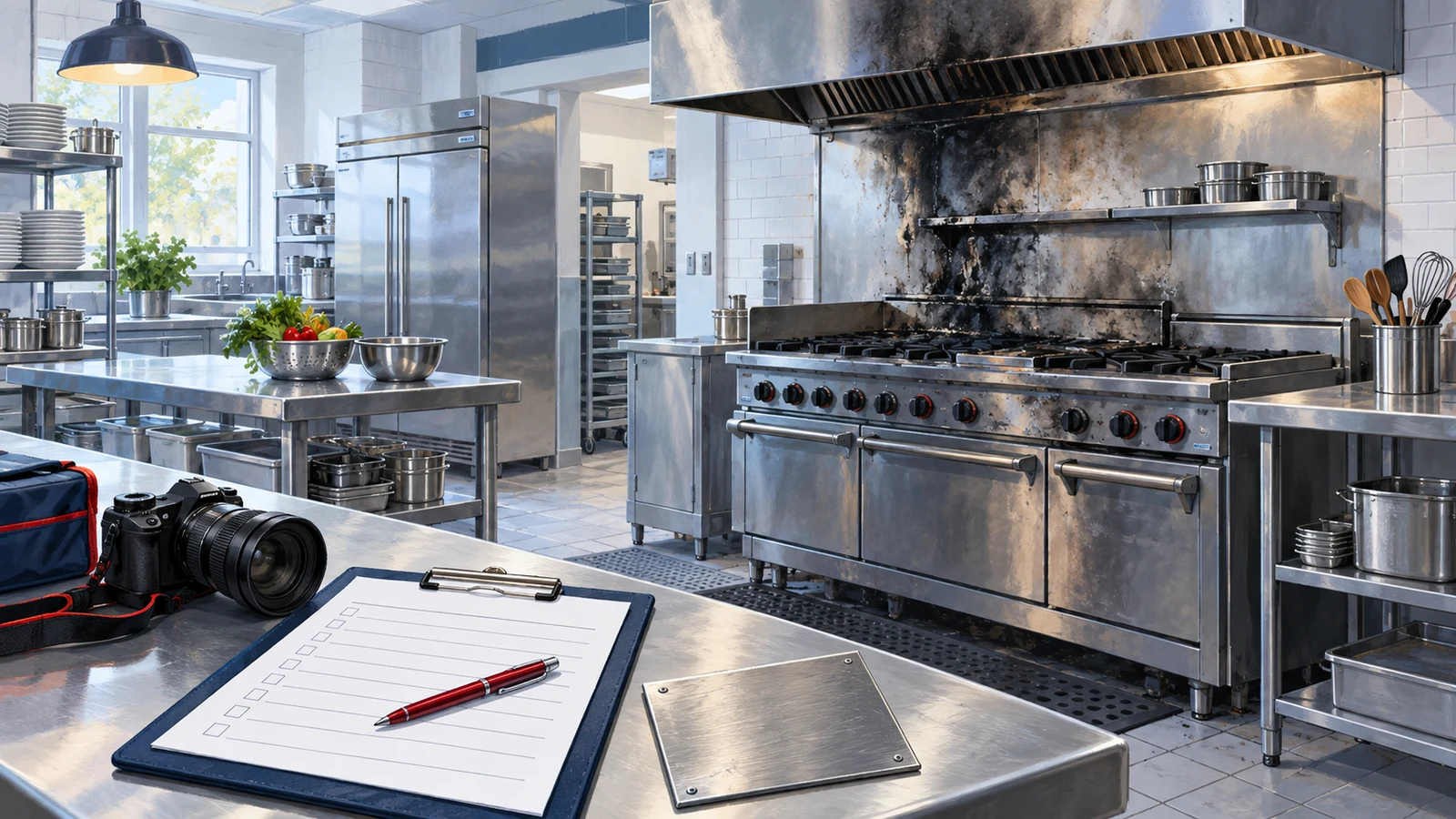
A commercial kitchen fire can affect cooking equipment, ventilation, wiring, finishes, food stock, and the space needed to operate. The claim becomes easier to understand when each category has its own evidence and a clear owner.
Cooking caused 29.7% of estimated U.S. nonresidential building fires in 2024. U.S. Fire Administration This United States figure covers nonresidential buildings broadly, not restaurants alone. It provides a useful reason for food businesses to maintain equipment and property records before an incident, without predicting the likelihood or size of a particular restaurant loss.
Establish the operating and safety status
Follow fire officials, utility professionals, and the appropriate health authority on access and reopening. A kitchen that looks clean is not automatically ready to operate. Record who restricted use, the reason, and any written requirements for further inspection.
Notify the insurer promptly. Also contact the landlord or property manager where the business is a tenant. Save the lease and equipment agreements so ownership and repair responsibilities can be reviewed rather than assumed.
The New York DFS recovery guidance notes that business-related losses require review of the applicable business policies. A homeowner's policy or a landlord's building policy should not be assumed to cover the restaurant's full loss.
Build an equipment schedule
List each affected range, fryer, oven, refrigerator, dishwasher, and other major unit separately. Record make, model, serial number, approximate age, ownership, and the location where it was installed.
Ask qualified technicians for written findings. A report should distinguish visible damage, recommended testing, repair feasibility, and replacement recommendations. Equipment should not be powered on to test it without appropriate direction.
Include installation requirements in the repair discussion. Replacing a unit may involve connections, access, permits, or work to adjacent systems. Those tasks need support; they should not be added simply because a new model is more desirable.
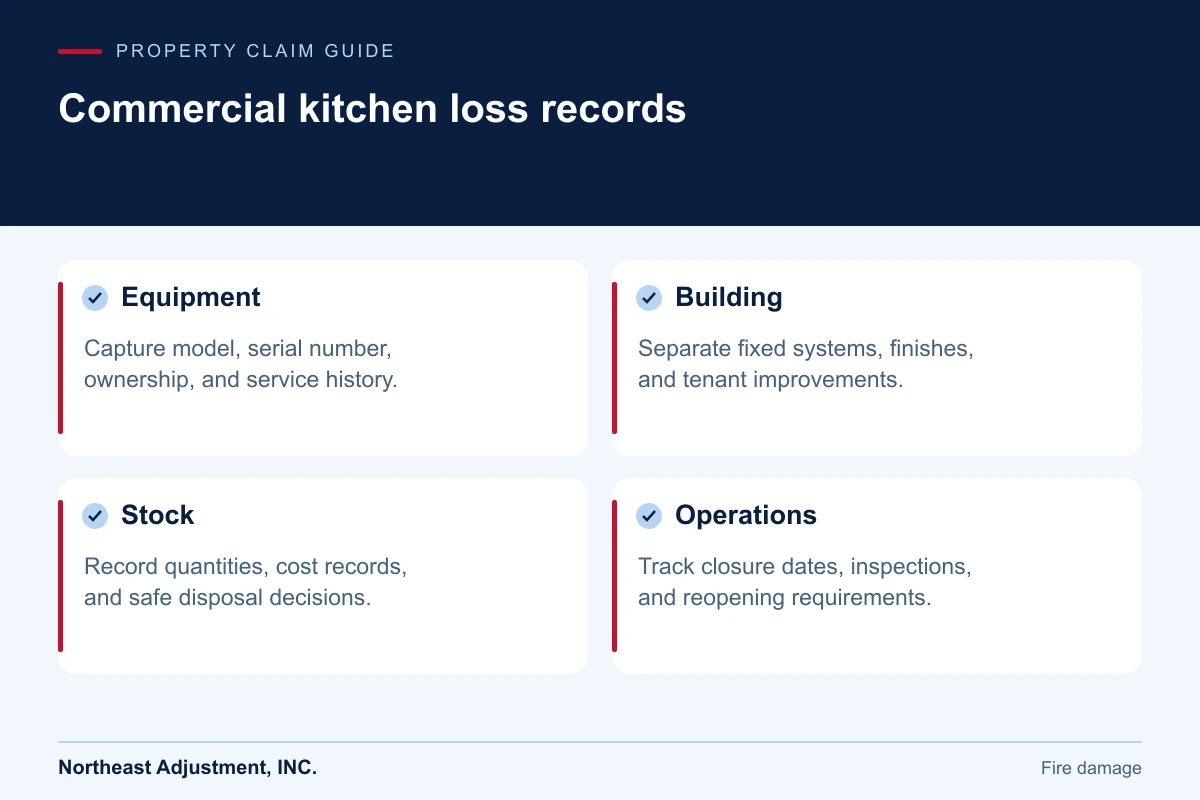
Keep four groups of records
- Equipment: Purchase or lease documents, service history, identification photographs, and technician assessments.
- Building and improvements: Damage photographs, plans, landlord correspondence, and a description of installed work.
- Stock and smallwares: Inventory counts, supplier invoices, condition notes, and appropriate disposal records.
- Operations: Closure dates, inspection notices, canceled reservations or orders, and relevant financial records.
Keep business interruption documentation separate from the physical repair estimate. Whether that coverage applies depends on the policy's trigger and terms; closure alone does not establish payment.
A hypothetical Connecticut restaurant
Picture a leased Connecticut restaurant where a fire affects a fryer, the hood area, and nearby electrical work. The fryer is owned by the tenant, while the lease addresses responsibility for certain fixed systems.
The owner creates an equipment list and asks the landlord to identify the relevant building policy contact. Qualified professionals inspect the affected systems and provide written findings. Stock records identify food removed under health guidance.
The owner does not combine everything into a single “kitchen replacement” amount. Each part can then be evaluated against ownership, actual damage, proposed work, and the policies involved. This scenario is illustrative and does not establish how a particular lease or insurer would respond.
Make the repair scope usable
Ask contractors to identify the work area and distinguish cleaning, repair, removal, and replacement. If one contractor handles equipment and another handles electrical connections, check that necessary tasks are included once and that handoffs are clear.
Save permit applications, inspection results, and changes required during the work. If new damage becomes visible, photograph it safely and notify the insurer with the supporting professional explanation.
Keep copies of documents sent by vendors. An owner should be able to see the same equipment schedule and estimates that the claim reviewer receives.
Common questions
Should food stay on site for inspection?
Food safety comes first. Follow the applicable health authority and document quantities, labels, and disposal safely. Do not retain unsafe stock just for the claim.
Can we replace damaged equipment with a larger unit?
An operational upgrade is a separate decision. Ask how the policy values the damaged equipment and keep upgrade costs distinct from the supported loss scope.
Does a fire report list all repair needs?
It may help document the incident, but detailed equipment and building assessments can still be needed.
Read our guide to firefighting water records for related damage. Contact Northeast Adjustment to discuss organizing a commercial property claim.